Philosophers / Modern Western
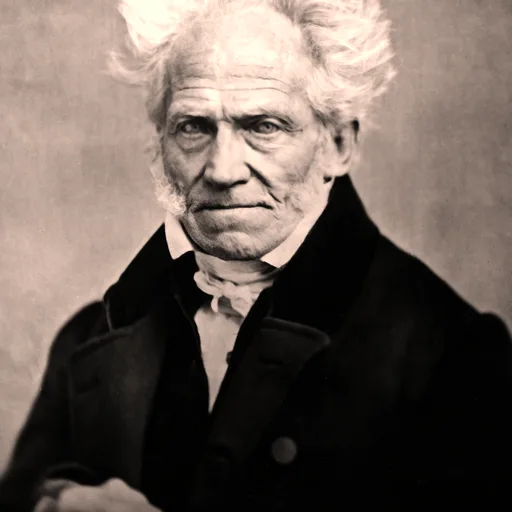
Arthur Schopenhauer
Germany 1788-02-22 ~ 1860-09-21
19th-century German philosopher
Constructed a metaphysics of blind will in The World as Will and Representation
His insight that satisfied desire merely breeds the next desire describes social-media validation-seeking with precision
Born in 1788 in Danzig (now Gdansk), Arthur Schopenhauer constructed in The World as Will and Representation a metaphysics identifying the essence of reality as a blind, purposeless 'will.' Inheriting Kant's critical philosophy while becoming the first major Western philosopher to integrate Buddhist thought systematically, his pessimistic vision of human nature profoundly shaped Nietzsche, Wagner, and Freud.
What You Can Learn
Schopenhauer's thought poses sharp questions to a modern world dominated by achievement culture and positive thinking. His observation that 'the satisfaction of desire merely breeds the next desire' describes with precision the dynamics of social-media validation-seeking and endless consumption. The delight of a new phone fades within weeks; the joy of promotion dissolves into anxiety about the next rung. That he diagnosed this psychology two centuries ago testifies to its universality. On the practical side, his prescription of 'temporary liberation from the will' through aesthetic immersion aligns with modern mindfulness practice. And the awareness that we fixate on what we lack rather than what we possess maps directly onto loss-aversion bias in investment decision-making. In an uncertain market environment, pessimism — deployed not as despair but as an intellectual tool against overconfidence — is precisely what sound judgment demands.
Words That Resonate
Talent hits a target no one else can hit; genius hits a target no one else can see.
Talent trifft ein Ziel, das niemand sonst treffen kann; Genie trifft ein Ziel, das niemand sonst sehen kann.
Compassion is the foundation of morality.
Mitleid ist die Grundlage der Moral.
The world is my representation.
Die Welt ist meine Vorstellung.
Life swings like a pendulum back and forth between pain and boredom.
Das Leben schwankt gleich einem Pendel hin und her zwischen dem Schmerz und der Langenweile.
Every day is a little life.
Jeder Tag ist ein kleines Leben.
We seldom think of what we have but always of what we lack.
Wir denken selten an das, was wir haben, aber immer an das, was uns fehlt.
Life & Legacy
Arthur Schopenhauer stood in direct opposition to Hegel's optimistic idealism, unflinchingly confronting the suffering at the root of human existence. Born in 1788 in the free city of Danzig (present-day Gdansk, Poland) into a wealthy merchant family, he was caught between his father Heinrich's expectation that he pursue trade and his mother Johanna's literary ambitions — she later ran a celebrated salon in Weimar and was acquainted with Goethe. This environment bequeathed both broad cultivation and acute critical faculties, while the conflict with his parents, especially his mother, cast a lasting shadow over his view of human nature.
After Heinrich's sudden death released him from his apprenticeship obligations, Schopenhauer studied medicine and philosophy at the University of Gottingen, where encounters with Plato and Kant led him to commit entirely to philosophy. He subsequently attended Fichte's lectures in Berlin but recoiled from Fichte's subjective idealism. In 1813 he earned his doctorate from the University of Jena with a dissertation on the fourfold root of the principle of sufficient reason — the epistemological foundation for his magnum opus.
That opus, The World as Will and Representation, was completed in 1818 and published the following year. He was thirty. Where Kant had left the 'thing-in-itself' unknowable, Schopenhauer identified it as 'will' — not individual intention or choice, but a blind, insatiable impulse pervading all existence. Gravity, animal instinct, human desire — all are manifestations of a single will. Intellect and reason are merely its instruments.
The anthropology that follows is bleak. Because will can never be finally satisfied, the gratification of desire is merely a temporary interruption of pain. Human life swings like a pendulum between suffering and boredom. Contemporary readers largely rejected this pessimism. When Schopenhauer scheduled lectures at Berlin at the same hour as Hegel, almost no one came. The first edition of his masterwork went mostly unsold.
Yet his thought offers remedies as well as diagnoses. In aesthetic contemplation — especially in music — humans momentarily escape the will's dominion and become pure subjects of cognition. He ranked music above all other arts because he considered it a direct copy of the will itself. As the ultimate path of liberation he prescribed asceticism and the denial of the will-to-live: a conscious renunciation resonant with Buddhism and the Upanishads. Schopenhauer openly expressed sympathy for Indian thought, making him the first major Western philosopher to incorporate Eastern philosophy systematically into his metaphysical system.
Recognition came only in the 1850s, more than thirty years after publication, when the essay collection Parerga and Paralipomena reached a broader audience. Fame grew during his reclusive final years in Frankfurt am Main; he died in 1860 at seventy-two. Posthumously, his influence blossomed in multiple directions: as the starting point for Nietzsche's 'will to power,' as the aesthetic foundation of Wagner's music dramas, and as a philosophical precursor to Freud's theory of the unconscious. Literary figures from Thomas Mann to Proust to Beckett drew deeply on his work. The contrast between neglect in life and immense posthumous influence unfolded exactly as Schopenhauer himself had predicted.
Expert Perspective
In the history of Western philosophy, Schopenhauer inherited Kant's epistemological framework while standing as the foremost critic of Hegel's optimistic system of reason's self-unfolding. Ontologically he represents the pessimist lineage and served as a precursor to existentialism. His distinctive contribution was being the first major philosopher to incorporate Buddhism and Upanishadic thought systematically into Western metaphysics. In aesthetics, he placed music at the apex of all art forms, directly inspiring Wagner's theory of the Gesamtkunstwerk. His concept of will was transformatively received as Nietzsche's will to power and Freud's libido theory, giving his influence an exceptionally broad reach across post-1850 intellectual history.