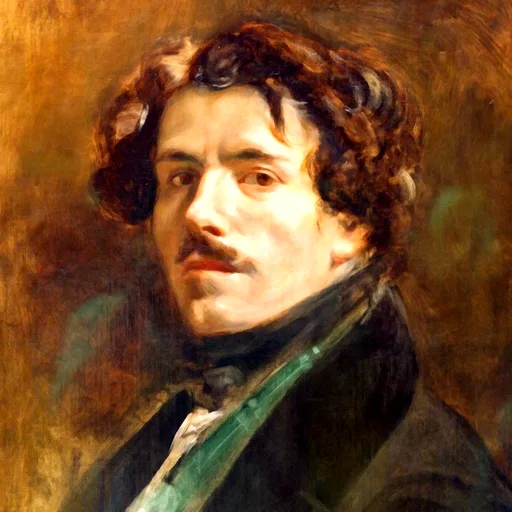
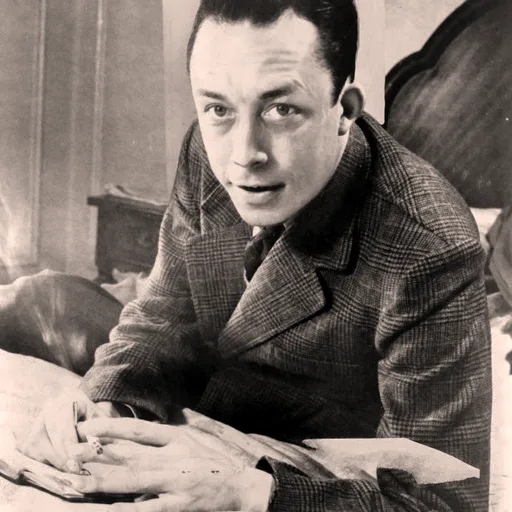
Writers & Literary Figures / Baroque

Nikolai Gogol
Ukraine 1809-04-01 ~ 1852-03-04
Born 1809 in Sorochyntsi in the Russian Empire's Poltava Governorate (today's Ukraine), of Ukrainian Cossack descent
Founder of Russian realism through The Government Inspector (1836) and Dead Souls Part One (1842, published as The Adventures of Chichikov)
Burned most of Dead Souls Part Two on 24 February 1852 and died nine days later
Nikolai Gogol (1 April [O.S. 20 March] 1809 - 4 March [O.S. 21 February] 1852), born in Sorochyntsi in the Russian Empire's Poltava Governorate (in today's Ukraine), was a novelist, short-story writer and playwright of Ukrainian Cossack origin. Drawing on Ukrainian folklore in Evenings on a Farm Near Dikanka (1831) and turning satirical fire on imperial bureaucracy and serfdom in The Government Inspector (1836) and Dead Souls (1842), he is regarded as a founder of Russian realism. He died in Moscow nine days after burning most of the manuscript of Dead Souls Part Two.
What You Can Learn
Gogol's career offers durable lessons for makers of public discourse. First, satire as constructive critique: he framed The Government Inspector and Dead Souls as work that would change Russia for the better, which is a useful framing for any writer or designer who treats criticism as a tool of repair rather than mere demolition. Second, the courage to discard a failed first effort: after Hans Kuchelgarten flopped he bought up and destroyed every copy and swore off poetry, then returned with the prose that defined him. Third, the danger of letting a single mentor override one's own judgement: Konstantinovsky's insistence that imaginative work was sinful cost the world the second part of Dead Souls and contributed to Gogol's own death, a sober warning for anyone tempted to treat a charismatic advisor as final authority over their creative life.
Words That Resonate
Life & Legacy
Nikolai Vasilyevich Gogol holds a foundational place in Russian and Ukrainian letters as a master of the grotesque whose satire of provincial bureaucracy and serfdom became the seed of nineteenth-century Russian realism. He used estrangement and caricature so methodically that, in Eugene-Melchior de Vogue's words, the next generation of Russian writers "all came out from under Gogol's Overcoat".
He was born on 1 April 1809 (Old Style 20 March) in the Ukrainian Cossack town of Sorochyntsi, in the Poltava Governorate of the Russian Empire. His father Vasily Gogol-Yanovsky, supposedly a descendant of Ukrainian Cossacks and an amateur playwright in his own theatre, died when Gogol was fifteen. The family was trilingual, speaking Ukrainian and Russian and using Polish mostly for reading.
In 1820 Gogol entered the school of higher art at Nezhin, where he developed a dark and secretive disposition together with a talent for mimicry. He left school in 1828 for Saint Petersburg with literary ambitions, publishing a Romantic poem Hans Kuchelgarten under the pseudonym "V. Alov". The magazines derided it; he bought up the remaining copies and destroyed them, swearing never to write poetry again. Around 1830 he shortened his surname from Gogol-Ianovskii to Gogol.
In 1831 the first volume of Evenings on a Farm Near Dikanka appeared under the pen name "Rudy Panko" and met with immediate success. A second volume followed in 1832, then Mirgorod and Arabesques in 1835. He was made Professor of Medieval History at the University of Saint Petersburg in 1834, an academic venture so disastrous that he resigned the chair in 1835.
On 19 April 1836 his comedy The Government Inspector premiered at the Alexandrinsky Theatre in Saint Petersburg with Tsar Nicholas I in attendance, staged thanks only to the emperor's intervention. From 1836 to 1848 Gogol lived abroad, mainly in Rome, where he composed Dead Souls. The first part was ready in 1841 and printed in Moscow in 1842 under the censor-imposed title The Adventures of Chichikov.
After a pilgrimage to Jerusalem he returned to Russia in April 1848. Under the influence of the starets Matvey Konstantinovsky, who insisted on the sinfulness of his imaginative work, he undertook exaggerated ascetic practices. On the night of 24 February 1852 he burned manuscripts containing most of the second part of Dead Souls; he took to bed, refused all food, and died nine days later, on 4 March 1852. His grotesque imagination acknowledged influence on Dostoevsky, Saltykov-Shchedrin, Akutagawa, Kafka, Bulgakov, Nabokov and Flannery O'Connor.
Expert Perspective
Rubens represents the grandest Baroque achievement, synthesizing Titian's colorism and Caravaggio's chiaroscuro into sweeping narrative compositions. His workshop model is a prototype of the modern creative studio. As painter-diplomat he embodies a Baroque-era universal man. His influence on the colorist tradition from Delacroix to Renoir is substantial.