Artists / Romanticism
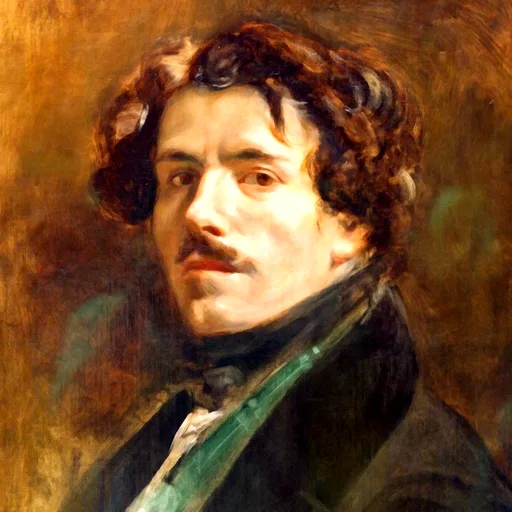
Eugène Delacroix
France 1798-04-26 ~ 1863-08-13
French Romantic painter born near Paris in 1798
Led Romanticism with dramatic color in Liberty Leading the People
His color theory and conviction in holding an unpopular position model creative courage and systematic experimentation
Born in 1798 near Paris, Delacroix led French Romanticism with dramatic color and emotional intensity. Liberty Leading the People became a symbol of revolutionary spirit and French national identity.
What You Can Learn
Delacroix offers lessons in conviction. His championing of color against the academic establishment models the value of holding an unpopular position when evidence supports it. His Moroccan trip shows how deliberate exposure to unfamiliar environments can transform a creator's palette and perspective. And his detailed journals, documenting color experiments systematically, demonstrate that rigorous documentation of creative process yields compounding returns.
Words That Resonate
What moves men of genius is not new ideas, but their obsession that what has been said is not enough.
Il faut être de son temps.
If you are not skillful enough to sketch a man jumping from a window in the time it takes him to fall, you will never produce great work.
La couleur est par excellence la partie de l'art qui détient le don magique.
Color is, so to speak, what gives the painting its blood and its life.
Ce qui fait les hommes de génie, ce n'est pas les idées neuves, c'est cette idée qui les possède, que ce qui a été dit ne l'a pas encore été assez.
Life & Legacy
Eugene Delacroix holds a central place in 19th-century art as the leader of French Romanticism, championing color, emotion, and movement against the Neoclassical emphasis on line and restraint. His Liberty Leading the People is one of the most recognized political paintings ever created.
Born April 26, 1798, in Charenton-Saint-Maurice near Paris, he trained under Pierre-Narcisse Guerin and studied Rubens and the Venetian colorists at the Louvre. His first Salon success, The Barque of Dante (1822), announced his commitment to dramatic subject matter and rich color.
The Massacre at Chios (1824) depicted Greek suffering under Ottoman rule with an emotional intensity that scandalized classicists but electrified younger artists. A trip to Morocco in 1832 exposed him to North African light and color, profoundly enriching his palette and providing exotic subjects for decades.
Liberty Leading the People (1830) commemorates the July Revolution. Marianne strides over barricades, tricolor in hand, accompanied by citizens of all classes. The painting fuses allegory with reportage and remains a symbol of republican ideals.
Delacroix kept detailed journals that document his color theories and working methods. His systematic study of complementary colors influenced the Impressionists and Neo-Impressionists. He died August 13, 1863. Baudelaire called him the last great painter of the heroic tradition; his colorist legacy runs from Rubens through him to Renoir and beyond.
Delacroix maintained a lifelong friendship with the writer George Sand and was close to Chopin, whose portrait he painted. His journals, kept over decades, offer one of the richest records of a working painter's thought process and remain essential reading for art students.
Expert Perspective
Delacroix leads French Romanticism, championing color and emotion. His color theory influenced Impressionism. Liberty Leading the People fuses allegory with reportage. His colorist lineage runs from Rubens through him to the Impressionists.