Artists / Baroque

Caravaggio
Italy 1571-09-29 ~ 1610-07-18
Italian Baroque painter born near Milan in 1571
Revolutionized religious art by casting street people as saints under dramatic chiaroscuro
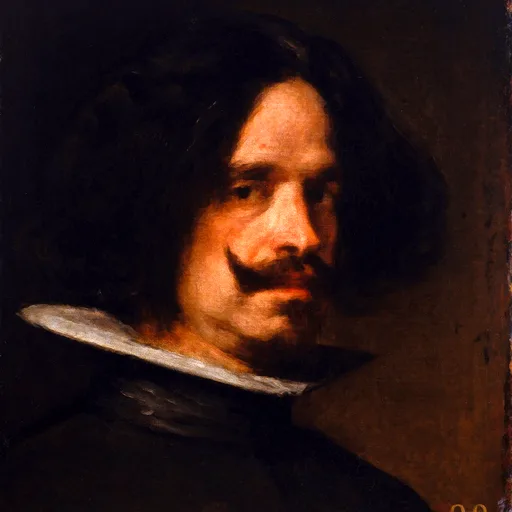
His lighting shaped Rembrandt, Vermeer, and Velazquez, defining the Baroque visual grammar
Born near Milan in 1571, Caravaggio opened the door to Baroque painting through dramatic chiaroscuro. He cast street people as saints and died a fugitive at thirty-eight after killing a man.
What You Can Learn
Caravaggio's art yields sharp lessons. His casting of street people as saints prototypes disruption: delivering raw truth instead of polished ideals, a pattern repeated by disruptors in every industry. His tenebrism, spotlighting essentials against darkness, maps onto communication design in an information-saturated age where the ability to direct attention is paramount. And his self-destructive path warns that no talent compensates for a failure of self-management.
Words That Resonate
I do not copy nature; I reveal it.
Io non copio la natura, io la rivelo.
Every painter paints himself.
Ogni dipintore dipinge sé.
My studio is the street.
Il mio studio è la strada.
Life & Legacy
Caravaggio changed art history by refusing to idealize. He brought the faces of the street into biblical scenes, irreversibly altering religious painting. His chiaroscuro, carving figures from darkness with directed light, became the Baroque's core vocabulary.
Born September 29, 1571, near Milan to a stonemason's family, he trained under Simone Peterzano for four years. Arriving in Rome around 1592 as an unknown youth, he won Cardinal del Monte's patronage and rose quickly. Early works like Boy with a Basket of Fruit and Bacchus reveal a still-life sensibility and an aesthetic attraction to youthful male figures.
His religious commissions made revolution explicit. The Calling of Saint Matthew in the Contarelli Chapel sends a beam of light into a dim tavern of gamblers, erasing the boundary between sacred and profane. The shock generated a wave of followers called Caravaggisti. His tenebrism, steep directional light against deep shadow, rewrote the concept of illumination in Western painting for generations to come.
Yet violence ran parallel to genius. Police records list brawls, assaults, and weapons offenses. In May 1606 he killed Ranuccio Tomassoni in a fight triggered by a tennis wager and fled Rome as a wanted man. He wandered Naples, Malta, and Sicily, producing masterpieces at each stop but finding no peace or safety.
Works from exile show profound inner transformation. Sicilian canvases grew darker still, isolating figures in shadow between hope and despair, reaching an emotional depth that a settled life might never have produced.
He died July 18, 1610, at Porto Ercole on the Tuscan coast, just short of reaching Rome. The cause, whether fever, lead poisoning, or murder, remains disputed. His roughly eighty surviving paintings shaped Rembrandt, Vermeer, and Velazquez, making him an indispensable catalyst of the entire Baroque tradition.
Expert Perspective
Caravaggio stands at the watershed between Renaissance and Baroque. By replacing idealization with realism and inventing tenebrism, he rewrote religious painting's visual language. His roughly eighty works radiated influence through the Caravaggisti across Europe, laying the foundation of light for Rembrandt, Velazquez, and Ribera.