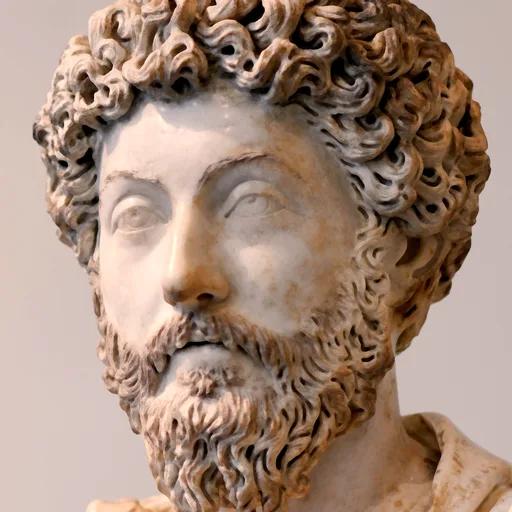
Psychologists / cognitive

Albert Ellis
United States 1913-09-27 ~ 2007-07-24
American clinical psychologist (1913-2007) who founded rational therapy in 1955, later renamed rational emotive behavior therapy (REBT). Trained in psychoanalysis at Columbia and the Karen Horney Institute, he broke with the Freudian school by 1953. His ABC model and the concept of irrational beliefs are direct progenitors of the entire cognitive behavioral therapy family. In a 1982 survey he was ranked the second most influential psychotherapist in history, ahead of Freud. He founded the non-profit Albert Ellis Institute in 1959, was controversially removed from its board in 2005, and was reinstated by court order in 2006. Famous for his confrontational style and outspoken views on sex and religion, he authored over 80 books before dying at 93.
What You Can Learn
Ellis's ABC model is one of the most actionable emotional-management tools available to leaders, investors and founders. Faced with an A (market crash, competitor launch, key-client churn), people experience C (anger, despair, fear) as if it followed directly. Yet a B sits in between — "I must never fail," "Everyone must approve of me." Naming the irrational belief and disputing it is what changes behavior. His doctrine of unconditional self-acceptance is a pillar of resilience for executives bruised by quarterly earnings and for portfolio managers exposed to public performance. A caveat: Ellis's confrontational, sometimes verbally aggressive style would today fail any psychological-safety test. Adopt the technique; modernise the delivery. The substance is the model, not his bark.
Words That Resonate
The best years of your life are the ones in which you decide your problems are your own. You do not blame them on your mother, the ecology, or the president. You realize that you control your own destiny.
The art of love is largely the art of persistence.
There are three musts that hold us back: I must do well. You must treat me well. And the world must be easy.
You largely constructed your depression. It wasn't given to you. Therefore, you can deconstruct it.
People and things do not upset us. Rather, we upset ourselves by believing that they can upset us.
Life & Legacy
Albert Ellis was born on September 27, 1913, in Pittsburgh, Pennsylvania, to Jewish immigrants from the Russian Empire and Galicia. The eldest of three children, he was raised in the Bronx by emotionally distant parents and endured eight childhood hospitalizations for kidney disease, tonsillitis and streptococcal infection, one nearly a year long. At nineteen he confronted his social anxiety by forcing himself to approach 100 women over a month in the Bronx Botanical Gardens — an early cognitive-behavioral self-experiment. In his autobiography he also candidly admitted to hundreds of non-consensual frotteurism acts during his teens and twenties, behavior that today is recognized as serious sexual assault and is part of any honest assessment of his legacy.
After a B.A. in business from City College of New York in 1934 and unsuccessful careers in business and fiction, Ellis turned to non-fiction on human sexuality and then to clinical psychology, earning an M.A. (1943) and Ph.D. (1947) from Columbia's Teachers College. He trained as a Jungian analyst at the Karen Horney Institute, but disillusioned with the inefficiency of long-form analysis, he broke from psychoanalysis by 1953.
In 1955 Ellis presented his "rational therapy." The framework later codified as the ABC model — that activating events (A) do not directly cause emotional consequences (C); the intervening factor is beliefs (B), especially the rigid "musts" — drew on his clinical observation, Alfred Korzybski's general semantics, and Stoic philosophy, with explicit citations of Epictetus and Marcus Aurelius. He founded the non-profit Institute for Rational Living (later the Albert Ellis Institute) in Manhattan in 1959, published the landmark Reason and Emotion in Psychotherapy in 1962, and in 1995 renamed his system Rational Emotive Behavior Therapy (REBT). In a 1982 survey of US and Canadian clinical psychologists, he was ranked the second most influential psychotherapist in history (after Carl Rogers and ahead of Freud), and after 1957 he was the most-cited author in US psychology journals. He authored more than 80 books and over 1,200 articles in his lifetime.
His legacy carries both credit and debit. On the credit side, REBT — by targeting cognition to produce short-term emotional and behavioral change — accelerated the entire cognitive-behavioral movement. He received the American Humanist Association's Humanist of the Year award in 1971, the APA's Distinguished Professional Contribution Award in 1985, and a posthumous APA Award for Outstanding Lifetime Contributions in 2013. On the debit side, his confrontational and often abrasive session style was criticized as mechanistic and invasive; his public stage demonstrations split opinion. His 1965 book Homosexuality: Its Causes and Cure treated homosexuality as pathology — a position he revised in 1976 after the APA's 1973 depathologization, but the original remains an indelible mark. In 2005 he was removed from the board of the institute he had founded, in a dispute over governance; a New York court reinstated him in January 2006, but his final years were consumed by litigation against the very board members he had once appointed.
He died on July 24, 2007, in his Manhattan home at age 93 of kidney and heart failure. His establishing of short, evidence-based psychotherapy is a decisive achievement; the shadow of his personal conduct and institutional rupture remains part of the testimony, and any fair assessment of Ellis must weigh both.
Expert Perspective
Within the history of psychotherapy, Ellis is the translator who carried Stoic insight into evidence-based clinical practice. His ABC framework and the concept of irrational beliefs form the theoretical headwaters of the entire CBT family — and the 1982 survey that ranked him above Freud testifies to his penetration. The credit is the establishment of short-term, rationality-driven therapy; the debit includes his confessed teenage sexual offences, abrasive session style, the 1965 pathologization of homosexuality, and the 2005 expulsion from his own institute.