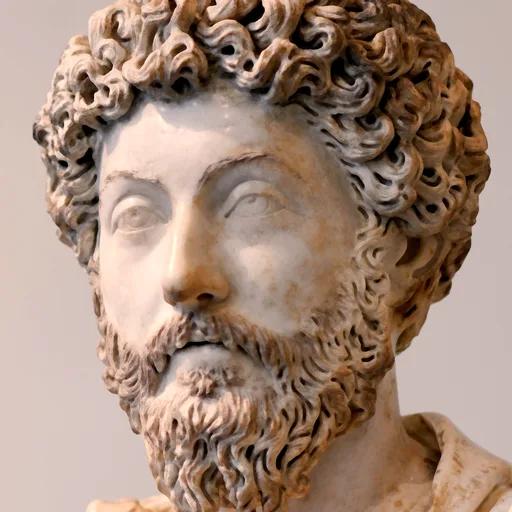
Politicians / ancient_roman

Trajan
Italy 0053-09-16 ~ 0117-08-06
13th Roman emperor (53-117), second of the Five Good Emperors. Born in the Hispanic colony of Italica, Trajan was the first emperor from a province. He expanded Rome to its greatest territorial extent through the Dacian and Parthian wars, formalized the alimenta welfare scheme for orphans, and was hailed by the Senate as Optimus Princeps. His conquests also produced mass enslavement in Dacia and the Kitos War uprising, and his successor Hadrian abandoned the eastern provinces almost immediately.
What You Can Learn
Trajan's reign offers two complementary lessons for modern leaders. He recycled the gains from the Dacian wars into Italian welfare (alimenta) and public infrastructure, an early model for redeploying acquisition cash flow into employee development and customer reinvestment. But the Parthian campaign shows the danger of over-extension: his successor Hadrian had to abandon the eastern provinces almost immediately, paying the cost of unsustainable ambition. The principle that 'taking ground' and 'holding ground' are different problems applies directly to global expansion in SaaS, leveraged M&A and venture portfolios. His rescript to Pliny, refusing to act on anonymous denunciations and pardoning those who recanted, is a striking template for whistleblower policy and disciplinary culture, an ancient Roman counter-model to surveillance-style compliance regimes.
Words That Resonate
The best ruler.
Optimus Princeps.
May you be more fortunate than Augustus and better than Trajan.
Felicior Augusto, melior Traiano.
They are not to be sought out. If denounced and convicted, they should be punished, but anyone who denies being a Christian and proves it in fact by praying to our gods is to be pardoned through repentance, however suspect his past.
Conquirendi non sunt; si deferantur et arguantur, puniendi sunt, ita tamen ut, qui negaverit se Christianum esse idque re ipsa manifestum fecerit, id est supplicando dis nostris, quamvis suspectus in praeteritum, veniam ex paenitentia impetret.
Use this (sword) on my behalf if I rule well; if I rule badly, use it against me.
Hoc utere in me si bene imperavero, si male, in me.
Anonymous accusations should have no place in any charge. They set the worst kind of precedent and are out of keeping with the spirit of our age.
Sine auctore vero propositi libelli in nullo crimine locum habere debent. Nam et pessimi exempli nec nostri saeculi est.
Life & Legacy
Marcus Ulpius Traianus was born on 18 September AD 53 in Italica, a Roman colony in Hispania Baetica (modern Andalusia, Spain) founded by Scipio Africanus in 206 BC. His father, a senator and consul of the same name, served as governor of Syria. The Ulpii were an Italic family originally from Tuder (modern Todi) in Umbria, so Trajan's status as 'first provincial emperor' refers to his place of birth rather than provincial blood.
He rose through standard senatorial offices and as legatus legionis of Legio VII Gemina helped suppress the 89 revolt of Saturninus in Upper Germany. After serving as consul in 91 and governor of Upper Germany, he was adopted by the elderly emperor Nerva in 97 under pressure from the Praetorians and a restive army. Nerva died in January 98, and Trajan succeeded smoothly, the first emperor born in the provinces.
His first acts reversed the worst of Domitian's tyranny: releasing the unjustly imprisoned and restoring confiscated property. The Senate, grateful for his deference, awarded him the title Optimus, later formalized as Optimus Princeps. His greatest military achievements were the two Dacian Wars (101-102 and 105-106). Defeating King Decebalus and storming the Dacian capital Sarmizegetusa Regia, Trajan made Dacia a Roman province. The Danube bridge designed by his architect Apollodorus of Damascus was a triumph of imperial engineering, and Dacian gold filled the imperial treasury. In Rome he built Trajan's Forum, Trajan's Market, Trajan's Baths and the famous Column of Trajan, whose 30-meter spiral relief remains an unmatched visual chronicle of an ancient campaign.
In 113 Trajan launched a Parthian war that took him to the Persian Gulf. He annexed Armenia in 114, northern Mesopotamia in 115 and Assyria in 116, achieving Rome's maximum extent. The Senate hailed him as Parthicus Maximus. But the empire could not sustain the strain. The Kitos War, a massive Jewish revolt across the eastern Mediterranean, erupted in 115, and rebellions broke out in the new provinces. Ill and exhausted, Trajan headed home and died at Selinus in Cilicia on 9 August 117. His successor and cousin Hadrian immediately abandoned Armenia, Mesopotamia and Assyria, conceding that the conquests were unsustainable.
On the domestic side, Trajan formalized the alimenta program that funded subsistence loans whose interest supported Italian orphans, though historians debate whether the scheme was true charity or a vehicle for citizen registration. Pliny the Younger's Book 10 letters preserve their exchanges and reveal a hands-on emperor responding to provincial governors on matters from aqueducts to Christians, instructing Pliny not to act on anonymous denunciations and to pardon those who recanted. Yet the record has shadows: roughly half a million Dacians enslaved, a 123-day spectacle in which 11,000 men reportedly died in the arena, and a debasement of the silver denarius to pay for the games. Praise for Trajan nevertheless persisted through late antiquity, medieval Christian historiography, the Renaissance and Gibbon's Decline and Fall, which counted him among the Five Good Emperors.
Expert Perspective
Among Roman emperors, Trajan is the rare ruler who combined aggressive expansion with senatorial deference. The Dacian and Parthian wars produced Rome's largest territorial footprint and earned him the title Optimus Princeps, yet that footprint embedded a structural fragility that Hadrian was forced to retract within months. His alimenta, public works and judicial moderation sit alongside the mass enslavement of Dacians, the eastern revolts of 115-117 and the debasement of the denarius, a layered legacy Gibbon enshrined as one of the Five Good Emperors.