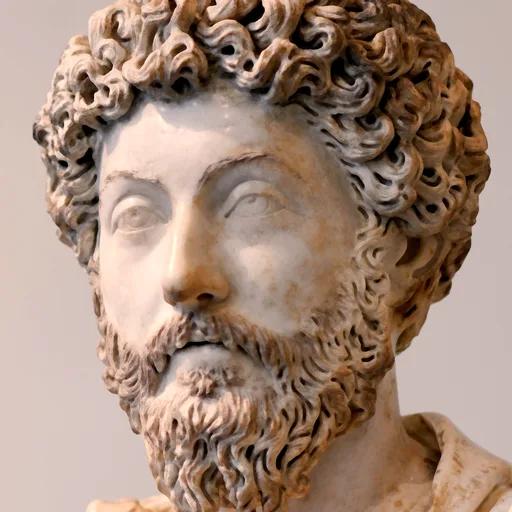
Politicians / ancient_roman

Hadrian
Italy 0076-01-22 ~ 0138-07-09
14th Roman emperor (r. 117-138). Hispania-born, he traded Trajan's expansion for fixed borders — Hadrian's Wall — and rebuilt the Pantheon. One of Gibbon's Five Good Emperors, a tyrant in Jewish memory.
What You Can Learn
Hadrian's first lesson is that withdrawal is a strategic choice. Inheriting Trajan's overstretched empire, he abandoned Mesopotamia and concentrated on defensible borders — a precedent for any CEO inheriting an over-expanded portfolio. His second lesson is presence: he spent half his reign inspecting frontiers in person, a counter to dashboard governance. The cautionary side: the early purge of four senators and the Bar Kokhba bloodshed show how easily a confident leader confuses decisiveness with brutality.
Words That Resonate
He who commands thirty legions is wiser than I am.
Triginta legionibus instructior is qui imperat, doctior omnibus est.
A crowd of doctors has killed an emperor.
Turba se medicorum regem interfecit.
Little soul, wandering and pale, guest and companion of my body, into what places will you now depart — bloodless, rigid, naked — never again to share your familiar jests?
Animula vagula blandula, hospes comesque corporis, quae nunc abibis in loca pallidula rigida nudula, nec ut soles dabis iocos.
Name ten men fit to rule Rome — no, nine; I already know one of them, Servianus.
Sufficit decem nominare; immo novem, unum enim novi, Servianum.
This is the city of Hadrian, and not of Theseus.
Hic Athenarum, Thesei urbs antiqua; haec autem Hadriani urbs, non Thesei.
Life & Legacy
Publius Aelius Hadrianus was born on 24 January 76 in Italica, Hispania Baetica, into a senatorial family. Orphaned at ten, he was raised by his cousin Trajan. A teenage passion for Greek culture earned him the nickname Graeculus, 'little Greek', placing him at odds with the Italian elite.
Governor of Syria in 117, he succeeded Trajan that August on a contested deathbed adoption — Dio repeats his father's suspicion that the empress Plotina forged it. Within weeks four consulars were executed for an alleged plot, and Hadrian had to swear never to execute a senator without trial. The breach with the Senate proved permanent.
The core of his reign was strategic retrenchment. He abandoned Trajan's conquests in Mesopotamia, made peace with Parthia and invested in defensible frontiers. The 120-km stone wall across northern Britannia became its iconic monument, paired with the Limes Germanicus on the Rhine-Danube. From 121 he spent four years inspecting the west and from 128 toured Africa, Greece and Egypt, sleeping in legionary barracks and extending citizenship to provincials. The Edictum Perpetuum harmonised praetorian edicts into stable civil law, and he rebuilt the Pantheon and completed the Temple of Olympian Zeus in Athens.
From 130 the reign darkened. His companion Antinous drowned in the Nile, and the grieving emperor founded a cult of the deified youth. The same year he refounded Jerusalem as Aelia Capitolina and in 132 banned circumcision; both sparked the Bar Kokhba revolt. Its suppression in 135 cost, by Dio's figure, some 580,000 Jewish lives, and so battered Rome that Hadrian could not open his report with the usual 'I and the legions are in good health.'
He died on 10 July 138 at Baiae, aged 62, reportedly crying that 'a crowd of doctors has killed an emperor.' The Senate granted him divinity only under pressure. The Pantheon and the wall against the purges and Bar Kokhba bloodshed leave him two emperors at once.
Expert Perspective
Within the Roman imperial line Hadrian sits between the conquering Trajan and the philosophical Marcus Aurelius as the archetypal administrator-builder emperor. Gibbon enrolled him among the Five Good Emperors, yet to ancient senators and Jewish memory he remains a tyrant for the purges and Bar Kokhba bloodshed.