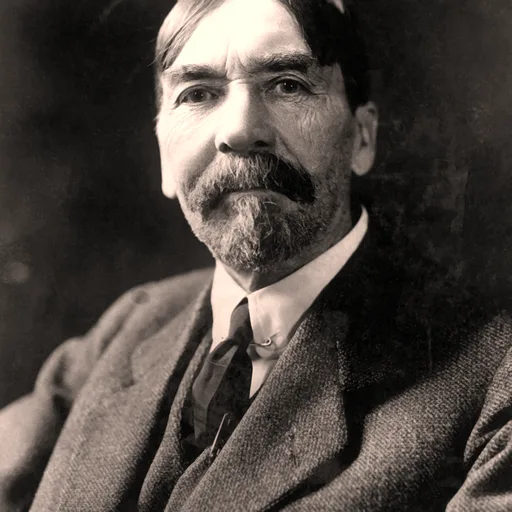
Economists / classical

Thomas Robert Malthus
United Kingdom 1766-02-13 ~ 1834-12-23
Born 1766, Surrey. Clergyman-economist whose Essay on Population argued geometric population growth outpaces arithmetic food growth. Directly inspired Darwin's natural selection. Anticipated Keynes on effective demand.
What You Can Learn
Malthus's population-resource tension gains renewed significance amid environmental crisis and energy constraints. Earth's finite ecosystems underpin ESG frameworks. His logic informs long-term valuation of agricultural technology, water management, and alternative energy. Understanding demographic-growth relationships remains essential for emerging market potential and developed-world aging risks. With eight billion people, resource finitude versus technological breakthrough is Malthus's problem restated.
Words That Resonate
Life & Legacy
Thomas Robert Malthus shaped economics, demography, and biology through his insight into population-resource tension. His arguments provoked controversy from publication and remain referenced in environmental debates today.
Born 1766 into a prosperous Surrey family. His father knew Rousseau and Hume. Malthus studied mathematics and classics at Jesus College, Cambridge, taking Anglican orders in 1788.
His 1798 Essay on the Principle of Population countered the optimism of Condorcet and Godwin. Population grows geometrically when unchecked; food grows arithmetically. The gap is corrected by positive checks (famine, disease, war) or preventive checks (delayed marriage, abstinence).
Darwin and Wallace both stated that Malthus's population pressure gave them the key to natural selection. One of biology's greatest breakthroughs was directly triggered by an economist's population theory.
The first edition drew criticism for weak evidence. The 1803 second edition expanded fivefold with European and Asian population data. He revised through six editions by 1826.
In economics, his prolonged debate with Ricardo shaped classical political economy. They disagreed on rent, value, and accumulation despite deep friendship. Crucially, Malthus argued for general glut from insufficient effective demand, rejecting Say's Law. Keynes later identified him as precursor.
In 1805 he became professor at Haileybury, Britain's first economics chair. His 1820 Principles developed rent and demand theory further. He died at Bath in 1834, aged sixty-eight.
Expert Perspective
Malthus introduced demographic dimensions to classical economics. His debate with Ricardo shaped comparative advantage and rent theory. His demand-side glut argument made him Keynes's precursor. His resource-constraint thesis directly ancestral to environmental and ecological economics.