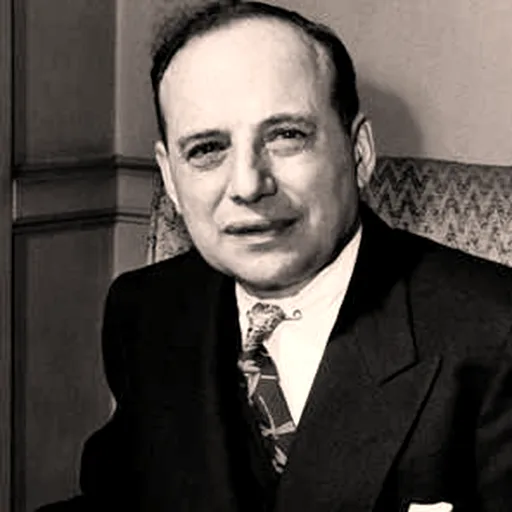
Investors / Trader

Jesse Lauriston Livermore
United States 1877-07-26 ~ 1940-11-28
Legendary American trader, 19th-20th century
The 'Boy Plunger' who made ~$100 million shorting the crash
The value of 'sitting tight' resonates most in an era of impulse trading
The "Boy Plunger" born in 1877 Massachusetts, who entered a Boston bucket shop at 14 and cycled through fortunes and bankruptcies on price action alone. A foundational figure in technical analysis.
What You Can Learn
Livermore's stress on sitting tight grows more relevant as apps let anyone trade in seconds. The urge to sell the moment a position turns red is the "desire for constant action" he flagged a century ago. His life warns against leverage: four wipeouts via margin make a case for starting small. When social media fills feeds with spectacular gains and temptation to lever up rises, recalling those bankruptcies carries weight. Knowing principles and sustaining discipline to follow them are different skills.
Words That Resonate
I know from experience that nobody can give me a tip or a series of tips that will make more money for me than my own judgment.
The market does not beat them. They beat themselves, because though they have brains they cannot sit tight.
The desire for constant action irrespective of underlying conditions is responsible for many losses in Wall Street.
There is nothing new in Wall Street. There can't be because speculation is as old as the hills.
A man must believe in himself and his judgment if he expects to make a living at this game.
It was never my thinking that made the big money for me. It always was my sitting.
Markets are never wrong -- opinions often are.
Life & Legacy
Jesse Livermore's life is an indispensable case study for anyone asking what it means to win in the markets. He embodied the insight that the market's essence is the interplay of price and human psychology, and his four bankruptcies and comebacks remain unmatched in both brilliance and cautionary power.
Born to a poor Massachusetts farming family, Livermore showed a gift for numbers early. At 14 he posted stock quotes at a Boston bucket shop, a venue for betting on price moves without owning shares. From stakes of a few dollars he earned the nickname Boy Plunger before reaching 20, was banned from every local shop, and moved to Wall Street.
New York humbled him. The split-second instincts that worked in bucket shops failed in real markets, where execution lag and liquidity shifted the game. He lost everything repeatedly. From those defeats he extracted two lessons: never fight the major trend, and separate emotion from decisions. These became the core philosophy of "Larry Livingston" in Lefevre's Reminiscences of a Stock Operator (1923).
In the 1907 Panic, J.P. Morgan reportedly asked him to close his shorts. In the 1929 crash he built massive short positions in advance and reportedly cleared around $100 million, roughly $2 billion today. Both episodes crowned his method of reading overheating through price and volume anomalies.
His methodology is the prototype of modern technical analysis. He focused on price, volume, and participant psychology rather than financials. He systematized pivot points and practiced pyramiding: adding to positions in stages as a trend confirms.
Yet market mastery did not bring happiness. He endured four bankruptcies, multiple divorces, and family collapse. Depression overtook him, and in 1940 he took his own life in a Manhattan hotel at 63. His note reportedly read: "My life has been a failure." The gulf between knowing risk principles and executing them emotionally is the enduring lesson of his story.
Expert Perspective
Livermore is the archetypal pure speculator. Where Graham and Buffett anchor on intrinsic value, he relied on price and volume, making him an ancestor of momentum traders. His pivot-point and pyramiding techniques survive in textbooks; his bankruptcies remain the definitive cautionary tale.