Entrepreneurs / Retail

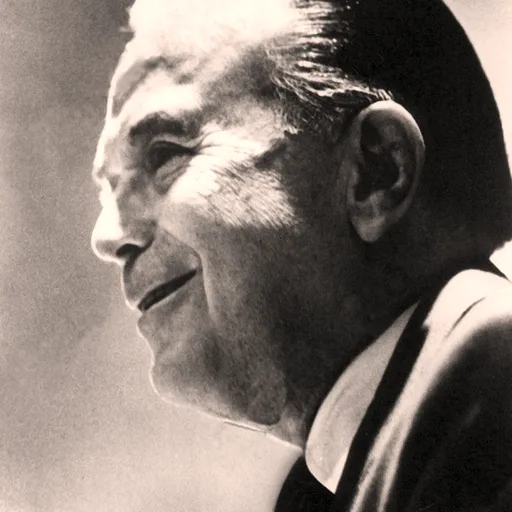
Howard Schultz
United States 1953-07-19
20th-century American food-service chain executive
Expanded Starbucks as a 'third place' to more than 80 countries
Selling not coffee but 'experience' is a textbook in experiential business design
Born in 1953 in Brooklyn, New York, Howard Schultz grew up in public housing and attended college on a football scholarship. He joined Starbucks in 1982 and, inspired by Italian espresso-bar culture, redefined the coffee shop as a 'third place.' Serving as CEO three times, he built a global chain spanning more than 80 countries.
What You Can Learn
The lessons entrepreneurs can draw from Schultz's business-building are especially valuable regarding experiential business design and organizational culture. First, 'packaging the experience': he added value not to the coffee itself but to the space and time of drinking it. This concept is now applied in co-working spaces and experiential retail. Second, extending benefits to part-time employees was a strategic decision linking workforce retention to customer-experience quality. In today's tight labor markets, the recognition that improving nontraditional workers' conditions directly enhances competitiveness is gaining ground. Third, his methodology of cross-cultural market adaptation: Starbucks's success in China was driven by a cultural translation that repositioned coffee as a 'fashionable lifestyle symbol.' For any company going global, the ability to translate not the product itself but 'the cultural meaning the product carries' is a decisive factor.
Words That Resonate
Success is not sustainable if it is defined by how big you become or by how much money you accumulate. Success is only meaningful and enjoyable if it feels like your own.
In life, you can blame a lot of people and you can wallow in self-pity, or you can pick yourself up and say, 'Listen, I have to be responsible for myself.'
The currency of leadership is transparency.
Life & Legacy
Howard Schultz is the entrepreneur who loaded the commodity of coffee with the added value of 'experience' and elevated it into a globally scalable business model. His journey from Brooklyn public housing to the helm of Starbucks is often told as a contemporary American Dream, yet its essence lies in the discovery and commercialization of 'the value of place.'
Born in 1953 into a truck-driver's family in a public housing project in Brooklyn, New York, Schultz grew up in financial hardship. A formative experience was his father's workplace injury when the family had no health insurance — a memory that later drove his unusual policy of providing healthcare benefits to part-time Starbucks employees. He attended Northern Michigan University on a football scholarship and began his sales career at Xerox after graduation.
In 1982, while selling Swedish housewares, he visited a small Seattle coffee-bean roaster called Starbucks and was captivated by its atmosphere and coffee quality. He joined as director of marketing that same year. A 1983 trip to Milan proved transformative: witnessing corner espresso bars functioning as social hubs, Schultz reinterpreted the insight as 'coffee is not a beverage — it is a spatial experience connecting people.' He envisioned transforming Starbucks from a coffee-bean retailer into a provider of space-centered experience.
The original Starbucks founders, however, did not share this vision. Schultz left in 1985 and started his own espresso bar, Il Giornale. When the founders decided to sell in 1987, he merged Il Giornale with Starbucks and took control. The company went public in 1992 at a market capitalization of $271 million.
The heart of Schultz's model is the concept of the 'third place.' If home is the first place and the workplace the second, Starbucks is the third — a space for relaxation and connection. Standardized store design, barista-customized beverages, and free Wi-Fi were the tools for implementing this concept in physical form.
After stepping down as CEO in 2000, quality erosion from rapid store expansion became a concern. Schultz returned as CEO during the 2008 financial crisis, executing painful reforms including hundreds of store closures and leadership changes. He also drove aggressive expansion into China, culturally translating coffee as a 'fashionable lifestyle symbol' in a tea-drinking nation — a case study in cross-cultural market adaptation. The adoption of Fair Trade certified coffee and the CAFE Practices ethical-sourcing standards are also achievements of the Schultz era.
After stepping down as CEO in 2017, Schultz returned for a third stint in 2022 before handing the role to Laxman Narasimhan in 2023. Tensions over employee unionization have exposed a gap between Schultz's 'employees are family' ethos and on-the-ground labor conditions.
An author of four business books, Schultz has also considered a presidential run but never entered the race. The core of the story — a Brooklyn kid building the world's largest coffee chain — lies in the imaginative power to find economic value in place and experience and design it into a scalable business model.
Expert Perspective
Among entrepreneurial archetypes, Schultz is classified as an 'experience-design chain operator.' Where Ray Kroc standardized 'efficiency' at McDonald's, Schultz standardized 'spatial experience.' Both employed franchise-like expansion models, but the axis of differentiation is fundamentally different. Schultz's distinctiveness lies in loading cultural added value onto a commodity (coffee) and achieving premium pricing — a methodology with universal applicability to branding in premium food and everyday consumer goods.