Investors / Activist

Carl Icahn
United States 1936-02-16
20th-century American pioneer of activist investing
Seized TWA Airlines via hostile takeover and pushed activist investing into the mainstream
The shareholder's right to speak up can be a driving force for corporate-value enhancement
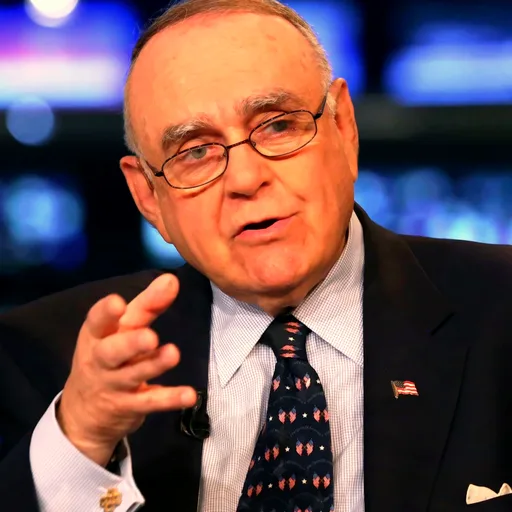
Born in 1936 in Queens, New York, Carl Icahn earned the epithet 'corporate raider' in the 1980s and pioneered the activist-investing strategy that pushed it into the hedge-fund mainstream. He made his name with the hostile takeover of TWA Airlines and has intervened as a shareholder in the management of dozens of companies including Texaco, Viacom, and Apple. Through his holding company Icahn Enterprises, he is known for a combative investment style focused on maximizing shareholder value.
What You Can Learn
Icahn's investment philosophy demonstrates to modern individual investors the significance of 'speaking up' as a shareholder. As equity-investing populations grow, many retail investors remain passive — neither attending shareholder meetings nor exercising proxy votes. Icahn's career shows that shareholders possess the right to engage with management and that exercising it can enhance corporate value. Individual investors cannot single-handedly move giant corporations, but they can signal their views through proxy voting and support for shareholder proposals. Furthermore, as stewardship codes and corporate-governance codes take hold, activist-style shareholder engagement is increasingly supported by institutional frameworks. Even for those who hold equities indirectly through index funds or retirement plans, taking an interest in how asset managers exercise voting rights improves the quality of long-term wealth building. One need not emulate Icahn's combativeness, but the posture of the 'active shareholder' is worth adopting.
Words That Resonate
In life and business, there are two cardinal sins: The first is to act precipitously without thought, and the second is to not act at all.
Some people get rich studying artificial intelligence. Me, I make money studying natural stupidity.
I make money by trying to buy stocks cheaply. If that makes me a raider, so be it.
Life & Legacy
Carl Icahn is the figure who elevated activist investing — acquiring large blocks of stock and pressuring management for change — into a mainstream Wall Street strategy. Shareholders had challenged management before, but no one had practiced it as systematically, aggressively, and profitably as Icahn.
Born in 1936 in Queens, New York, to a middle-class family — his father a lawyer of modest income, his mother a schoolteacher — Icahn studied philosophy at Princeton University, sharpening his skills in logical reasoning and debate. These abilities would later prove invaluable in negotiations with corporate boards and in composing open letters to management. After graduation he enrolled at New York University's medical school but dropped out, preferring finance to medicine. He began his career as a Wall Street broker and in 1968 founded Icahn & Company. Initially focused on options trading and risk arbitrage, he shifted in the late 1970s to acquiring large equity stakes and demanding operational improvements for larger gains.
The 1985 hostile takeover of TWA Airlines was the inflection point that made Icahn a household name. He overcame management resistance to seize control and profited through asset sales. The approach earned the label 'corporate raider,' becoming emblematic of 1980s Wall Street. Critics viewed Icahn as a predator dismantling companies for short-term gain; supporters hailed him as a market disciplinarian bringing accountability to complacent management.
The core of Icahn's investment philosophy is identifying the gap between a company's intrinsic value and its market price, then acting as the catalyst to close that gap. Where traditional value investors buy undervalued stocks and wait, Icahn buys undervalued stocks and then moves. He demands specific actions to unlock shareholder value: management changes, spin-offs, asset sales, share buybacks, or mergers. This active approach is what distinguishes him from conventional value investing.
From a risk-management perspective, Icahn favors concentration. He takes large positions in a small number of companies and manages risk by serving as the catalyst for change himself — a distinctive logic of risk control through the exercise of influence rather than through diversification. This strategy naturally entails failures: TWA ultimately went bankrupt, raising questions about his operational abilities. Not every campaign succeeds; his public feud with Bill Ackman over the Herbalife short made markets roar. These failures and controversies are integral to a multifaceted investing life.
Icahn remained active into the 2000s and beyond, launching activist campaigns at Yahoo, Dell, Herbalife, and Apple among others. His 2013 push for a massive share buyback at Apple is thought to have had a tangible effect. Since 2011 he has managed only his own capital, no longer accepting outside investors.
Icahn's presence has continually provoked debate about the balance between shareholder rights and managerial discretion in U.S. capital markets. As activist funds become more common in Japan as well, the question of how constructive tension between shareholders and managers can enhance corporate value grows ever more pressing. His legacy remains contested, but few dispute that he proved shareholders need not be mere bystanders.
Expert Perspective
In the investor landscape, Icahn occupies a unique position as the founder of the activist-investing archetype. Where Buffett and Graham buy stocks and passively wait for the market to recognize intrinsic value, Icahn serves as the catalyst that accelerates value realization. This 'active value investing' was later developed by Daniel Loeb and Bill Ackman. The blurring of the boundary between hostile takeovers and shareholder activism remains controversial, but Icahn's contribution to the evolution of corporate governance cannot be ignored.