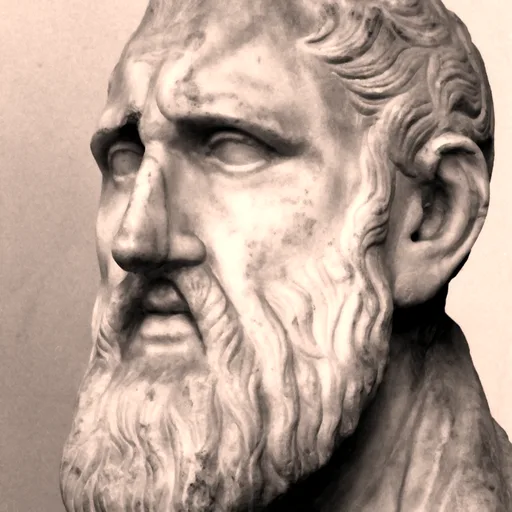
Philosophers / Modern Western

John Locke
United Kingdom 1632-09-08 ~ 1704-11-08
17th-century English philosopher and father of liberalism
Built the foundations of modern democracy with his tabula rasa epistemology and natural-rights social contract
The habit of questioning assumptions and verifying through experience is the foundation of sound judgment
Born in 1632 in England, John Locke is known as the 'father of British empiricism' and the 'father of liberalism.' His tabula rasa epistemology — that the mind is a blank slate at birth — and his social-contract theory defending life, liberty, and property as inviolable natural rights formed the intellectual skeleton of the American Declaration of Independence and the French Declaration of the Rights of Man, laying the foundations of modern democracy and constitutional government.
What You Can Learn
Locke's thought provides multiple practical perspectives for modern professionals and investors. First, the concept of tabula rasa can be applied as the thinking habit of 'questioning assumptions.' Rather than accepting market conventions or industry orthodoxies as innately true, verifying them through one's own observation and experience becomes the foundation of judgment in an age of information overload. Second, his labor theory of property is the conceptual origin of intellectual-property rights, founder equity in startups, and the question of value attribution in the creator economy. The logic that mixing one's labor with something makes it one's property connects directly to the question of how individuals protect the value they produce. Third, his social-contract principle — that government legitimacy rests on the consent of the governed — translates to corporate governance and organizational management. The recognition that organizations cannot sustain themselves without the trust of employees and stakeholders is also a foundation of modern governance theory.
Words That Resonate
The end of law is not to abolish or restrain, but to preserve and enlarge freedom.
Being all equal and independent, no one ought to harm another in his life, health, liberty, or possessions.
The labour of his body and the work of his hands, we may say, are properly his. Whatsoever then he removes out of the state that nature hath provided ... he hath mixed his labour with, and joined to it something that is his own, and thereby makes it his property.
New opinions are always suspected, and usually opposed, without any other reason but because they are not already common.
Let us then suppose the mind to be, as we say, white paper, void of all characters, without any ideas; how comes it to be furnished? ... To this I answer, in one word, from experience.
Life & Legacy
John Locke carved the channels of modern thought in two domains: epistemology and political philosophy. Born in 1632 into a legal family in Somerset, western England, he spent his youth amid the English Civil War and grew up sensing the tension between politics and faith under the influence of a father who served in the Parliamentary cause.
At fourteen Locke entered the elite Westminster School in London, then proceeded to Christ Church, Oxford, where he grew dissatisfied with the dominant Scholastic philosophy. Contact at the university with natural philosophers such as Robert Boyle, whose experimental methods inspired him, led Locke into medicine as well and instilled a deep commitment to observation and experience. These empiricist seeds would later bear fruit in his major philosophical work.
In 1666 a fateful event transformed Locke's life: his meeting with the Earl of Shaftesbury. Serving as the earl's personal physician and political adviser, Locke was drawn into the vortex of court politics. As Shaftesbury championed constitutionalism against royal prerogative, Locke began constructing a political theory in earnest. When Shaftesbury fell from power, Locke himself was imperiled, and from 1683 he was forced into exile in the Netherlands.
This period of exile proved the crucible of his thought. In An Essay Concerning Human Understanding he rejected the innate ideas asserted by Descartes and others, arguing that the mind at birth is a tabula rasa — a blank slate. All knowledge arises from sensory experience and reflection. By grounding knowledge in individual experience rather than authority or tradition, Locke mounted a fundamental challenge to established intellectual authority. This empiricist method was inherited by Berkeley and Hume, forming the tradition of British empiricism. His argument that personal identity resides in continuity of consciousness is also significant as the starting point of the modern concept of the self, exerting lasting influence on subsequent philosophy of mind.
Returning to England after the Glorious Revolution of 1688, Locke published his major works in rapid succession. In the Two Treatises of Government he identified life, liberty, and property as natural rights possessed from birth, and developed a social-contract theory holding that the legitimacy of government rests on the consent of the governed. His assertion that the people have a right to resist a government that betrays this trust provided a theoretical counterweight to absolute monarchy. This thought was directly referenced by Thomas Jefferson in drafting the American Declaration of Independence and is deeply reflected in the French Declaration of the Rights of Man.
In A Letter Concerning Toleration, published the same year, Locke argued that faith belongs to individual conscience and cannot be coerced by the state, articulating the principle of separation of church and state. In an era riven by conflicts between church and state, this was a prescription for the coexistence of a pluralistic society.
In his later years Locke served on the Board of Trade and Plantations while living at Oates, the Masham estate. He died in 1704 at seventy-two. Throughout his life he was simultaneously philosopher, physician, political adviser, and public servant. His career — linking the theory of the study to the practice of politics — was itself an embodiment of his empiricism. The two axes of his work — the primacy of experience in epistemology and the defense of individual rights in political philosophy — form the backbone of Enlightenment thought and profoundly influenced Voltaire, Rousseau, and Montesquieu. The framework Locke articulated — protecting individual freedom and rights through institutional design — has endured as the basic architecture of the modern state for more than three centuries.
Expert Perspective
In the history of Western philosophy, Locke is positioned as the figure who provided the systematic empiricist response to Cartesian rationalism. In epistemology, by rejecting innate ideas and proposing the tabula rasa, he shifted the source of knowledge from reason to experience. In political philosophy, where Hobbes's social contract culminated in absolute sovereignty, Locke argued for the inviolability of natural rights and the right of resistance, laying the foundation of liberal constitutionalism. Through this dual contribution he set the direction of Enlightenment intellectual currents and stands as a pivotal figure of early modern philosophy.