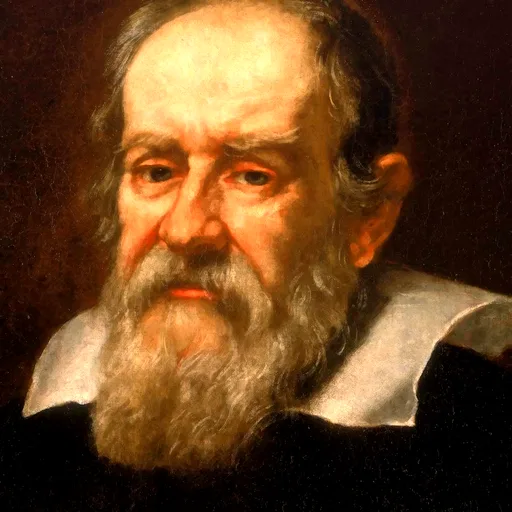
Scientists / Mathematics

Archimedes
Greece
Ancient Greek mathematician, physicist, and engineer of the third century BC
Discovered the principle of buoyancy, approximated pi, and formulated the law of the lever
Considered the greatest mathematician of antiquity, his methods anticipated integral calculus
Ancient Greek mathematician, physicist, and engineer born c. 287 BC in Syracuse. He discovered the principle of buoyancy, approximated pi, and invented ingenious war machines.
What You Can Learn
Archimedes' lever principle, amplifying force through mechanical advantage, is a metaphor for leverage in business: finding the right fulcrum to maximize impact with limited resources. His method of exhaustion shows that iterative approximation can solve problems that exact solutions cannot yet reach, a principle central to computational methods and machine learning. The Sand Reckoner, his system for expressing enormous numbers, demonstrates how inventing the right notation can open entirely new domains of thought, a lesson for data architecture.
Words That Resonate
Life & Legacy
Archimedes was the supreme mathematician and engineer of the ancient world. His work on buoyancy, the lever, and the calculation of areas and volumes anticipated integral calculus by nearly two millennia.
Born around 287 BC in Syracuse, Sicily, he likely studied in Alexandria before returning home. His life is known mainly through later accounts, some legendary.
His principle of buoyancy states that a body immersed in fluid experiences an upward force equal to the weight of the displaced fluid. The story that he discovered this in the bath and ran through the streets shouting "Eureka!" may be apocryphal, but the principle itself transformed physics.
In mathematics he used the method of exhaustion, a precursor to calculus, to determine areas of parabolic segments and approximate pi to between 3 + 10/71 and 3 + 1/7. He calculated the surface area and volume of the sphere.
As an engineer he devised war machines that defended Syracuse against the Roman siege, including cranes that capsized ships. He formulated the law of the lever: "Give me a place to stand, and I will move the Earth."
The Sand Reckoner, addressed to King Gelon, devised a number system capable of expressing astronomically large quantities, demonstrating both his mathematical creativity and his talent for communication.
Archimedes was killed during the Roman capture of Syracuse in 212 BC, reportedly while absorbed in a geometric diagram and telling the soldier, "Do not disturb my circles." His tomb bore the figure of a sphere inscribed in a cylinder, the result he considered his finest.
Expert Perspective
Among scientists, Archimedes is the greatest mathematician and physicist of antiquity. His method of exhaustion foreshadowed integral calculus. The principle of buoyancy and the law of the lever founded statics and hydrostatics. His combination of abstract mathematics and practical engineering is a model that reappeared in the Scientific Revolution.