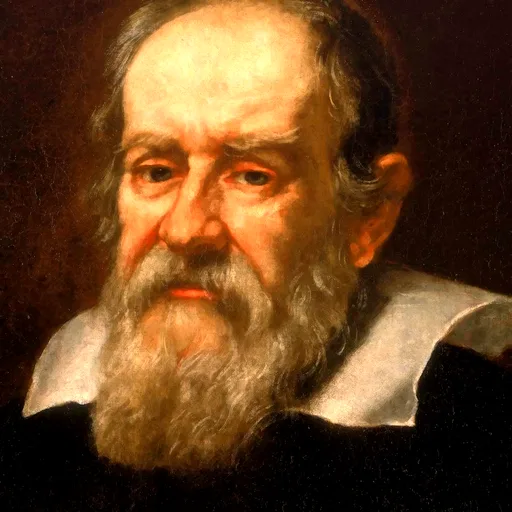
Scientists / Mathematics

Leonhard Euler
Switzerland 1707-04-15 ~ 1783-09-18
Eighteenth-century Swiss mathematician, the most prolific in history
Made foundational contributions across virtually every branch of mathematics and physics
Continued producing groundbreaking work even after losing his sight entirely
Swiss mathematician born in 1707, the most prolific in history. He made foundational contributions to analysis, number theory, graph theory, mechanics, and optics, and introduced much of modern mathematical notation.
What You Can Learn
Euler's astonishing productivity despite blindness demonstrates that constraints need not limit output when mental discipline is strong. His systematic notation shows the power of clear communication tools in any field. And his ability to work across mathematics, physics, and engineering models the cross-functional versatility prized in modern organizations. His ability to produce foundational work across multiple domains at once is a model for portfolio thinking: diversification of intellectual effort can compound returns over a career.
Words That Resonate
Read Euler, read Euler, he is the master of us all.
Madam, I have come from a country where people are hanged if they talk.
For since the fabric of the universe is most perfect and the work of a most wise Creator, nothing at all takes place in the universe in which some rule of maximum or minimum does not appear.
Life & Legacy
Leonhard Euler was the most productive mathematician who ever lived. His output, spanning some nine hundred papers and books, touched virtually every branch of mathematics and theoretical physics known in his day and created several that were not.
Born in 1707 in Basel, Switzerland, he studied under Johann Bernoulli and received his master's at fifteen. He spent most of his career at the academies of Saint Petersburg and Berlin.
In analysis he systematized the use of functions, introduced the notation e, i, and the sigma symbol for summation, and proved the famous identity e^(i*pi) + 1 = 0, linking five fundamental constants in a single equation. He laid the groundwork for differential equations, calculus of variations, and complex analysis.
In number theory he proved many results later extended by Gauss, including Fermat's little theorem. He founded graph theory with his solution of the Konigsberg bridge problem. In mechanics he formulated the equations of rigid-body dynamics. In optics and fluid dynamics he derived foundational equations still in use.
Euler lost sight in one eye in 1738 and became completely blind by 1771. His productivity scarcely slowed: he dictated papers to assistants, and roughly half his total output was produced after total blindness.
Laplace is said to have advised: "Read Euler, read Euler, he is the master of us all." Euler died in Saint Petersburg in 1783 during a conversation about the newly discovered planet Uranus.
Euler's contributions to notation alone shaped the future of mathematics. He standardized the use of f(x) for functions, e for the base of natural logarithms, and i for the imaginary unit. His identity linking e, pi, i, 1, and 0 is often called the most beautiful equation in mathematics. The sheer volume of his output, filling over seventy volumes in the Opera Omnia, remains unmatched.
Expert Perspective
Among scientists, Euler is the most prolific mathematician in history. He shaped analysis, number theory, graph theory, mechanics, and optics, and created much of the notation still used today. His solution of the Konigsberg bridge problem founded graph theory, and his identity linking e, i, and pi is considered the most beautiful equation in mathematics.