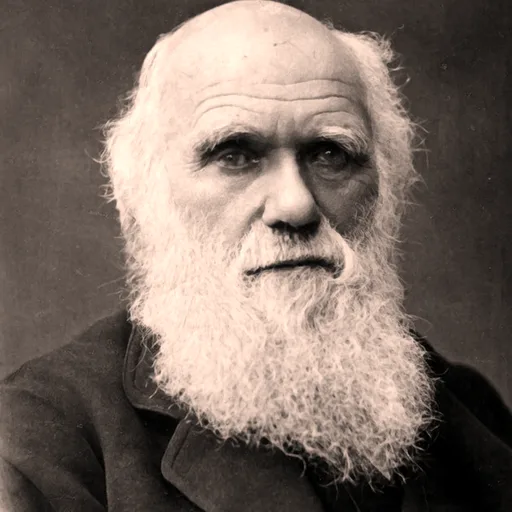
Scientists / Biology & Medicine

Minakata Kumagusu
Japan 1867-05-18 ~ 1941-12-29
Late nineteenth- and early twentieth-century Japanese naturalist
Achieved international recognition for slime-mold research and discovered over seventy new species
Pioneered ecological conservation by campaigning to save sacred shrine forests decades before modern environmentalism
Japanese naturalist born in 1867 in Wakayama, known worldwide for his research on slime molds. He was also a pioneering ecologist who fought to preserve shrine forests, anticipating modern environmentalism.
What You Can Learn
Minakata's fight to preserve shrine forests is an early model of corporate environmental stewardship and stakeholder activism. His convergence-point theory anticipates modern interdisciplinary approaches that seek innovation at the intersection of fields. And his extraordinary productivity outside institutional academia shows that groundbreaking research does not require a formal affiliation. His insistence on hands-on fieldwork, rather than relying solely on laboratory specimens, anticipates the modern emphasis on primary research and first-party data collection.
Words That Resonate
The present is a mirror of eternity.
現在の事は永遠の鏡なり。
At the convergence point, various causes intersect and produce diverse results.
萃点(すいてん)に於て諸因が交差し、種々の結果を生ず。
Nothing in the world is more precious than a sacred forest.
世界に神林ほど尊きものなし。
Life & Legacy
Minakata Kumagusu was one of the most remarkable polymath-naturalists of modern Japan. His research on slime molds won international recognition, and his campaign to protect shrine forests anticipated the environmental movement by decades.
Born in 1867 in Wakayama, he showed extraordinary memory and curiosity from childhood. He briefly attended the predecessor of Tokyo University but dropped out, dissatisfied with formal education. From 1886 he spent over a decade abroad, studying in the United States and at the British Museum in London, where he published papers on mycology and folklore in Nature and Notes and Queries.
Returning to Wakayama in 1900, he devoted himself to fieldwork, collecting and classifying fungi, algae, mosses, and especially slime molds (Myxomycetes). He discovered over seventy new species, including Minakatella longifila, named in his honor. His collections and detailed illustrations earned respect from European and American scientists.
Minakata was also a pioneer of ecological thinking. When the Meiji government's shrine-consolidation policy threatened to destroy sacred groves, he launched a passionate public campaign to save them, arguing that these forests were irreplaceable ecosystems. His activism succeeded in preserving several groves and is now seen as an early case of conservation biology.
His intellectual framework, which he called the 'suiten' (convergence point) theory, posited that phenomena from different domains converge and interact at specific points, an early form of systems thinking.
He never held an academic position and worked in relative isolation, but Emperor Hirohito visited him in 1929, acknowledging his scientific stature. He died in 1941 in Wakayama.
Expert Perspective
Among scientists, Minakata represents Japan's unique contribution to natural history. His slime-mold research achieved international standing, and his ecological activism predated the modern environmental movement. Working independently, he embodied an alternative model of scientific production that valued fieldwork, breadth, and direct engagement with nature.