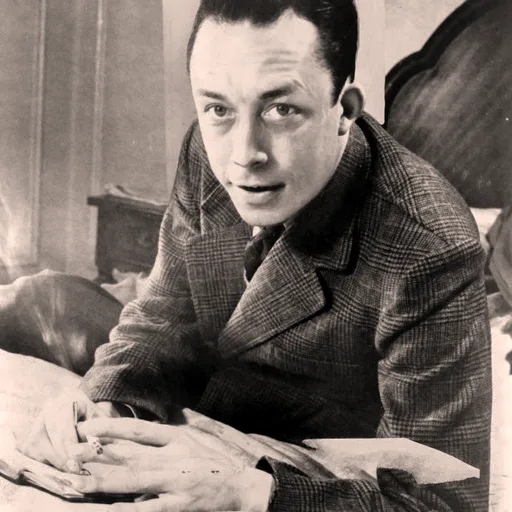
Writers & Literary Figures / Writers

Anton Chekhov
Russia
Anton Chekhov (1860-1904) was a Russian playwright and short story master whose works - 'The Cherry Orchard,' 'Three Sisters,' 'Uncle Vanya,' and hundreds of stories - revolutionized both drama and fiction by rejecting artificial plot in favor of the texture of ordinary life. A practicing physician, he brought clinical precision to the observation of human behavior.
What You Can Learn
Chekhov's famous principle - 'if there's a gun on the wall in act one, it must fire by act three' - is the foundation of lean narrative design, applicable to product development, presentation structure, and communication strategy. Every element must serve a purpose; nothing should be included merely for decoration. His mastery of the 'slice of life' - finding profound meaning in everyday moments - anticipates modern content strategy's emphasis on authentic, relatable storytelling over manufactured drama. His dual career as physician and writer demonstrates that analytical rigor and creative expression enhance rather than diminish each other.
Words That Resonate
Medicine is my lawful wife and literature is my mistress.
If in the first act you have hung a pistol on the wall, then in the following one it should be fired.
Any idiot can face a crisis; it's this day-to-day living that wears you out.
Brevity is the sister of talent.
Don't tell me the moon is shining; show me the glint of light on broken glass.
If in the first act you have a gun hanging on the wall, then in the last act it must fire.
Knowledge is of no value unless you put it into practice.
Life & Legacy
Anton Pavlovich Chekhov (1860-1904) was born in Taganrog, southern Russia, to a former serf's family. He studied medicine at Moscow University while supporting his family by writing humorous sketches for newspapers - producing over 400 short pieces in his early twenties. He called medicine his 'lawful wife' and literature his 'mistress.'
Chekhov's stories evolved rapidly from comic sketches into works of extraordinary subtlety. 'The Lady with the Dog' (1899), 'Ward No. 6' (1892), 'The Steppe' (1888), and 'Gooseberries' (1898) capture the quiet desperation of provincial Russian life with compassion and precision. His technique - no heroes or villains, no neat resolutions, the revelation of character through small gestures rather than dramatic events - was revolutionary.
His four major plays - 'The Seagull' (1896), 'Uncle Vanya' (1899), 'Three Sisters' (1901), and 'The Cherry Orchard' (1904) - similarly rejected theatrical convention. Nothing 'happens' in the traditional sense; instead, people talk past each other, fail to connect, and endure the slow passage of time. The Moscow Art Theatre under Stanislavsky made these plays the foundation of modern realistic acting.
'The Cherry Orchard,' his masterpiece, depicts an aristocratic family losing their estate to a former serf's son - a symbolic representation of Russia's social transformation told with exquisite tonal ambiguity (Chekhov insisted it was a comedy; Stanislavsky staged it as tragedy).
Chekhov married the actress Olga Knipper in 1901, already suffering from the tuberculosis that had plagued him for years. He died at a German spa in 1904 at age 44. His last words, in German, were 'I'm dying' followed by a request for champagne.
His influence on short fiction (Carver, Munro, Trevor) and drama (Beckett, Pinter, Stoppard) is without parallel. He demonstrated that art need not dramatize life to represent it truthfully.
Expert Perspective
Chekhov transformed both the short story and dramatic form by demonstrating that art could represent life without falsifying it through artificial plot. His plays created modern theatrical realism and remain the most performed non-Anglophone dramatic works worldwide. His stories established the 'literary' short story as a form distinct from plotted entertainment - the tradition that runs through Mansfield, Carver, and Munro.