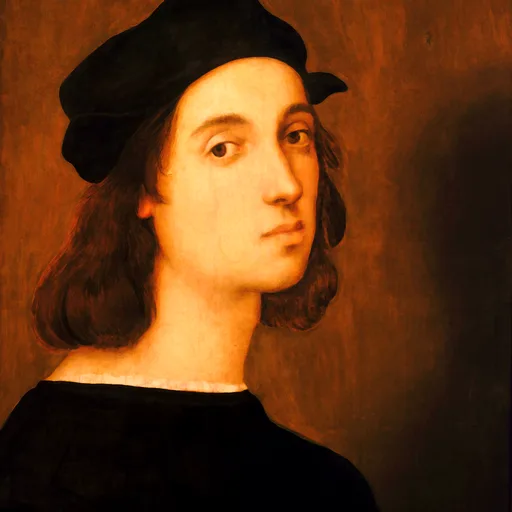
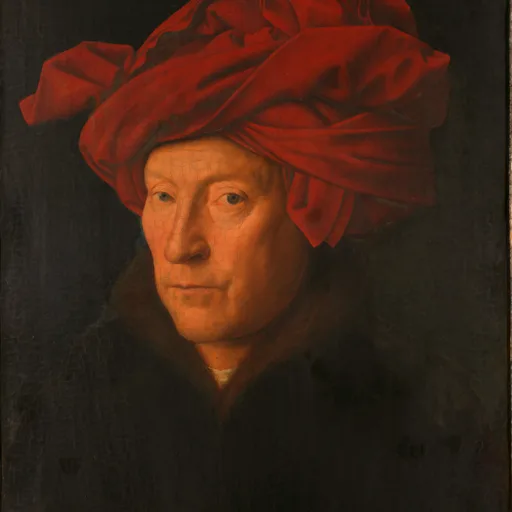
Artists / Baroque

Peter Paul Rubens
Belgium 1577-06-28 ~ 1640-05-30
Born 1577, Peter Paul Rubens led Flemish Baroque painting and served as a diplomat. His Antwerp Golden Studio produced 1,400+ works; he spoke seven languages and was knighted by both Philip IV and Charles I.
What You Can Learn
What creators take from Rubens is a method for scaling individual talent. He ran a workshop where he designed compositions, juniors executed the colour, and his final brush guaranteed quality — the logic now powering modern studios, agencies, and AI-augmented pipelines. He refused to be defined by one title, a model for portfolio careers built by stacking adjacent specialisms. His third lesson is continued study: classical texts and seven languages were the equipment he needed to negotiate as an equal with patrons.
Words That Resonate
I regard all the world as my country, and I believe that I should be very welcome everywhere.
My talent is such that no undertaking, however vast in size or diversified in subject, has ever surpassed my courage.
It is to be wished that the world were not deprived of those rare gifts which Heaven has bestowed.
I confess that I am by natural instinct better fitted to execute very large works than small curiosities.
Life & Legacy
Peter Paul Rubens stands at the apex of Flemish Baroque painting. His canvases visualised the Counter-Reformation by binding movement, colour, and sensuality into one language. He was equally a working diplomat — "the painter who is a friend of princes."
Born 1577 in Siegen to Calvinist refugees from Antwerp, Rubens lost his father early and grew up Catholic. After a humanist education in Latin, he apprenticed with Tobias Verhaecht, Adam van Noort, and Otto van Veen, becoming a master of the Guild of Saint Luke in 1598 — a learned painter, not a craftsman.
Eight years in Italy (1600–1608) fixed his style. In Venice he absorbed Titian, Veronese, and Tintoretto; in Mantua he served Vincenzo I Gonzaga; in Rome he studied antique sculpture, Michelangelo, and Raphael. The deepest shock came from Caravaggio's chiaroscuro and naturalism. He signed his Italian work "Pietro Paolo" and longed all his life to return.
Back in Antwerp from 1609 as court painter to Albert and Isabella, he built the "Golden Studio." He drew the design, assistants laid in the colour, and Rubens delivered the final touches. Anthony van Dyck and Jacob Jordaens both passed through this workshop, and the next generation of Flemish painting effectively flowed out of it. He also collaborated with Frans Snyders and Jan Brueghel the Elder.
What set him apart was refusing to separate painting from diplomacy. Between 1621 and 1630 he shuttled between Madrid and London for Spain–England peace, knighted by Philip IV in 1624 and Charles I in 1630. "Minerva Protects Pax from Mars" (1629–30) was offered to Charles I as a visual argument. In Madrid in 1628–29 he befriended Diego Velázquez; the two copied the royal Titians together.
His final decade he spent with his second wife Hélène Fourment and at Het Steen, where he turned to landscape. He died on 30 May 1640. Michael Jaffé's catalogue lists 1,403 works — an answer to one question: how large can the work of one painter become inside society and history?
Expert Perspective
Rubens sits atop the Western Baroque, fusing Italian Renaissance draughtsmanship, Venetian colour, and Caravaggio's chiaroscuro onto the Flemish tradition. Master of every genre, he made the studio a transnational supply operation — prototype of today's atelier and creative agency.