Scientists / Biology & Medicine
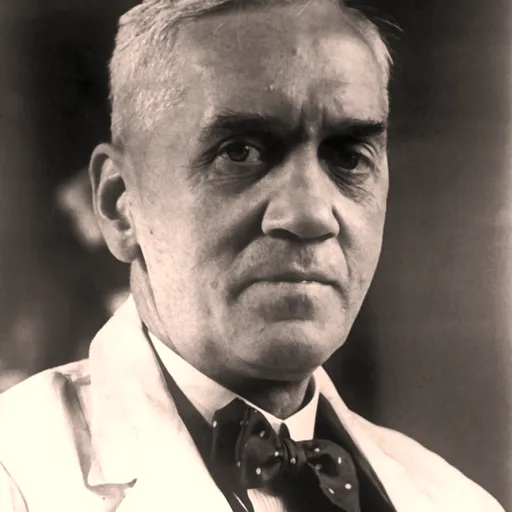
Alexander Fleming
United Kingdom 1881-08-06 ~ 1955-03-11
Twentieth-century Scottish bacteriologist
Discovered penicillin from a contaminated culture dish, opening the antibiotic era
The iconic example of serendipity in science, whose resistance warning proved prophetic
Scottish bacteriologist born in 1881 who discovered penicillin in 1928, opening the antibiotic age. Shared the 1945 Nobel Prize. His find is the iconic example of serendipity in science.
What You Can Learn
Fleming's story teaches that innovation often arises from unexpected observations; building a culture that captures anomalies is essential. His resistance warning illustrates how short-term convenience breeds long-term systemic risk, a pattern seen in environmental and cybersecurity domains. And the decade-long gap between discovery and practical drug underscores the valley-of-death problem between basic research and commercialization.
Words That Resonate
The unprepared mind cannot see the outstretched hand of opportunity.
One sometimes finds what one is not looking for.
The time may come when penicillin can be bought by anyone in the shops. Then there is the danger that the ignorant man may easily underdose himself and by exposing his microbes to non-lethal quantities of the drug make them resistant.
Life & Legacy
Alexander Fleming turned an accidental observation into one of medicine's most consequential discoveries. In 1928 he noticed that a mold contaminating a bacterial culture had killed the surrounding staphylococci. The substance he named penicillin became the world's first antibiotic, revolutionizing the treatment of infectious disease.
Born in 1881 on a farm in Ayrshire, Scotland, Fleming moved to London and studied at St Mary's Hospital Medical School, qualifying in 1906. He joined Almroth Wright's inoculation department, beginning a career in bacteriology.
World War I was formative. Serving in field hospitals in France, he observed that antiseptics often destroyed the body's own immune cells faster than they killed bacteria in deep wounds. This insight drove his search for a more effective antimicrobial agent. In 1922 he discovered lysozyme, an enzyme in tears and mucus that attacks bacteria, deepening his interest in natural defenses.
The penicillin discovery followed in 1928 when Fleming returned from holiday to find a contaminated petri dish. Where another bacteriologist might have discarded it, Fleming's prior experience with lysozyme made him alert to the phenomenon. He published his findings in 1929 but could not purify or mass-produce the substance.
Penicillin became a practical medicine only after Howard Florey and Ernst Chain at Oxford developed purification and production methods in the early 1940s. During World War II, penicillin dramatically reduced deaths from wound infections. All three shared the 1945 Nobel Prize in Physiology or Medicine.
In his Nobel lecture Fleming warned that misuse of antibiotics would breed resistant bacteria, a prophecy now realized in the global spread of antimicrobial resistance. He died in London in 1955.
Expert Perspective
Among scientists, Fleming is the emblematic figure of serendipity meeting the prepared mind. He extended Pasteur's bacteriological tradition into a wholly new therapeutic paradigm. The fact that Florey and Chain were essential to making penicillin practical highlights the division of labor between basic and applied research. His Nobel-lecture warning on resistance remains a landmark of scientific foresight.