Investors / Growth

Mark Mobius
United States 1936-08-17 ~ 2026-04-15
20th-century American pioneer of emerging-market investing
Led emerging-market equities at Franklin Templeton for over 30 years
The insistence on seeing things firsthand embodies the intellectual curiosity of seeking primary information
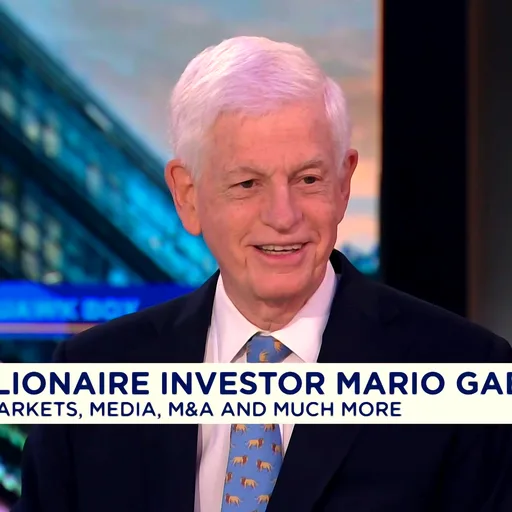
Born in 1936 as a German American, died April 2026. Mark Mobius led emerging-market equity investing at Franklin Templeton for over 30 years and earned the title 'father of emerging-market investing.' He visited more than 40 countries a year, insisting on on-the-ground research, and fundamentally rewrote the conventional wisdom that international diversification meant developed markets only. A true pioneer of frontier markets.
What You Can Learn
Mobius's emerging-market philosophy offers an important lens for individual investors weighing international diversification. Tax-advantaged accounts now allow purchases of overseas ETFs and emerging-market funds, opening the door to allocations beyond developed-market-heavy global indexes. Though most individual investors cannot replicate Mobius's in-person visits, his insistence on seeking primary information can be adopted as intellectual curiosity: when investing in, say, Indian or Vietnamese equities, digging beyond GDP growth rates into local consumer trends and regulatory environments is the weapon that narrows the information gap. His contrarian discipline — treating political turmoil and currency crises as buying opportunities — provides the psychological backbone needed to withstand the inherent volatility of emerging markets. And his emphasis on governance aligns with the growing ESG trend, offering a framework for balancing return pursuit with risk management.
Words That Resonate
To buy when others are despondently selling and to sell when others are avidly buying requires the greatest fortitude and pays the greatest ultimate rewards.
If you are not willing to endure pain, you cannot get the gain.
There is no substitute for personally visiting companies and their countries.
The best time to invest is when you have money. The best time to sell is when you need money.
Life & Legacy
Mark Mobius overturned the prevailing bias toward developed-market investing and opened the vast frontier of emerging markets to the world's investors. For more than three decades he led the Templeton Emerging Markets Group at Franklin Templeton, channeling institutional capital into regions once dismissed as 'uninvestable.' His contribution constitutes a significant chapter in the history of international finance.
Born in August 1936 into a German-American family, Mobius earned bachelor's and master's degrees in communication studies at Boston University, then a doctorate in political science and economics at MIT. This unusual academic background later proved a powerful asset for reading the political risks and cultural contexts of the countries in which he invested. After stints in academia and consulting, he joined John Templeton's investment firm in the 1980s — the decisive turning point of his career. Templeton, who preached that 'the greatest opportunities lie where pessimism is deepest,' was a pioneer of international value investing, and his philosophy became the bedrock of Mobius's own approach.
In 1987 Mobius was appointed manager of the Templeton Emerging Markets Fund. For the next 30-plus years he made emerging markets his arena. At the time, markets in Brazil, India, Turkey, and South Korea were terra incognita for most institutional investors; low liquidity, political risk, and information asymmetry formed high barriers to entry. Mobius's differentiator was relentless on-the-ground research. He visited upward of 40 countries a year, personally inspecting factories and meeting executives — a boots-on-the-ground style that set him apart from desk-bound peers. The image of 'the investor with one suitcase, flying around the world' became synonymous with emerging-market investing itself.
Mobius's investment philosophy rests on three pillars. First, bottom-up company analysis takes precedence over macro forecasting. Second, political turmoil and economic crises are precisely where bargain opportunities hide — a contrarian stance. Third, he actively engages with portfolio companies on corporate-governance improvements, an activist dimension. During the Asian financial crisis and the aftermath of Russia's financial collapse, he reportedly added to positions while others fled, harvesting substantial long-term returns. This willingness to act decisively amid crisis was a faithful application of Templeton's teaching.
After leaving Franklin Templeton in 2018, Mobius — by then in his eighties — founded Mobius Capital Partners, promoting emerging-market investing with a strong emphasis on ESG (environmental, social, and governance) factors. As technology improved governance transparency in emerging-market companies, the marriage of ESG and emerging-market investing became the capstone of his career. Through numerous books and media appearances he also worked to popularize emerging-market investing; his book Passport to Profits is widely read as a practical guide.
Mobius died in April 2026 at the age of 89. The legacy he left is a structural shift: bringing emerging markets into the investment mainstream. Markets once considered peripheral now account for more than half of global GDP growth, and it is now routine to include emerging-market ETFs in developed-world portfolios. That reality stands on the path Mobius's foresight and action cleared.
Expert Perspective
Among investor archetypes, Mobius is the figure who effectively created the entire category of emerging-market investing. He inherited John Templeton's international value-investing philosophy and dramatically expanded the frontier from developed to emerging markets. His emphasis on bottom-up company analysis and fieldwork distinguishes him from the macro-driven approaches of Soros or Dalio, while his extension of Buffett-style fundamental analysis into an international context gives his method its own character. His risk posture was moderately aggressive, accepting political and liquidity risk in exchange for higher returns. His late-career turn toward ESG marked the maturation of emerging-market investing as a discipline.