Investors / Financier
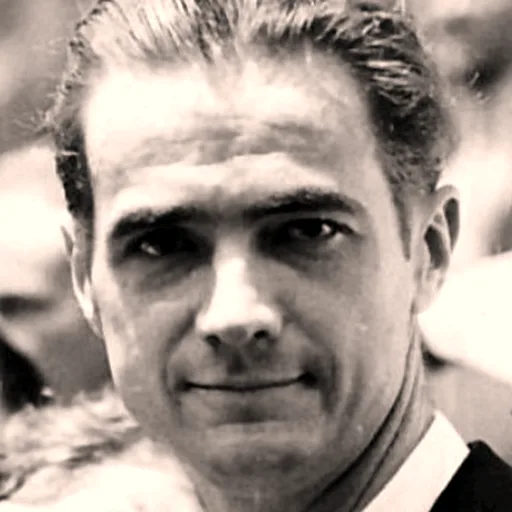
Howard Hughes
United States 1905-12-24 ~ 1976-04-05
20th-century American multi-industry magnate and aviator
Spanned aviation, film, and casino real estate, living both extremes of fortune and isolation
The power and the peril of combining passion with capital — both lessons are indispensable
Born on Christmas Eve 1905 in Houston, Texas, Howard Hughes was one of 20th-century America's most extraordinary multi-industry magnates, spanning aviation, film, and casino real estate. He set world speed records at the controls of his own aircraft, produced blockbuster films in Hollywood, and in his later years built a casino and real-estate empire in Las Vegas. He lived both extremes of fortune and isolation, embodying the glory and the deep shadow that capitalism can produce.
What You Can Learn
Hughes's life offers today's investors and business leaders two major lessons. First, the power and the peril of combining passion with capital. His breakthroughs in aviation and film came because he concentrated capital in fields he deeply understood and loved — an echo of Buffett's 'circle of competence.' Individual investors, too, can reduce information asymmetry by focusing on industries they genuinely understand. Yet the RKO debacle shows that passion can cloud sober analysis; excessive portfolio concentration means a single misjudgment can shake the whole. Second, 'success and happiness are not synonyms.' Hughes amassed enormous wealth yet lost almost all human connection in his final years — a stark reminder that asset accumulation is a means to a richer life, not an end in itself.
Words That Resonate
Life & Legacy
Howard Hughes was the 20th-century American who most vividly embodied wealth, ambition, and the price they exact. He reached the summit of three utterly different industries — aviation, motion pictures, and real estate — yet ended his life as a near-total recluse who had severed almost every human connection. His dramatic trajectory poses a fundamental question: where does unlimited capital, coupled with relentless passion, ultimately lead?
Born on Christmas Eve 1905 in Houston, Hughes inherited a vast fortune at 18 from his father, Howard Sr., who had built it on patents for oil-drilling equipment. That initial capital bankrolled every venture that followed. In the late 1920s he moved to Hollywood, pouring unprecedented sums into film production. The World War I aerial epic Hell's Angels (1930) and the gangster film Scarface (1932) won critical and commercial acclaim, establishing the young producer's reputation. In 1948 he acquired the storied RKO Pictures studio, but his management of it descended into chaos, and the studio ceased operations in 1957 — a cautionary tale that passion and money alone cannot sustain a complex organization.
Parallel to filmmaking, aviation consumed Hughes's energy. He founded the Hughes Aircraft Company in 1932 and personally set multiple world speed records from the cockpit. His 1935 speed record in the Hughes H-1 Racer, his 1938 record for the fastest flight around the globe, the Congressional Gold Medal, and simultaneous Harmon and Collier trophies all cemented his stature. The H-4 Hercules — nicknamed the 'Spruce Goose' — held the record for the largest wingspan on any aircraft from its completion until 2019, a monument to the scale of his vision. He also entered the airline business, acquiring control of Trans World Airlines (TWA) and later Air West.
Hughes's investing style was fundamentally different from that of the financial capitalists of his era. Rather than starting from financial analysis or market arbitrage, he operated as an owner-operator who poured enormous capital into industries he was personally passionate about, driving technological innovation and business creation simultaneously — an approach that foreshadows Elon Musk's. Yet he repeatedly ran up against the limits of managerial capacity as he diversified, demonstrating that passion and execution alone cannot indefinitely govern a conglomerate.
In his later years Hughes relocated to Las Vegas and acquired hotels, casinos, real estate, and broadcast media in rapid succession, reportedly becoming the most powerful figure in Nevada. But severe obsessive-compulsive disorder, chronic pain from a 1946 plane crash, and progressive hearing loss conspired to drive him into total seclusion. He died of renal failure in April 1976 at 70.
The bulk of his estate continues to fund medical research through the Howard Hughes Medical Institute. A life that combined a glory-filled first half with a deeply isolated final act, Hughes's story is retold in films and books as a rare narrative that forces a reexamination of what wealth and success really mean. The life of the man once called 'the richest man on earth' serves as a mirror reflecting both the pinnacle and the limits of ambition in a capitalist society.
Expert Perspective
Hughes was not a financial investor in the traditional sense but an owner-operator industrial capitalist who created and ran businesses himself. He fits neither the value-investing nor the growth-investing taxonomy; his diversified portfolio across aviation, film, and real estate more closely resembles modern conglomerate management or venture capital. His risk appetite was extremely aggressive — he personally risked his life at the controls of experimental aircraft, taking risk beyond the merely financial. In the history of investing, he occupies a transitional position between the financial-capitalist model of J.P. Morgan and the tech-entrepreneur-investor model of the present day.