Investors / Macro

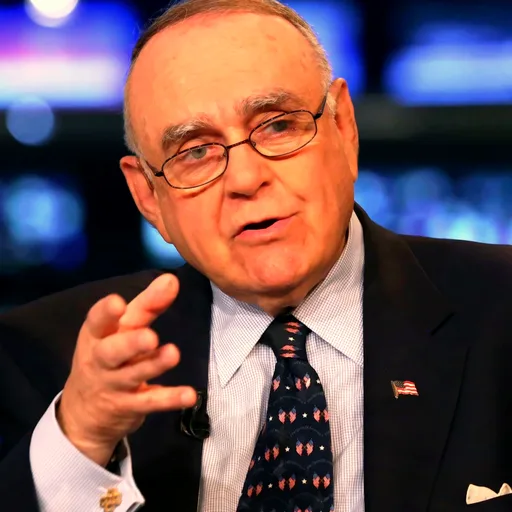
John Paulson
United States 1955-12-14
20th-century American hedge-fund manager
Executed 'the greatest trade ever' by shorting subprime before the 2007 crisis
Designing asymmetric risk-reward is the key to surviving — and profiting from — market dislocations
Born in 1955 in New York, John Paulson rose from obscurity managing a modest merger-arbitrage hedge fund to global fame by deploying credit default swaps to short subprime mortgage securities ahead of the 2007 crisis, personally earning roughly four billion dollars in a single year. The trade, chronicled in Gregory Zuckerman's book, is widely regarded as the greatest in financial history.
What You Can Learn
The most important lesson Paulson's case offers today's individual investors is the concept of asymmetric risk-reward. The CDS position he designed capped his maximum loss at the premiums paid while leaving the upside open-ended if the housing market collapsed. Most retail investors will never trade CDS directly, but the same logic underlies protective-put option strategies and the use of stop-loss orders to cap portfolio drawdowns. Even within a long-term savings plan, designing in advance for how to respond to a crash — rather than simply fearing one — is the discipline Paulson's example teaches. Equally noteworthy is that his subprime analysis rested on two years of painstaking data work. Rather than chasing popular tickers, the habit of independently uncovering structural market dislocations is what ultimately drives superior long-term results.
Words That Resonate
The key is to limit your downside and have unlimited upside.
We spent two years analyzing the data before we made the trade. It was the research that gave us the conviction.
I've always been bullish on U.S. real estate, but we found value in shorting subprime because the loans were so badly underwritten.
Life & Legacy
John Paulson is the investor who, in the face of an unprecedented financial crisis, took the diametrically opposite side of the market consensus and reaped historic profits. His trade has been dubbed 'the greatest trade ever,' and it stands as one of the most dramatic contrarian successes in financial history.
Born in 1955 in the borough of Queens, New York, Paulson earned an MBA from NYU Stern and a second from Harvard Business School. After working in merger arbitrage at Bear Stearns, he founded Paulson & Co. in 1994. The fund started small, running a steady if unspectacular merger-arbitrage strategy that captured spreads from announced deals. Paulson was far from a household name on Wall Street.
The turning point came around 2005. As the U.S. housing market overheated and lending standards for subprime mortgages deteriorated dramatically, Paulson detected a structural buildup of risk. Working with analyst Paolo Pellegrini, he combed through vast data sets on subprime mortgage-backed securities and concluded that rising default rates would inflict catastrophic losses. Based on this analysis, he built a massive short position using credit default swaps (CDS) — insurance-like instruments that pay off when the referenced securities default.
When the housing market began to collapse in 2007, Paulson's funds generated staggering profits. He personally earned roughly four billion dollars that year, and the funds as a whole reportedly returned more than fifteen billion. Gregory Zuckerman's book The Greatest Trade Ever documented the episode in detail, elevating Paulson from Wall Street hero to living legend.
Yet Paulson's subsequent career was far from smooth. A large bet on gold backfired, and several of his funds posted steep losses from 2011 onward — a stark reminder that one spectacular success does not guarantee permanent investing prowess. In 2020 he converted his fund to a family office and returned outside investors' capital.
What stands out in Paulson's investment philosophy is the importance of deep, research-driven conviction and the courage to stand against the crowd. He was not the only investor to identify the structural flaws in subprime lending, but he was distinguished by the decisiveness and scale with which he acted on the insight. From a risk-management perspective, his use of CDS was elegant: the maximum loss was capped at the premiums paid, while the upside was theoretically unlimited — an asymmetric payoff profile that allowed him to calculate the risk-reward ratio in advance.
Paulson's story symbolizes both the destruction and the opportunity embedded in financial crises. Many lost their homes and savings as the housing bubble burst, and the fact that Paulson profited from that very collapse sparked ethical debate. Yet in the mechanics of markets, short selling serves the function of discovering and correcting price distortions, and Paulson's trade is recorded in investment history as a case where that function operated on a grand scale.
Expert Perspective
Among investor archetypes, Paulson is an unusual figure who evolved from event-driven merger arbitrage into macro crisis investing. Starting in the relatively unglamorous corner of deal-spread capture, he inscribed his name in history with a single enormous macro bet. Often compared with Soros's short of the British pound, Paulson's trade differs in that Soros wagered on a flaw in currency policy whereas Paulson wagered on a structural defect in the credit market. His subsequent underperformance is equally important as a case study demonstrating that one spectacular win does not confer a lasting edge.