Entrepreneurs / Tech
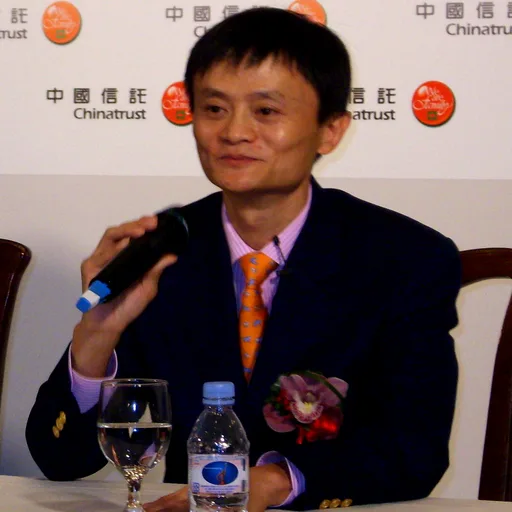
Jack Ma
China 1964-09-10
20th-century Chinese internet entrepreneur
Founded Alibaba and built China's e-commerce and digital payment ecosystem
Entering from outside the field turns user perspective into a competitive weapon
Born in Hangzhou in 1964, Jack Ma failed the gaokao twice, taught English, then co-founded Alibaba in 1999. He built China's e-commerce infrastructure, created Alipay, and took Alibaba to a record NYSE IPO.
What You Can Learn
Ma offers three lessons. First, outsider perspective creates advantage: evaluating tech through user eyes shaped Taobao's UX and Alipay's trust design. Second, when infrastructure is absent, build it -- Alipay for payments, Cainiao for logistics. Third, ecosystem thinking sustains growth: designing a structure where all partners profit keeps a platform healthy long-term. These principles apply wherever marketplace economics operate.
Words That Resonate
Today is hard, tomorrow will be worse, but the day after tomorrow will be sunshine.
If you don't give up, you still have a chance. Giving up is the greatest failure.
I'm not a tech guy. I'm looking at the technology with the eyes of my customers, normal people's eyes.
A leader should have higher grit and tenacity, and be able to endure what the employees can't.
Customers first, employees second, shareholders third.
Life & Legacy
Jack Ma's name is inseparable from China's internet rise. When he launched Alibaba in the late 1990s, Chinese internet penetration was minimal and e-commerce unknown. That a former English teacher built the country's largest commerce empire testifies to timing, empathy, and tenacity.
Born Ma Yun in 1964 in Hangzhou, he practiced English by chatting with foreign tourists. He failed the gaokao twice before passing on the third attempt and entering Hangzhou Normal University. After graduation he taught English for about 90 yuan a month -- stable but insufficient for his entrepreneurial drive.
A 1995 US trip as an interpreter changed everything. Encountering the internet, Ma was struck by the absence of Chinese content. He launched China Pages, an online directory, then joined a government web project before leaving in frustration. In 1999, gathering 17 co-founders in his apartment, he started Alibaba as a B2B marketplace linking Chinese small businesses to overseas buyers.
In 2003 Alibaba entered C2C with Taobao, challenging eBay China through zero fees, escrow payments (later Alipay), and instant messaging. eBay effectively withdrew within years. Alipay solved the trust gap: buyers deposited funds and released payment only after confirming receipt. By building payment infrastructure, Alibaba became a pillar of China's digital economy.
In 2014 Alibaba's NYSE IPO raised roughly $25 billion, then a record. After the Ant Group IPO was suspended in 2020, Ma retreated from public life, spotlighting the complex dynamics between Chinese private enterprise and the state. His creed -- customers first, employees second, shareholders third -- prioritizes ecosystem health over short-term shareholder returns.
Expert Perspective
Ma is a market creator, not a product or technology creator. Jobs reshaped markets through products; Bezos through operations. Ma built a market from nothing, solving a trust problem via escrow. His model of co-designing infrastructure and trust offers an alternative to Silicon Valley playbooks.