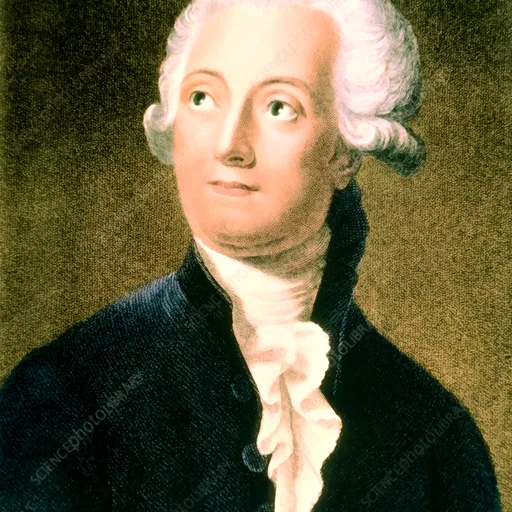
Scientists / Chemistry

Dmitri Mendeleev
Russia 1834-02-08 ~ 1907-02-02
Nineteenth-century Russian chemist
Created the periodic table in 1869, predicting undiscovered elements with remarkable accuracy
His framework remains the central organizing principle of chemistry
Russian chemist born in 1834 who created the periodic table of elements in 1869, predicting the properties of then-undiscovered elements. His framework remains the organizing principle of chemistry.
What You Can Learn
Mendeleev's table shows the power of systematic classification: organizing complex information into a clear framework reveals hidden patterns and enables prediction. Businesses that create taxonomies of customers, products, or risks gain similar predictive power. His willingness to leave gaps, trusting the framework over available data, models the confidence needed to invest ahead of the market. His approach of leaving gaps for undiscovered elements shows that a good framework makes the unknown manageable, a lesson for strategic planning under uncertainty.
Words That Resonate
There is nothing in this world that I fear to say.
I saw in a dream a table where all the elements fell into place as required.
I saw in a dream a table where all the elements fell into place as required. Awakening, I immediately wrote it down on a piece of paper.
Work, look for peace and calm in work: you will find it nowhere else.
Life & Legacy
Dmitri Mendeleev imposed order on the elements. His 1869 periodic table arranged known elements by atomic weight and grouped them by recurring chemical properties, revealing gaps that he boldly predicted would be filled by elements not yet discovered. Those predictions proved correct, validating the table as a fundamental law of nature.
Born in 1834 in Tobolsk, Siberia, the youngest of a large family, he studied at the Main Pedagogical Institute in Saint Petersburg and later in Heidelberg. He became professor of chemistry at Saint Petersburg University in 1867.
By 1869 sixty-three elements were known but lacked a unifying framework. Mendeleev wrote each element's properties on a card and arranged them in columns. A periodic pattern emerged: elements with similar properties appeared at regular intervals of atomic weight. He published his table in 1869 and refined it over subsequent years.
The table's power lay in its predictive capacity. Mendeleev left gaps for elements he called eka-aluminum, eka-boron, and eka-silicon, specifying their atomic weights and chemical behavior. When gallium (1875), scandium (1879), and germanium (1886) were discovered with properties closely matching his forecasts, the periodic law gained wide acceptance.
Mendeleev also contributed to the Russian petroleum industry and to metrology, heading the Bureau of Weights and Measures. He was nominated for the Nobel Prize but never received it, reportedly losing by one vote in 1906.
His table has since been reordered by atomic number rather than weight, and over fifty new elements have been added, yet the periodic framework Mendeleev conceived remains the central organizing principle of chemistry. He died in 1907 in Saint Petersburg.
Expert Perspective
Among scientists, Mendeleev is the architect of chemistry's master framework. The periodic table unified disparate empirical observations into a single predictive system. Its success in forecasting undiscovered elements elevated it from a classification tool to a law of nature, comparable in scope to Newton's laws in physics.