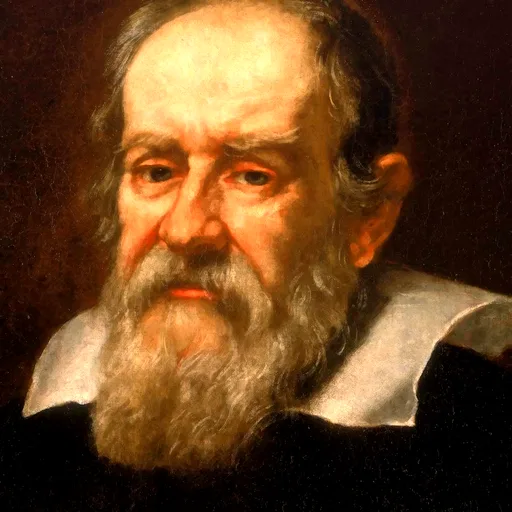
Scientists / Mathematics

Muḥammad ibn Musa al-Khwarizmi
Uzbekistan 0780-01-01 ~ 0850-01-01
Ninth-century Central Asian mathematician at the House of Wisdom in Baghdad
Systematized algebra and transmitted the Hindu-Arabic numeral system to the world
Gave mathematics the words 'algebra' and 'algorithm,' concepts that underpin modern computing
Central Asian mathematician born c. 780 who systematized algebra and gave his name to the word 'algorithm.' His works transmitted Indian numerals to the Islamic and then the European world, transforming mathematics.
What You Can Learn
Al-Khwarizmi's systematic approach to problem-solving is the conceptual ancestor of every algorithm running in modern software. His motivation, making mathematics useful for commerce and law, shows that the most enduring innovations arise from practical needs. And his synthesis of multiple cultural traditions models the cross-cultural collaboration that drives global innovation today. His synthesis of multiple cultural traditions models the cross-cultural collaboration that drives global innovation today, where ideas from different backgrounds converge to produce breakthroughs.
Words That Resonate
When I considered what people generally want in calculating, I found that it always is a number.
I composed this work to serve as an aid in the calculation of inheritances, legacies, partition, lawsuits, and trade.
I composed this work... to serve as an aid in the various requirements of everyday life.
That fondness for science, that affability and condescension which God shows to the learned, that promptitude with which he protects and supports them in the elucidation of obscurities and in the removal of difficulties.
Life & Legacy
Al-Khwarizmi is the father of algebra and the namesake of the algorithm. His treatise on solving equations systematized a new branch of mathematics, and his arithmetic text introduced the Hindu-Arabic numeral system to the wider world.
Born around 780 in the Khwarezm region of Central Asia (modern Uzbekistan), he worked at the House of Wisdom in Baghdad under Caliph al-Ma'mun. This institution gathered scholars from across the Islamic world to translate and extend Greek, Indian, and Persian knowledge.
His most influential work, Al-Kitab al-Mukhtasar fi Hisab al-Jabr wal-Muqabala (The Compendious Book on Calculation by Completion and Balancing), published around 820, gave the word 'algebra' (al-jabr) to mathematics. The book presented systematic methods for solving linear and quadratic equations using words rather than symbols, motivated by practical needs such as inheritance law and commerce.
His arithmetic treatise, surviving only in Latin translation, introduced the Hindu-Arabic decimal positional numeral system to Islamic and later European audiences. The system's superiority over Roman numerals for computation was decisive, and the Latinized form of his name, Algoritmi, gave English the word 'algorithm.'
Al-Khwarizmi also contributed to astronomy, producing astronomical tables, and to geography, supervising a project to map the known world. His synthesis of Indian, Greek, and Persian mathematical traditions created a foundation on which later Islamic and European mathematicians built.
He died around 850. The concepts he systematized, systematic equation-solving and positional notation, remain the bedrock of mathematics and computing.
Expert Perspective
Among scientists, Al-Khwarizmi founded algebra as a discipline and transmitted the numeral system that made modern mathematics possible. His work epitomizes the Islamic Golden Age's role as a bridge between ancient Greek and Indian knowledge and later European development. The words 'algebra' and 'algorithm' both trace to his legacy.