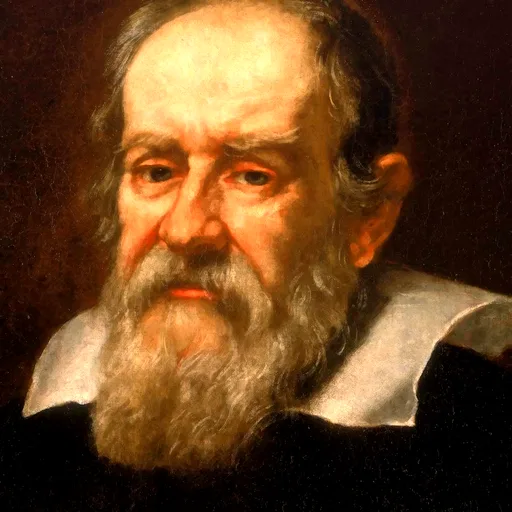
Scientists / Physics

Michael Faraday
United Kingdom 1791-09-22 ~ 1867-08-25
Nineteenth-century British physicist, largely self-taught
Discovered electromagnetic induction, making the electrical age possible
His field concept became the foundation Maxwell used to unify electricity, magnetism, and light
British physicist born in 1791 who discovered electromagnetic induction and the laws of electrolysis. Largely self-taught, he laid the experimental foundations of electromagnetism that Maxwell later unified mathematically.
What You Can Learn
Faraday's career proves that lack of formal credentials need not prevent world-changing contributions, a lesson for organizations that over-value pedigree. His concept of the field, later formalized by Maxwell, illustrates how intuitive physical understanding can precede and guide mathematical theory. And his Christmas Lectures pioneered public science engagement, anticipating modern corporate thought-leadership and content marketing.
Words That Resonate
Life & Legacy
Michael Faraday was the greatest experimental physicist of the nineteenth century. With virtually no formal education, he discovered electromagnetic induction, the principle behind the electric generator and transformer, and established the laws of electrolysis. His experimental findings became the basis for Maxwell's mathematical unification of electricity and magnetism.
Born in 1791 in Newington Butts, Surrey, to a blacksmith's family, he received only a basic education. Apprenticed to a bookbinder, he read voraciously and attended lectures by Humphry Davy at the Royal Institution. Davy hired him as a laboratory assistant in 1813.
Faraday's most celebrated discovery came in 1831: electromagnetic induction, the generation of electric current by a changing magnetic field. This single finding made possible the electric motor, the generator, and the transformer, technologies that underpin the entire electrical age.
His laws of electrolysis (1834) established quantitative relationships between electric charge and chemical change, linking electricity to chemistry. He also discovered benzene and pioneered the concept of the field, a revolutionary idea that replaced action-at-a-distance with lines of force permeating space.
Despite his lack of mathematical training, Faraday's physical intuition was so profound that Maxwell translated his field concept into the four equations that unified electricity, magnetism, and light. Einstein kept a portrait of Faraday in his study.
Faraday declined a knighthood and the presidency of the Royal Society, preferring to remain a working scientist. He also pioneered public science communication through the Royal Institution Christmas Lectures. He died in 1867.
Expert Perspective
Among scientists, Faraday is the experimentalist whose discoveries enabled the electrical age. Electromagnetic induction and the field concept were his greatest contributions. Maxwell's mathematical formalization of Faraday's insights produced one of physics' most elegant theories. That a largely self-taught bookbinder's apprentice achieved this places Faraday among history's most inspiring scientific figures.