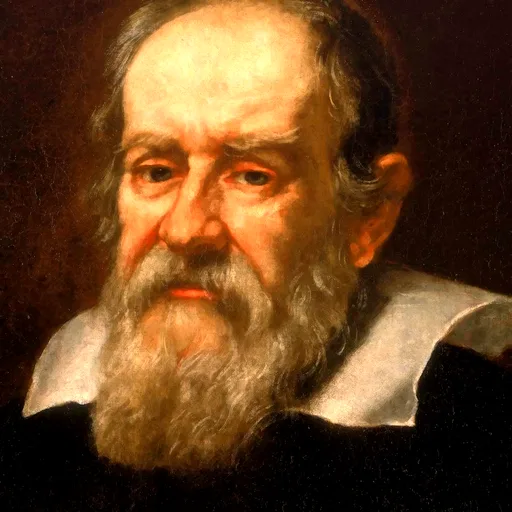
Scientists / Mathematics

Srinivasa Ramanujan
India 1887-12-22 ~ 1920-04-26
Early twentieth-century Indian mathematician
Produced astonishing results in number theory with almost no formal training
His collaboration with Hardy and his notebooks continue to inspire new mathematical discoveries
Indian mathematician born in 1887 who, with almost no formal training, produced astonishing results in number theory and infinite series. His collaboration with G. H.
What You Can Learn
Ramanujan's story demonstrates that extraordinary talent can emerge from any background, provided it finds the right mentor and institutional support. His notebooks, still yielding new results, show that intuitive leaps, even without formal proof, can be immensely valuable, a principle that resonates with rapid prototyping and hypothesis-driven innovation. And the Hardy-Ramanujan partnership illustrates the power of pairing intuition with rigor.
Words That Resonate
An equation for me has no meaning unless it expresses a thought of God.
I have not trodden through the conventional regular course which is followed in a university course, but I am striking out a new path for myself.
1729 is a very interesting number; it is the smallest number expressible as the sum of two cubes in two different ways.
Life & Legacy
Srinivasa Ramanujan was a largely self-taught mathematical prodigy whose intuitive discoveries in number theory, infinite series, and continued fractions stunned the professional mathematical world. His partnership with G. H. Hardy at Cambridge produced results that are still being explored a century later.
Born in 1887 in Erode, Tamil Nadu, he grew up in modest circumstances. He became obsessed with mathematics after encountering Carr's Synopsis of Pure Mathematics, a compendium of formulas without proofs, and began filling notebooks with original results.
Unable to complete a degree because he neglected all subjects except mathematics, he worked as a clerk in Madras while continuing to produce theorems. In 1913 he wrote to Hardy, enclosing pages of results. Hardy recognized their extraordinary depth and arranged for Ramanujan to come to Cambridge.
Their five-year collaboration was enormously productive. Ramanujan contributed to partition theory, highly composite numbers, mock theta functions, and the theory of modular forms. The Hardy-Ramanujan asymptotic formula for the number of partitions of an integer was a landmark. The taxicab number 1729, which Ramanujan instantly recognized as the smallest number expressible as the sum of two cubes in two different ways, has become legendary.
Ramanujan was elected a Fellow of the Royal Society in 1918. But his health deteriorated in the English climate, and he returned to India in 1919. He died in 1920 at age thirty-two.
His notebooks, containing thousands of results, many without proofs, continue to generate new mathematics. His story is among the most poignant illustrations of raw mathematical talent overcoming institutional barriers.
Expert Perspective
Among scientists, Ramanujan is the most dramatic example of mathematical genius arising outside formal training. His results in partition theory, modular forms, and continued fractions remain active areas of research. The contrast between his intuitive style and Hardy's analytical rigor made their collaboration uniquely productive.