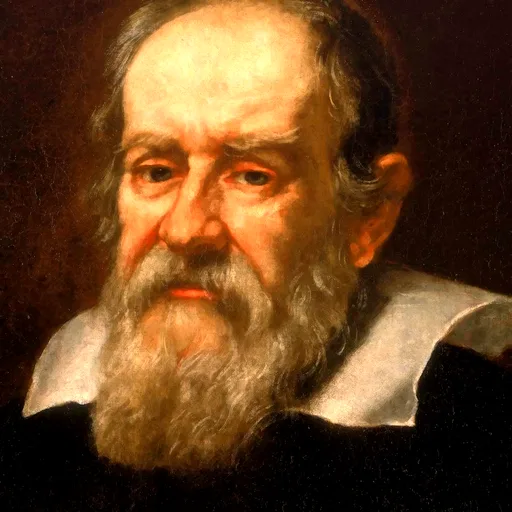
Scientists / Physics

Nicolaus Copernicus
Poland 1473-02-28 ~ 1543-06-03
Fifteenth-century Polish astronomer and canon
Proposed the heliocentric model in De revolutionibus, opening the astronomical revolution
Pursued mathematical harmony over observational fit, setting the template for paradigm shifts
Polish astronomer born in 1473 whose De revolutionibus proposed heliocentrism, overturning fourteen centuries of Ptolemaic geocentrism and launching the revolution that led to Kepler and Newton.
What You Can Learn
Copernicus illustrates the value of questioning entrenched assumptions. Just as geocentrism held for fourteen centuries, long-standing industry orthodoxies can blind organizations to better models. His thirty-year gestation counsels patience: in foundational research, premature publication risks credibility. And his side-pursuit breakthrough shows that transformative insight can arise alongside a full professional career, a lesson for anyone balancing a day job with intellectual ambition.
Words That Resonate
Life & Legacy
Nicolaus Copernicus did more than rearrange the planets. His heliocentric model displaced humanity from the cosmic center, an epistemic shock later captured in the phrase "Copernican revolution." He stands at the starting point of the Scientific Revolution.
Born in 1473 in Torun, Poland, he lost his father at ten and grew up under his uncle, the Bishop of Warmia. He studied astronomy at Krakow, then law and medicine in Italy, training in observation under Domenico Maria Novara in Bologna.
Exposure to ancient Greek sources in Italy was decisive. Learning that Aristarchus had proposed a sun-centered cosmos encouraged him to pursue the idea. Back in Poland as a cathedral canon, he privately continued astronomical work. Around 1514 his Commentariolus first sketched the heliocentric scheme.
His method favored mathematical harmony over observational precision. Ptolemy's geocentric system required elaborate epicycles; placing the Sun at the center simplified the picture. Yet Copernicus kept circular orbits, so predictions matched Ptolemy's at best. Only Kepler's elliptical orbits resolved the problem.
De revolutionibus appeared in 1543, about thirty years after conception. The publisher Osiander added a preface calling the model a mere computational device. Acceptance was slow; full vindication came through Tycho's data, Kepler's laws, and Galileo's telescope.
Beyond astronomy, Copernicus noted that debased coins drive good money from circulation, anticipating Gresham's Law. His career as cleric, physician, and administrator shows that transformative ideas can emerge as side pursuits alongside a full professional life.
Expert Perspective
Among scientists, Copernicus is the indispensable starting point of the astronomical revolution. His contribution was not improved observational accuracy but a fundamental reframing of cosmic structure. The theory prioritized mathematical elegance, leaving empirical confirmation to Kepler and Galileo. In the narrative of the Scientific Revolution, Copernicus set the stage that Tycho's data, Kepler's laws, and Galileo's telescope would complete.