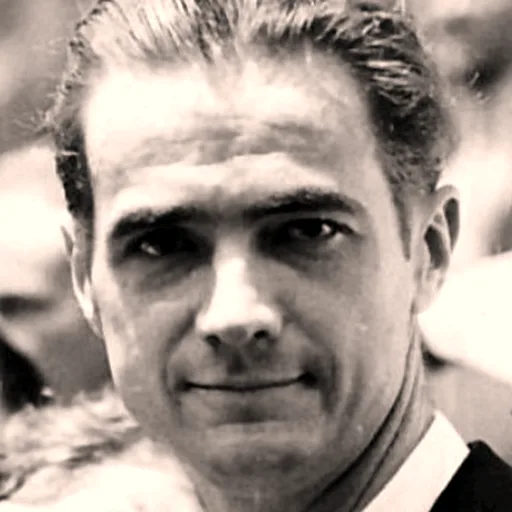
Investors / Financier

J. P. Morgan
United States 1837-04-17 ~ 1913-03-31
19th-century American financier and banker
Resolved the 1907 Panic through personal credibility and catalyzed the Federal Reserve's creation
The quality and trustworthiness of management remains the core of investment decisions even in the AI era
Born in 1837, J.P. Morgan dominated Gilded Age Wall Street. He reorganized railroads, created U.S. Steel, and halted the 1907 Panic, catalyzing the Federal Reserve's creation as modern American finance's architect.
What You Can Learn
Morgan's character-first lending philosophy remains relevant: even with AI-driven analytics, the ultimate investment question is whether you trust the management team. His 1907 actions teach composure and contrarian judgment in panic: can you resist the crowd and act on your own analysis? That is a foundational principle of risk management. His industrial-consolidation methods also prefigure modern private equity, identifying intrinsic value through restructuring and operational engagement.
Words That Resonate
The first step towards getting somewhere is to decide that you are not going to stay where you are.
A man always has two reasons for the things he does -- a good one, and the real one.
I don't want a lawyer to tell me what I cannot do. I hire him to tell me how to do what I want to do.
No problem can be solved until it is reduced to some simple form. The changing of a vague difficulty into a specific, concrete form is a very essential element in thinking.
Go as far as you can see; when you get there, you'll be able to see farther.
Life & Legacy
J.P. Morgan's personal credibility could move a nation's financial structure. His life answered how far one banker's influence can reach and tracked that power's institutionalization.
Born in Hartford, Connecticut, in 1837, eldest son of banker Junius Spencer Morgan, he studied at Gottingen and apprenticed at his father's London firm. The transatlantic network became decisive for linking American and European capital.
Post-Civil War railroad overbuilding caused ruinous competition. Morgan imposed order through "Morganization": injecting capital and placing associates on boards to fix management. This foreshadowed investment banking and private equity.
In 1901 he bought Carnegie's steel for roughly $480 million, creating U.S. Steel, the first billion-dollar corporation, proving capital could redesign industry.
The 1907 Panic cemented his legacy. When Knickerbocker Trust's failure triggered runs, the seventy-year-old summoned bankers to his library, locking doors until rescue terms were agreed. They committed funds and averted a Stock Exchange closure. But the act raised a question: should such power rest in one man?
Morgan valued character above collateral. Asked his lending criterion, he replied, "Character, first." The conviction that management quality outweighs balance sheets retains validity.
After Pujo Committee testimony amid "Money Trust" criticism, he devoted later years to art as Metropolitan Museum president. He died in Rome March 31, 1913, at seventy-five. His $80 million estate was modest beside contemporaries, but his infrastructure became the Federal Reserve.
Expert Perspective
Morgan is a financial architect, not an investor in any modern sense. He designed capital-market structures before value or growth categories existed. His character-based credit, heterodox today, resonates with ESG and governance-focused analysis.