Scientists / Biology & Medicine

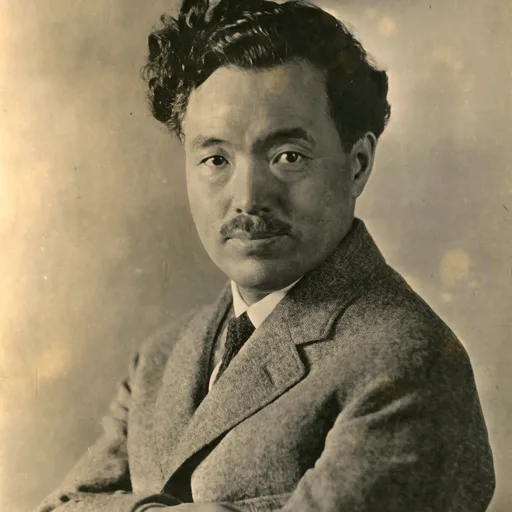
Kitasato Shibasaburō
Japan 1853-01-29 ~ 1931-06-13
Japanese microbiologist of the late nineteenth and early twentieth centuries
Achieved the first pure culture of tetanus bacillus and co-developed serum therapy
Built the institutional foundations of modern Japanese medicine
Japanese microbiologist born in 1853 who studied under Robert Koch, achieved the first pure culture of tetanus bacillus, and established serum therapy. He founded Japan's modern medical infrastructure.
What You Can Learn
Kitasato's career demonstrates that world-class research and institution-building are complementary, not competing goals. His insistence on prevention over cure anticipates modern public-health strategy. And his resignation and self-funded restart when institutional politics threatened his mission offers a model of principled leadership in the face of organizational conflict. His founding of two major institutions demonstrates that sustainable scientific progress requires not only discoveries but durable organizations to carry them forward.
Words That Resonate
Research alone is not enough. The question is how to put it to use for humanity.
研究だけやっていたのでは駄目だ。それをどう人類のために役立てるかだ。
The mission of a physician lies in preventing disease.
医者の使命は病気を予防することにある。
Learning must never be separated from practice.
学問は実行と離るべからず。
Life & Legacy
Kitasato Shibasaburo brought Japanese medicine to the international stage. Trained under Robert Koch in Berlin, he accomplished world-class research in bacteriology and then returned home to build the institutional foundations of Japan's modern medical system.
Born in 1853 in Kumamoto Prefecture to a village headman's family, Kitasato studied at the Kumamoto Medical School and then Tokyo Imperial University. In 1885 he left for Germany and joined Koch's laboratory.
His six years there were extraordinarily productive. In 1889 he became the first person to obtain a pure culture of the tetanus bacillus, an anaerobic bacterium thought impossible to isolate. He designed a hydrogen-filled culture apparatus that solved the oxygen problem.
In 1890, together with Emil von Behring, he announced serum therapy for tetanus and diphtheria, showing that antitoxin-containing serum could treat patients. The discovery was foundational for immunology. Behring won the first Nobel Prize in Physiology or Medicine in 1901; Kitasato's omission is still debated.
Back in Japan in 1892, with support from Fukuzawa Yukichi, he founded the Institute for Infectious Diseases and became its first director. In 1894, during a plague outbreak in Hong Kong, he identified the plague bacillus, a discovery made almost simultaneously by Alexandre Yersin.
When the government transferred his institute to Tokyo Imperial University against his wishes in 1914, he resigned, founded the Kitasato Institute with personal funds, and in 1917 established the Keio University School of Medicine. His legacy spans both scientific achievement and institutional building. He died in 1931.
Expert Perspective
Among scientists, Kitasato bridged European bacteriology and Japanese medical modernization. His pure-culture technique for anaerobic bacteria was a landmark in microbiology. The serum-therapy co-discovery with Behring laid the groundwork for immunology. Through the Kitasato Institute and Keio medical school, he created institutional pillars that still serve Japanese science.