Artists / Modern
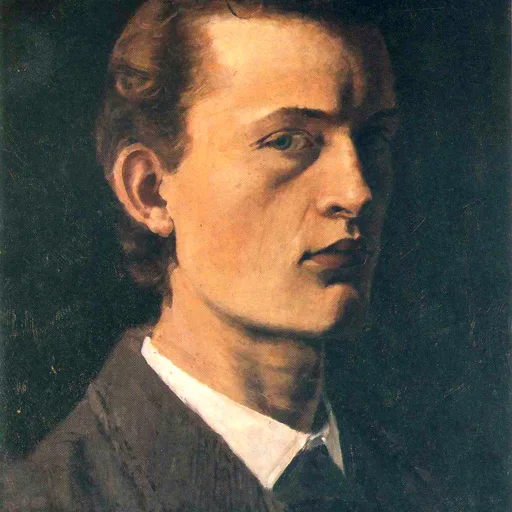
Edvard Munch
Norway 1863-12-12 ~ 1944-01-23
Norwegian painter born in 1863
Created The Scream, the modern era's most recognized image of existential anxiety
His transformation of private anguish into universal visual language models how authentic emotion connects with audiences
Born in Norway in 1863, Munch created The Scream, an icon of modern anxiety. His exploration of illness, death, and emotional extremity made him a forerunner of Expressionism.
What You Can Learn
Munch offers pointed lessons. His transformation of private pain into communicable imagery models the creative principle that authentic emotion, not technical display, is what connects with audiences. The Scream's viral reproducibility, one of the most parodied images in history, demonstrates the power of visual simplicity in an age of content overload. And his Frieze of Life concept, organizing disparate works into a thematic cycle, anticipates modern content-strategy frameworks.
Words That Resonate
Illness, insanity, and death were the dark angels that kept watch over my cradle.
Jeg maler ikke det jeg ser, men det jeg så.
I do not paint what I see, but what I saw.
Sykdom, galskap og død var de svarte engler som sto vakt ved min vugge.
From my rotting body, flowers shall grow and I am in them and that is eternity.
Fra min rådnende kropp skal blomster vokse, og jeg er i dem, og det er evigheten.
Life & Legacy
Edvard Munch matters because he turned private anguish into a universal visual language. The Scream, a figure on a bridge beneath a blood-red sky with mouth agape, has become the modern era's most recognized image of existential dread.
Born December 12, 1863, in Loten, Norway, he experienced his mother's death at five and his sister's at fourteen, events that haunted his art. He studied in Christiania (Oslo) and traveled to Paris, where Impressionism, Gauguin, and Van Gogh shaped his palette.
The Frieze of Life, a cycle of paintings on love, anxiety, and death, occupied him from the 1890s onward. The Scream (1893) distills anxiety into a single image: wavy lines radiating through sky and water mirror the figure's inner turmoil, dissolving the boundary between self and environment.
His bold color, simplified form, and psychologically charged subjects directly influenced German Expressionism, particularly Die Brucke. After a nervous breakdown in 1908 he retreated to Norway, where his work grew calmer but remained emotionally direct.
He bequeathed his entire estate, over 28,000 works, to the city of Oslo. He died January 23, 1944, at eighty.
His technique evolved considerably. Later outdoor murals for Oslo University (1909-16) are more optimistic, depicting sunlight and vitality. He was also deeply interested in photography, using it as both documentary tool and creative medium.
His enormous bequest required a dedicated museum, which opened in its latest incarnation in 2021. His influence extends beyond the visual arts: filmmakers, graphic novelists, and musicians have drawn on his imagery of anxiety and isolation. His art proves that the deeply personal, rendered with sufficient formal power, achieves universal resonance.
Expert Perspective
Munch pioneered Expressionism by turning private anguish into universal visual language. The Scream is the modern era's foremost image of existential anxiety. His Frieze of Life organized paintings into thematic cycles. His influence on Die Brucke and later Expressionism is direct.