Scientists / Biology & Medicine
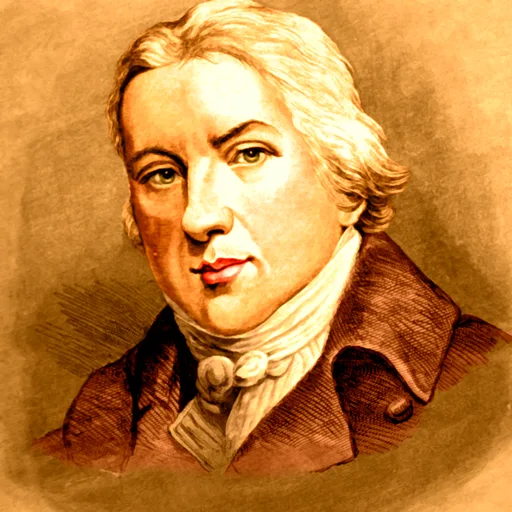
Edward Jenner
United Kingdom 1749-05-17 ~ 1823-01-26
Eighteenth-century English country physician
Developed vaccination by proving cowpox inoculation prevents smallpox
Launched the campaign that culminated in the eradication of smallpox in 1980
English physician born in 1749 who developed vaccination by proving that cowpox inoculation prevents smallpox. His method launched modern immunology and ultimately led to smallpox's eradication in 1980.
What You Can Learn
Jenner's method of testing folk knowledge through controlled experiment is the prototype of clinical trials. His self-publication after Royal Society rejection shows that institutional gatekeeping need not halt important ideas. And the anti-vaccination backlash he faced prefigures modern vaccine-hesitancy debates, reminding communicators that evidence alone does not ensure adoption. His conversion of rural observation into rigorous medical practice anticipates the field of translational medicine, where bench findings must reach the bedside to deliver value.
Words That Resonate
I shall endeavour still further to prosecute this inquiry, an inquiry I trust not merely speculative, but of sufficient moment to inspire the pleasing hope of its becoming essentially beneficial to mankind.
The deviation of man from the state in which he was originally placed by nature seems to have proved to him a prolific source of diseases.
Don't think; try.
Life & Legacy
Edward Jenner gave humanity its first systematic weapon against infectious disease. Smallpox killed roughly thirty percent of those infected. Jenner's cowpox-based vaccination replaced the dangerous practice of variolation and began a campaign that ended with the WHO's 1980 eradication declaration.
Born in 1749 in Berkeley, Gloucestershire, the son of a clergyman, he apprenticed with a surgeon at thirteen and later studied under the surgeon-naturalist John Hunter in London, whose motto "Don't think; try" shaped his empirical approach.
Local folklore held that milkmaids who caught cowpox never contracted smallpox. On 14 May 1796 Jenner tested the claim by inoculating eight-year-old James Phipps with material from milkmaid Sarah Nelmes's cowpox sore. The boy developed a mild fever, recovered, and proved immune to smallpox.
The Royal Society rejected his paper, so in 1798 Jenner self-published An Inquiry into the Causes and Effects of the Variolae Vaccinae. The work spread across Europe; Napoleon reportedly vaccinated his army and called the achievement a benefit to mankind.
Opposition was fierce: satirical cartoons showed cows sprouting from patients. Yet vaccination's safety advantage was decisive, and the method became standard. Jenner spent the rest of his life promoting it. He died in 1823. Pasteur later coined the word "vaccine" from vaccinia in tribute.
Jenner's work also advanced the understanding that the human body can be trained to resist disease, even though the mechanism of immunity remained unknown in his time. His empirical success preceded Pasteur's germ theory by decades, illustrating that practical innovation can outrun theoretical understanding. The word 'vaccine' itself, derived from the Latin vacca (cow), preserves the memory of Jenner's original insight.
Expert Perspective
Among scientists, Jenner founded vaccination and, by extension, immunology. He validated folk observation through empirical experiment, creating a preventive method decades before germ theory explained why it worked. Pasteur and Koch built the theoretical edifice, but Jenner supplied the foundational proof of concept.