Philosophers / Islamic
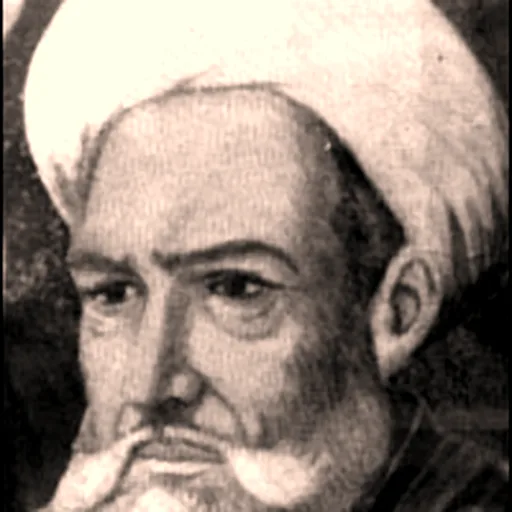
Averroes
Spain 1126-04-21 ~ 1198-12-17
12th-century Andalusian philosopher, jurist, and physician
Commented on the complete works of Aristotle, earning the title 'the Commentator'
His stance of integrating reason and faith maps onto bridging data and intuition in modern business
Born in 12th-century Cordoba in Andalusia, Ibn Rushd (Averroes) was a philosopher, jurist, and physician. He composed commentaries on the complete works of Aristotle, earning the title 'the Commentator' in the Latin West. His Incoherence of the Incoherence refuted the theologian al-Ghazali's attack on philosophy, systematically defending the compatibility of reason and faith. His thought decisively influenced Thomas Aquinas and Scholasticism, serving as an intellectual bridge between East and West.
What You Can Learn
Ibn Rushd's greatest lesson for the modern world is the stance of treating seemingly opposing knowledge systems not as conflicts but as subjects for integration. In contemporary business, professionals who can bridge data analytics and intuition, scientific evidence and experiential knowledge, technology and the humanities are in highest demand. Just as he framed philosophy and religion as 'different paths to the same truth,' bridging rather than excluding different domains of knowledge is a wellspring of innovation. His method of responding to al-Ghazali's critique — not with emotion but with point-by-point logical rebuttal — also models an effective approach to modern debate and negotiation: understanding the structure of an opponent's argument precisely before responding constructively, rather than becoming defensive. His cross-disciplinary activity spanning philosophy, law, and medicine further underscores the value of interdisciplinary thinking in an age of increasing specialization.
Words That Resonate
Ignorance leads to fear, fear leads to hate, and hate leads to violence. This is the equation.
Knowledge is the conformity of the object and the intellect.
Truth does not contradict truth; rather it accords with it and bears witness to it.
إن الحق لا يضاد الحق بل يوافقه ويشهد له
The divine law commands rational consideration of existing things and reflection upon them.
الشريعة تأمر بالنظر العقلي في الموجودات واعتبارها
The study of the books of the ancients is obligatory under religious law.
إن النظر في كتب القدماء واجب بالشرع
Life & Legacy
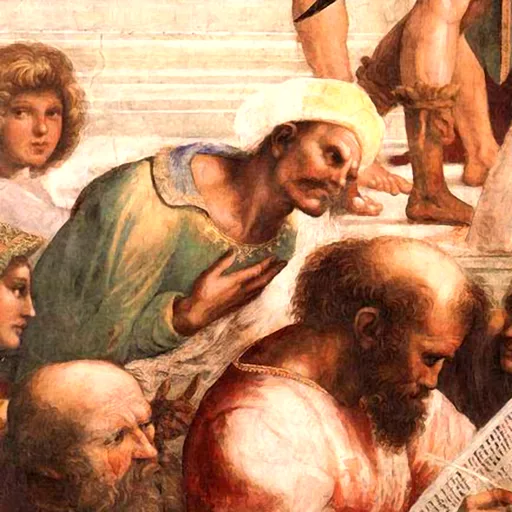
Ibn Rushd's place in history rests not merely on reviving Aristotelian philosophy in the Islamic world but on catalyzing, through his commentaries, the intellectual transformation of medieval Europe. Known in the West by his Latinized name Averroes, the epithet 'the Commentator' signals that his glosses became the standard for understanding Aristotle. His inclusion in Raphael's School of Athens alongside Greek philosophers testifies to the esteem in which Renaissance intellectuals held him.
Born in 1126 in Cordoba during the waning years of the Almoravid dynasty, he came from a distinguished family of jurists — both grandfather and father served as qadis (judges). Educated from childhood in Islamic jurisprudence and theology, he also mastered medicine, mathematics, and philosophy. Under the Almohad caliphate, whose first caliph encouraged philosophy, Ibn Rushd was introduced to Caliph Abu Ya'qub by the philosopher Ibn Tufayl, and reportedly received a commission to compose commentaries on Aristotle's works.
This commission defined his scholarly life. He produced commentaries on Aristotle's major works spanning logic through metaphysics, natural philosophy through ethics — in three tiers: great commentary, middle commentary, and epitome. His method critically examined earlier Islamic philosophers' Neoplatonic readings of Aristotle, attempting to recover interpretations faithful to the original texts. While acknowledging the contributions of Ibn Sina (Avicenna) and al-Farabi, he systematically stripped away the Neoplatonic accretions they had grafted onto Aristotle — a kind of philosophical textual criticism.
His intellectual originality appears most clearly in his response to al-Ghazali. The 11th-century theologian had attacked philosophy on twenty points in The Incoherence of the Philosophers. Ibn Rushd's The Incoherence of the Incoherence answered point by point, exposing logical errors in al-Ghazali's reasoning while arguing that philosophy and religion do not conflict — they reach the same truth by different paths. Scriptural texts admit allegorical interpretation and need not contradict rational inquiry. This harmonizing position was later received in the Latin world as the 'double truth' theory, though Ibn Rushd himself never claimed two truths exist — his consistent view was that reason and faith are different expressions of the same truth.
Ibn Rushd was simultaneously a practical man. He served as a judge in Cordoba administering justice, and authored the medical encyclopedia al-Kulliyyat, translated into Latin as the Colliget and used in European medical education for centuries. Some scholars credit him with the first description of Parkinson's disease symptoms, suggesting keen clinical observation.
In 1197, late in life, a philosophical ban issued by the Almohad caliph drove him from Cordoba. He died the following year in Marrakesh. His direct influence within the Islamic world remained limited, but once his commentaries were translated into Latin and Hebrew, they reshaped the intellectual map of medieval Europe. Thomas Aquinas wrestled with his arguments while building his own philosophical system, and at the University of Paris a current known as Latin Averroism persisted into the 16th century. His work connecting Eastern and Western intellectual traditions stands as a historical exemplar of how cross-civilizational dialogue can yield extraordinary fruit.
Expert Perspective
In the history of Islamic philosophy, Ibn Rushd stands as the 'restorer' who returned to Aristotle's original texts after al-Farabi and Ibn Sina had layered Neoplatonic interpretations over them. In Western philosophy, he is among the greatest mediators who transmitted ancient Greek thought to the medieval Latin world. His harmonizing position on reason and faith became the premise of Thomas Aquinas's natural theology and prepared the ground for the autonomy of reason in modern philosophy. By justifying philosophy as a religious obligation, he defended intellectual freedom from within a religious framework — occupying a unique position in the history of ideas.