Artists / Post-Impressionism
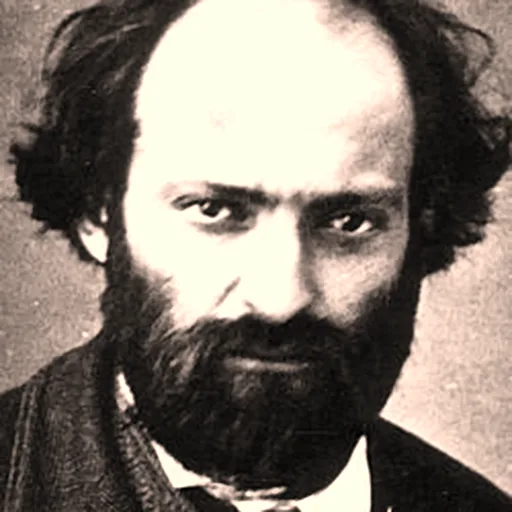
Paul Cézanne
France 1839-01-19 ~ 1906-10-22
French painter born in Aix-en-Provence in 1839, called the father of modern painting
Reconstructed nature through planes of color in the Mont Sainte-Victoire series, directly preparing the way for Cubism
His solitary pursuit of structure over surface remains a model for fundamental, long-horizon creative research
Born in Aix-en-Provence in 1839, Cezanne is called the father of modern painting. He reconstructed nature through planes of color, directly preparing the way for Cubism and abstract art.
What You Can Learn
Cezanne offers foundational lessons. His reduction of nature to geometric forms parallels extracting essential structure from complex phenomena, a skill central to business analysis. His decades of solitary experiment in Aix show the value of investing in fundamental research undistracted by trends. And his ambition to astonish Paris with a single apple illustrates how obsessive refinement of an everyday product can reshape an industry.
Words That Resonate
Treat nature by the cylinder, the sphere, the cone.
Traitez la nature par le cylindre, la sphère, le cône.
With an apple I want to astonish Paris.
Avec une pomme, je veux étonner Paris.
I owe you the truth in painting and I will tell it to you.
Je vous dois la vérité en peinture et je vous la dirai.
Life & Legacy
Paul Cezanne earned the title father of modern painting because he took Impressionism's exploration of color as his starting point and then pushed further, reconstructing the structural essence of objects through planes of color, a method that directly prepared the ground for Cubism and abstraction. After Cezanne, Western painting shifted decisively from imitating the visible world to rebuilding it through the painter's perception.
Born January 19, 1839, in Aix-en-Provence to a banker, he formed a close childhood friendship with Emile Zola. His early dark, roughhewn canvases marked him as an outsider in the art establishment for years.
In the 1870s he worked alongside Pissarro and absorbed Impressionist plein-air color, brightening his palette dramatically. Yet he was dissatisfied with Impressionism's fleeting record of light, seeking instead to realize sensation before nature, his way of saying that painting should reconstruct not just what the eye sees but the structure underlying it.
From the 1880s, secluded in Aix, he developed his constructive stroke: short parallel brushmarks that build volume and depth through color alone, without relying on line. His still lifes of apples became laboratories for this method, integrating multiple viewpoints into a single canvas, the seed from which Picasso and Braque grew Cubism.
The Mont Sainte-Victoire series is the culmination of his career. In the latest versions outlines dissolve and colors interpenetrate, erasing the border between representation and abstraction, anticipating Mondrian and Malevich.
His personal life was marked by extreme introversion. Recognition came late through Ambroise Vollard's exhibitions in the 1890s.
He died October 22, 1906, after collapsing in a storm while painting outdoors. A major Paris retrospective the following year galvanized Picasso, Braque, and Matisse, catalyzing both Cubism and Fauvism.
Expert Perspective
Cezanne is the father of modern painting, having established a method of reconstructing nature through color planes. His constructive stroke and multi-viewpoint integration are the direct source of Cubism. The Mont Sainte-Victoire series dissolved the border between figuration and abstraction. Where Monet pursued the fleeting moment, Cezanne sought the structure of perception, transcending Impressionism and becoming the wellspring of multiple 20th-century movements.