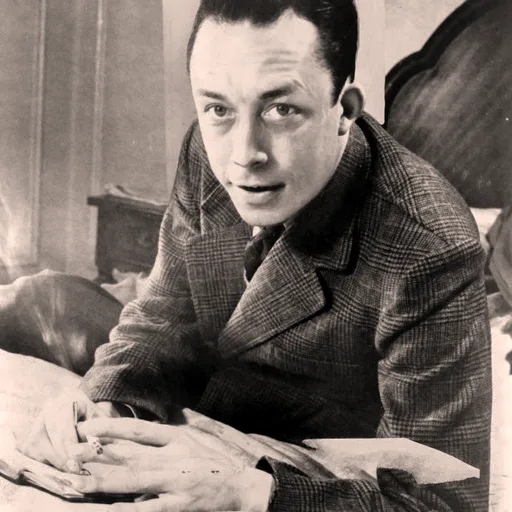
Writers & Literary Figures / Writers

George Orwell
United Kingdom
George Orwell (1903-1950) was a British essayist and novelist whose works 'Nineteen Eighty-Four' and 'Animal Farm' defined the modern understanding of totalitarianism. His clear, direct prose style and unwavering commitment to truth made him the twentieth century's most influential political writer in English.
What You Can Learn
Orwell's concept of Newspeak - language deliberately impoverished to make certain thoughts impossible - is more relevant in the age of algorithms and information warfare than when he wrote it. His insight that controlling narrative means controlling reality directly applies to modern brand management, corporate communications, and social media strategy. His essay 'Politics and the English Language' should be required reading for anyone who writes professionally: its insistence that clear writing reflects clear thinking is the foundation of effective business communication. His broader lesson: institutional health requires individuals willing to say uncomfortable truths clearly.
Words That Resonate
Political language is designed to make lies sound truthful and murder respectable, and to give an appearance of solidity to pure wind.
Who controls the past controls the future. Who controls the present controls the past.
In a time of deceit, telling the truth is a revolutionary act.
All animals are equal, but some animals are more equal than others.
Life & Legacy
George Orwell (1903-1950), born Eric Arthur Blair in British India, was the great moral voice of twentieth-century English literature. Educated at Eton, he rejected the comfortable path available to him and spent years in deliberate hardship - serving as a colonial policeman in Burma, living among the destitute in Paris and London, and fighting fascism in the Spanish Civil War.
'Down and Out in Paris and London' (1933) and 'The Road to Wigan Pier' (1937) established his method: immersive reporting driven by moral conviction, written in prose of crystalline clarity. His experience in Spain - where he was shot through the throat and witnessed communist betrayal of the revolution - radicalized his thinking about totalitarian ideology.
'Animal Farm' (1945), the allegory of the Russian Revolution as barnyard fable, was rejected by multiple publishers during wartime for its anti-Soviet stance. Its success made Orwell famous and financially secure for the first time. The novel's final line - 'The creatures outside looked from pig to man, and from man to pig, and from it was impossible to say which was which' - captured the corruption of revolutionary ideals with devastating economy.
'Nineteen Eighty-Four' (1949), written as Orwell was dying of tuberculosis on the Scottish island of Jura, imagined totalitarianism perfected through language control (Newspeak), perpetual surveillance (Big Brother), and the destruction of objective truth ('2+2=5'). Published just before his death, it gave English the vocabulary - Big Brother, thoughtcrime, doublethink, Room 101 - with which to recognize and resist authoritarian tendencies.
Orwell's essay 'Politics and the English Language' (1946) argued that corrupted language enables corrupted thinking - that political euphemism makes atrocity possible by making it invisible. This insight remains the foundation of all serious media criticism.
He died of tuberculosis in January 1950 at age 46, having completed the two works that would make him the most cited political writer of the twentieth century.
Expert Perspective
Orwell is the most influential political writer in English since Swift. His two masterworks created an entire vocabulary for discussing power, surveillance, and propaganda that has become indispensable to political discourse worldwide. His essay style - clear, honest, direct - established the gold standard for English nonfiction prose. His influence extends far beyond literature into journalism, political theory, and media criticism.