Investors / Institutional
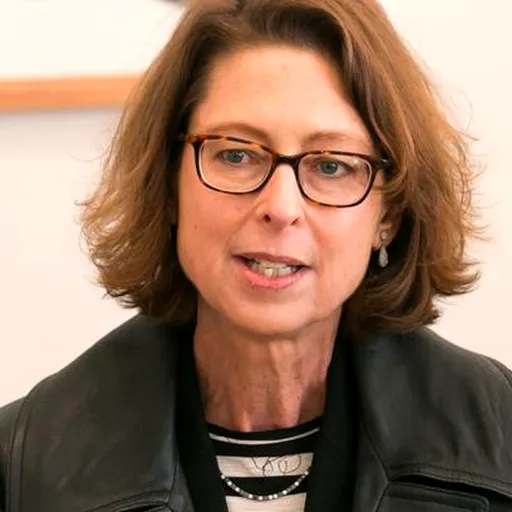
Abigail Johnson
United States 1961-12-19
21st-century American asset-management executive
Leads Fidelity Investments as its third-generation steward, driving digitization
A private company's long-term perspective mirrors the mindset of the patient accumulator
Born in Boston in 1961, Abigail Johnson is the chair, CEO, and president of Fidelity Investments. She leads the world-class asset management firm — founded by her grandfather Edward C. Johnson II and expanded by her father Edward 'Ned' Johnson III — as its third-generation steward, driving growth through digital-asset services and fintech expansion. Named to Forbes's 'Most Powerful Women' list, she is a symbolic figure of female leadership in the financial industry.
What You Can Learn
Johnson's leadership at Fidelity offers several valuable perspectives for individual investors. First, the overwhelming value of a long-term horizon: Fidelity's status as a private company insulates it from quarterly earnings pressure, and this structural advantage aligns directly with the mindset of individual investors building wealth through regular contributions to tax-advantaged retirement accounts. The takeaway is not to agonize over short-term market swings but to grow assets steadily over ten- or twenty-year spans — a philosophy that mirrors Fidelity's own management ethos. Second, adaptability to technology: despite being a traditional mutual-fund house, Fidelity's proactive engagement with cryptocurrency and fintech underscores the importance for individual investors of remaining open to new financial products and technologies rather than reflexively avoiding them. Third, the fact that Johnson began her career in art history — a seemingly unrelated field — suggests the value of a multi-dimensional perspective in investing. The ability to read social and cultural trends, not just financial data, can elevate the quality of long-term investment judgment.
Words That Resonate
Life & Legacy
Abigail Johnson heads Fidelity Investments, one of the world's largest asset-management firms, and is widely recognized as a landmark figure for female leadership in finance. She inherited a company founded by her grandfather Edward C. Johnson II in 1946 and built into a financial giant by her father Edward 'Ned' Johnson III, and as its third-generation leader she has driven further evolution in a rapidly changing market.
Born in December 1961 in Boston, Johnson majored in art history at the College of William & Mary before earning an MBA at Harvard Business School. She did not study finance formally until graduate school; some observers note that her undergraduate immersion in the arts contributed to the breadth of perspective and creative management approach she later brought to business. After joining Fidelity in 1988, she rose through the ranks as equity analyst, portfolio manager, and head of various business divisions, accumulating hands-on operational experience on her way to the top.
Especially notable in her career is that she did not rest on the label of 'founder's heir' but built a track record from within the organization. She managed funds personally, oversaw the technology division, and arrived at the helm with a thorough understanding of the company's workings. In 2014 she became president and CEO, and in 2016 she added the role of chair, assuming full authority over a firm with approximately 45,000 employees worldwide.
Among her most significant strategic decisions is Fidelity's early move into digital assets. Despite being a titan of traditional mutual funds, Fidelity was one of the first major financial institutions to offer cryptocurrency custody and trading services to institutional clients. In a sector often perceived as conservative, the willingness to engage head-on with an emerging asset class is seen as a reflection of technological understanding and forward-looking judgment.
A distinctive feature of Fidelity is that it remains a privately held company in which the Johnson family owns approximately 49 percent of the equity. Free from the quarterly-earnings pressure that public companies face, Fidelity can maintain a structural advantage for long-term investment decisions and business development. Johnson has leveraged this private-company model to diversify into retirement-plan administration, wealth management, and fintech.
Ranked on Forbes's list of the world's 100 most powerful women, Johnson holds an estimated personal fortune of approximately $31.5 billion (Forbes) to $47.3 billion (Bloomberg), making her the wealthiest person in Massachusetts. Yet she keeps media exposure to a minimum and is characteristically measured and reserved in public statements — a reticence that can be read as embodying the essence of a steady asset-management business far removed from speculative glamour.
She also serves on the board of Breakthrough Energy Ventures, signaling an interest in clean energy that extends her engagement beyond finance to broader societal challenges. Leading an enterprise passed down through generations is a theme that resonates deeply with family-run businesses in Japan and elsewhere. For leaders of companies where founding families retain an active management role — Toyota and Suntory among them — Johnson's example offers one model of how a third-generation steward can preserve the firm while driving innovation.
Expert Perspective
Johnson is not an investor celebrated for individual stock-picking prowess but is positioned as the head of an institution that provides the infrastructure through which millions of individuals build their wealth. Unlike portfolio virtuosos such as Buffett or Soros, her contribution lies essentially in the management of an investment platform. Under the distinctive governance structure of a family-controlled private company, she makes long-term-oriented decisions that fundamentally differentiate Fidelity from publicly traded hedge funds on Wall Street. She is a pioneering female leader in the financial industry and has made significant contributions to the democratization of institutional investing and the adaptation to technology.