Writers & Literary Figures / Writers

Hermann Hesse
Germany
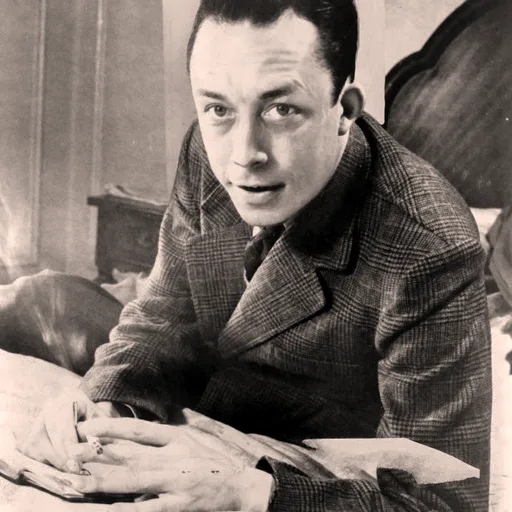
Hermann Hesse (1877-1962) was a German-Swiss novelist and poet whose works - 'Siddhartha,' 'Steppenwolf,' 'The Glass Bead Game,' 'Demian' - explore the individual's search for authenticity and spiritual fulfillment. His Nobel Prize (1946) recognized a lifetime of writing that bridges Eastern and Western philosophical traditions.
What You Can Learn
Hesse's distinction between knowledge and wisdom anticipates modern debates about information overload: having access to all data does not equate to understanding. His novels' central theme - that each person must find their own authentic path rather than following prescribed routes - directly challenges credentialist thinking in career development. For leaders managing diverse teams, Hesse's insistence on individuation suggests that the best organizations accommodate multiple paths to excellence rather than enforcing a single model. His synthesis of Eastern and Western thinking also models the cross-cultural literacy increasingly required in global business.
Words That Resonate
Knowledge can be communicated, but not wisdom.
Wer sich selbst nicht lieben kann, kann auch keinen andern lieben.
One need not be afraid of anyone. If one fears someone, it is because one has given that person power over oneself.
I have always believed, and I still believe, that whatever good or bad fortune may come our way we can always give it meaning and transform it into something of value.
Every person's life is a journey toward himself.
Some of us think holding on makes us strong, but sometimes it is letting go.
Learning is experience. Everything else is just information.
Lernen ist erfahren. Alles andere ist nur Information.
Life & Legacy
Hermann Hesse (1877-1962) was born in Calw, Germany, to a family of Protestant missionaries who had served in India. This background gave him early exposure to Eastern philosophy that would shape his entire literary career. After a mental breakdown during his seminary education, he apprenticed as a bookseller and began writing.
'Peter Camenzind' (1904) established his reputation with its Romantic story of a young man seeking meaning in nature and art. 'Demian' (1919), published pseudonymously after World War I, explored a young man's spiritual awakening through Jungian symbolism and became an immediate sensation among disillusioned youth.
'Siddhartha' (1922), set in ancient India, follows a Brahmin's son on his journey through asceticism, worldly pleasure, and finally enlightenment by a river. Its synthesis of Buddhist philosophy with Western narrative made it one of the most influential spiritual novels of the century.
'Steppenwolf' (1927) depicted a middle-aged intellectual torn between his bourgeois and wild selves - a novel that would find its most passionate audience among the 1960s counterculture. 'Narcissus and Goldmund' (1930) explored the tension between intellectual and artistic temperaments through a medieval friendship.
'The Glass Bead Game' (Das Glasperlenspiel, 1943), his final novel, imagines a future intellectual community devoted to a synthesis of all human knowledge through an abstract game. It won him the Nobel Prize in 1946.
Hesse underwent Jungian analysis in 1916-1917 (with a student of Jung himself), an experience that permanently shaped his fiction's concern with individuation and the integration of opposing selves. He became a Swiss citizen in 1923 and lived his final decades in Montagnola, Ticino.
His works experienced a massive revival in the 1960s-70s among young readers seeking alternatives to Western materialism. He remains one of the most translated German-language authors worldwide.
Expert Perspective
Hesse occupies a unique position as the literary bridge between European Romanticism and Eastern philosophy. His novels created a genre of spiritual quest fiction that influenced the counterculture movement and continues to shape popular engagement with Buddhist and Hindu ideas in the West. His Nobel Prize confirmed the literary validity of philosophical fiction focused on inner development rather than social realism.