Scientists / Chemistry
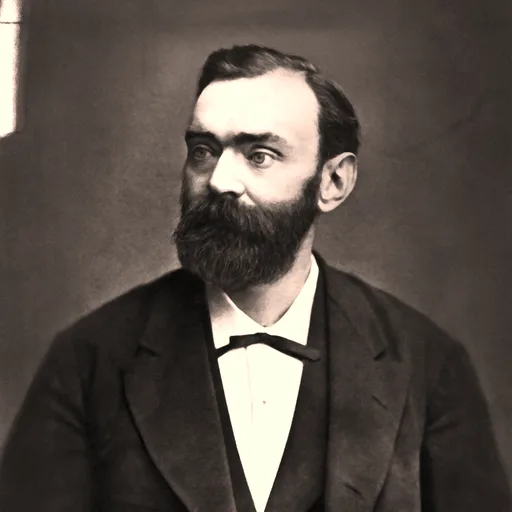
Alfred Nobel
Sweden 1833-10-21 ~ 1896-12-10
Nineteenth-century Swedish chemist and industrialist
Invented dynamite and held 355 patents
Established the Nobel Prizes, transforming his legacy from armaments manufacturer to patron of human achievement
Swedish chemist and industrialist born in 1833 who invented dynamite and held 355 patents. He used his fortune to establish the Nobel Prizes, transforming his legacy from armaments manufacturer to patron of human achievement.
What You Can Learn
Nobel's premature obituary shows the power of reputation and narrative, a lesson for personal branding and corporate reputation management. His decision to redirect wealth from armaments to prizes for human achievement is a model of philanthropic legacy building. And the tension between his explosives business and peace-prize legacy illustrates the complexity of evaluating impact across time horizons.
Words That Resonate
Life & Legacy
Alfred Nobel invented dynamite and accumulated a fortune from explosives, then bequeathed most of it to fund the prizes that bear his name. Few lives illustrate the tension between destructive technology and constructive legacy as starkly as his.
Born in 1833 in Stockholm to an engineer and arms manufacturer, he was educated privately in Saint Petersburg and Paris, studying chemistry under Nikolai Zinin and later working in a laboratory in Paris. He spoke five languages fluently.
Nitroglycerin was a powerful but dangerously unstable explosive. Nobel's brother Emil was killed in an 1864 factory explosion. Nobel spent years seeking a way to stabilize it and in 1867 patented dynamite, nitroglycerin absorbed in diatomaceous earth. The product transformed mining, tunneling, and construction.
He went on to develop blasting gelatin (1875) and ballistite (1887), a smokeless powder. By his death he held 355 patents and had established factories across Europe. He became one of the wealthiest men of his era.
A French newspaper, mistaking his brother Ludvig's death for his own, published an obituary calling him the 'merchant of death.' The incident reportedly prompted Nobel to reconsider his legacy. In his 1895 will he directed that the bulk of his estate fund annual prizes in physics, chemistry, medicine, literature, and peace.
Nobel died in San Remo, Italy, in 1896. The first Nobel Prizes were awarded in 1901. They became the world's most prestigious recognition of intellectual and humanitarian achievement, transforming Nobel's name from a synonym for explosives into a symbol of excellence.
Expert Perspective
Among scientists, Nobel is the chemist-inventor whose practical innovations transformed industry and warfare. Dynamite was a genuine engineering breakthrough. But his enduring significance lies in the prizes: by institutionalizing recognition of scientific excellence, he created the most powerful incentive structure in modern science.