Entrepreneurs / Consumer
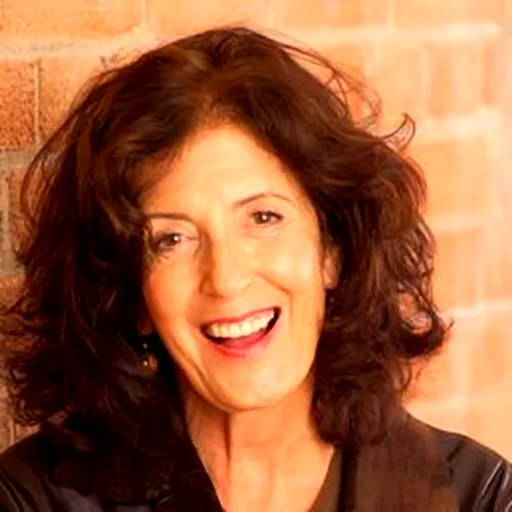
Anita Roddick
United Kingdom 1942-10-23 ~ 2007-09-10
20th-century British pioneer of ethical business
Founded The Body Shop and brought ethical consumerism to the mass market
Converting ethics into brand differentiation is the prototype of ESG management
Born in England in 1942 to an Italian immigrant family, Anita Roddick founded The Body Shop in 1976 and placed the elimination of animal testing, fair-trade sourcing, and environmentally conscious packaging at the heart of the business. Guided by the conviction that profit and social contribution are compatible, she pioneered the concept of ethical consumerism in the mass market. She remained an active campaigner for human rights and environmental causes until her death in 2007 at the age of 64.
What You Can Learn
Roddick's business offers rich lessons for today's ESG-focused and sustainable enterprises. First, the methodology of converting ethical business principles into brand differentiation: eliminating animal testing and adopting fair-trade sourcing were not mere cost increases but investments that generated consumer empathy and brand loyalty — the prototype for modern D2C brands that put sustainability at the core of their marketing. Second, a warning that rapid franchise expansion risks diluting the founding principles: the tension between scale and quality is a perennial challenge for mission-driven businesses. Third, the ethical dilemma of an exit to a large corporation: Roddick justified selling to L'Oreal with the logic of 'changing from within,' but this decision remains a live question for every social entrepreneur. Preserve the mission independently, or merge with big capital to amplify impact? Roddick's choice illustrates both the promise and the limits of each path.
Words That Resonate
Life & Legacy
Anita Roddick was an entrepreneur who redefined business as a vehicle for social change, setting out to prove through the success of a single cosmetics chain that profit and ethical conduct are not mutually exclusive.
Born in 1942 in Littlehampton on England's south coast to an Italian immigrant family, Roddick worked as a teacher before traveling in developing countries as a United Nations worker. The traditional beauty practices and natural ingredients she encountered abroad became the foundation of her vision for cosmetics free of synthetic chemicals.
In 1976, while her husband Gordon was traveling in South America, she opened the first Body Shop in Brighton to support the family, funded by a bank loan of just four thousand pounds. The early store was as much a product of frugality as philosophy: she used small bottles to keep container costs down and encouraged customers to bring them back for refills. These practical economies were later reinterpreted as hallmarks of environmentally conscious business.
What set Roddick's model fundamentally apart from the rest of the cosmetics industry were three principles. First, the elimination of animal testing on products — at a time when animal testing was the industry's standard safety protocol, Roddick championed the development and adoption of alternatives. Second, the construction of a supply chain that sourced raw materials through fair-trade arrangements with small-scale producers in developing countries. Third, a commitment to transparency in ingredients and production methods rather than exaggerated advertising claims about product efficacy.
These principles were not marketing strategy; they sprang from conviction. Roddick argued that 'business has a more powerful force in society than religion or government' and used her stores as awareness platforms for social causes. She collaborated with Greenpeace, supported The Big Issue magazine, and participated in campaigns for the release of political prisoners in Angola — deliberately blurring the boundary between commerce and activism.
The Body Shop expanded rapidly through franchising, building a network of more than 2,000 stores in over 50 countries by the 1990s. Rapid growth, however, brought challenges in quality control and franchisee relations. Critics also questioned the substance behind Roddick's ethical claims; some journalists accused her of greenwashing, arguing that supply-chain transparency fell short of her rhetoric. Roddick responded that showing the direction matters even when perfection remains out of reach.
In 2006, L'Oreal of France acquired The Body Shop for approximately 652 million pounds. The sale to a company that conducted animal testing drew sharp criticism from fans and activists, but Roddick argued that influencing a major corporation from the inside would have greater impact. She died in 2007 of complications from hepatitis at the age of 64.
Roddick's legacy lies in elevating ethical consumerism from an idealistic notion to a demonstrably viable business model. Environmentally conscious companies existed before her, but none had achieved scale in the mass market. The charitable organization Children on the Edge, which she established in 1990, continues to support disadvantaged children in Eastern Europe, Africa, and Asia. The consumer consciousness that 'shopping can change the world,' which The Body Shop pioneered, stands at the headwaters of today's sustainable-brand movement.
Expert Perspective
Among entrepreneurial archetypes, Roddick is classified as a social-activist entrepreneur. Her explicit prioritization of social change as the end and profit as the means places her in the lineage of Patagonia's Yvon Chouinard. What distinguishes Roddick is her integration of multiple social causes — environmental protection, human rights, animal welfare, and fair trade — into a single cosmetics business model, making her a conceptual forerunner of today's B Corporation movement and social enterprise philosophy.