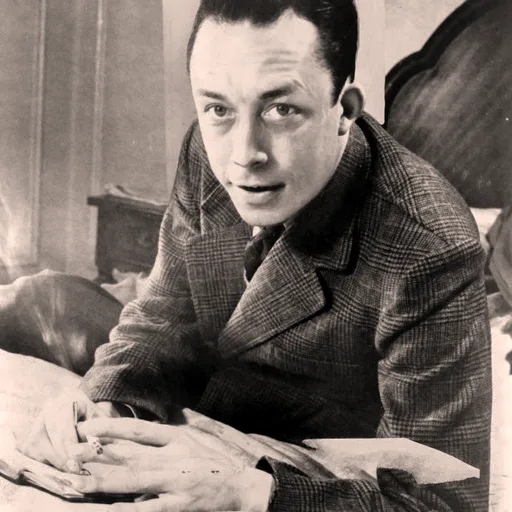
Writers & Literary Figures / Writers

Ernest Hemingway
United States
Ernest Hemingway (1899-1961) was an American novelist and journalist whose spare, declarative prose style revolutionized twentieth-century fiction. His works - 'The Sun Also Rises,' 'A Farewell to Arms,' 'The Old Man and the Sea' - and his Nobel Prize (1954) established him as the most influential American writer of his generation.
What You Can Learn
Hemingway's 'iceberg theory' - that the dignity of movement of an iceberg lies in only one-eighth of it showing above water - is directly applicable to modern communication strategy. The most powerful presentations, pitches, and products communicate confidence through restraint: showing mastery by revealing only what's necessary. His discipline of writing 'one true sentence' each morning offers a practical technique for overcoming creative paralysis. His insight about being 'strong at the broken places' has become the psychological foundation of resilience theory and post-traumatic growth.
Words That Resonate
Courage is grace under pressure.
The world breaks everyone, and afterward, many are strong at the broken places.
All you have to do is write one true sentence. Write the truest sentence that you know.
There is nothing noble in being superior to your fellow man; true nobility is being superior to your former self.
Life & Legacy
Ernest Hemingway (1899-1961) was born in Oak Park, Illinois, and began his career as a journalist for the Kansas City Star, where he learned the crisp, factual prose style that would transform fiction. During World War I, he served as an ambulance driver in Italy and was seriously wounded - an experience that shaped his lifelong preoccupation with courage, violence, and death.
Living in 1920s Paris among the expatriate literary community, he wrote 'The Sun Also Rises' (1926), a novel of disillusioned postwar youth that defined the 'Lost Generation.' Its understated prose - communicating emotion through surface detail rather than explicit statement (his 'iceberg theory') - was revolutionary.
'A Farewell to Arms' (1929) drew on his wartime experience to create a love story set against the Italian front. 'For Whom the Bell Tolls' (1940) depicted the Spanish Civil War through an American volunteer's final mission. Both novels demonstrated his ability to find universal meaning in extreme circumstances.
Hemingway's prose style - short sentences, simple words, minimal adjectives, dialogue that carries enormous unstated weight - broke permanently with the ornate Victorian tradition. He proved that literary power could reside in what was left out rather than what was put in. His influence on English prose is incalculable.
'The Old Man and the Sea' (1952), the tale of an aging Cuban fisherman's epic battle with a giant marlin, won the Pulitzer Prize and contributed to his Nobel Prize in Literature (1954). The Swedish Academy praised 'his mastery of the art of narrative' and 'the influence he has exerted on contemporary style.'
Hemingway's larger-than-life persona - bullfighting aficionado, deep-sea fisherman, big-game hunter, war correspondent - made him as famous as any film star. But behind the machismo lay serious craft: he revised constantly, famously rewriting the ending of 'A Farewell to Arms' thirty-nine times.
Suffering from depression, alcoholism, and failing health, he died by suicide in Ketchum, Idaho, in July 1961.
Expert Perspective
Hemingway's influence on English prose is perhaps the most significant of any twentieth-century writer. His minimalist style - elevated to aesthetic principle - changed how English-language writers thought about sentences permanently. His war novels defined how literature processes collective trauma. His Nobel Prize confirmed the short, declarative sentence as a valid vehicle for the highest literary ambition.