Writers & Literary Figures / Writers

Lu Xun
China
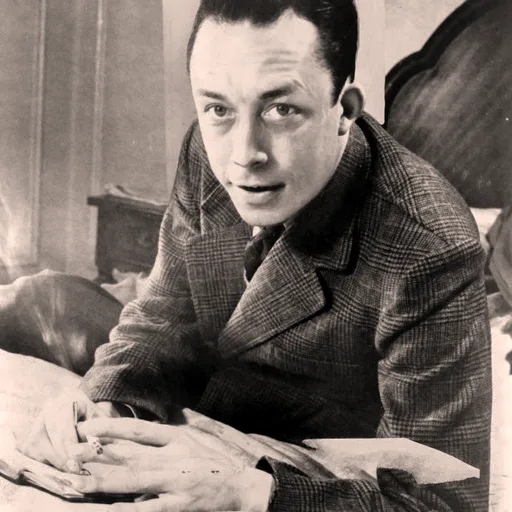
Lu Xun (1881-1936) is universally recognized as the father of modern Chinese literature. His short stories - 'A Madman's Diary,' 'The True Story of Ah Q,' 'Kong Yiji' - combined fierce social criticism with literary innovation, attacking the feudal traditions he believed were destroying China. No other writer has had comparable influence on modern Chinese cultural consciousness.
What You Can Learn
Lu Xun's diagnosis of 'Ah Q spirit' - the human tendency to reframe failure as success and humiliation as victory - is essential knowledge for anyone building a culture of honest feedback. Organizations that cannot face uncomfortable truths develop their own 'Ah Q spirit,' celebrating vanity metrics while ignoring genuine problems. His metaphor about roads being created by walking provides the philosophical foundation for first-mover strategy: markets, like paths, come into existence through action rather than waiting for permission. His choice to abandon medicine for literature demonstrates that the most impactful work addresses root causes (culture) rather than symptoms.
Words That Resonate
Fierce-browed, I coolly defy a thousand pointing fingers; head bowed, I willingly serve as a children's ox.
Hope is like a path in the countryside: originally there was no path - yet, as people walk all the time in the same spot, a way appears.
There was no road on earth to begin with. When many people walk the same way, a road comes into being.
Lies written in ink cannot obscure a truth written in blood.
Either explode in silence, or perish in silence.
To be silent is to consent.
Life & Legacy
Lu Xun (1881-1936), born Zhou Shuren in Shaoxing, Zhejiang Province, came from a declining scholarly family. His father's death from tuberculosis (inadequately treated by traditional medicine) and the family's subsequent impoverishment left him with a lifelong hostility toward traditional Chinese culture and a determination to modernize Chinese thought.
He studied medicine in Japan (1902-1909) but abandoned it after a famous epiphany: watching a newsreel of Chinese spectators passively observing the execution of a fellow Chinese, he concluded that China's sickness was spiritual, not physical, and could only be cured through literature.
'A Madman's Diary' (1918) - the first major work of modern Chinese fiction written in vernacular rather than classical Chinese - used the device of a paranoid narrator to expose Confucian society as literally cannibalistic: 'I opened the history book... and between the lines were written the words EAT PEOPLE.'
'The True Story of Ah Q' (1921-1922), his most famous work, depicts a village idiot who transforms every humiliation into a 'spiritual victory' - a devastating satire of Chinese national psychology. The term 'Ah Q spirit' (self-deceptive consolation) became permanent Chinese vocabulary.
'Kong Yiji' (1919), 'Medicine' (1919), and 'The New Year's Sacrifice' (1924) continued his assault on feudal mentality with stories of devastating economy and compassion for the oppressed.
Lu Xun also excelled as an essayist - his 'zawen' (miscellaneous essays) attacked social injustice, cultural conservatism, and political oppression with a satirical ferocity unmatched in Chinese letters. He was also a pioneer of Chinese woodcut art and literary translation.
He died of tuberculosis in Shanghai in 1936. Mao Zedong later proclaimed him 'the commander of China's cultural revolution' - a posthumous political conscription that Lu Xun, a fierce independent, might have resisted. His works remain mandatory reading in Chinese schools and his influence on Chinese intellectual culture is total.
Expert Perspective
Lu Xun is the unchallenged founding figure of modern Chinese literature - the writer who simultaneously destroyed classical literary conventions and created the modern Chinese short story. His influence on Chinese culture extends far beyond literature into political thought, education, and national self-understanding. No other writer in any national tradition occupies quite as dominant a position in modern cultural consciousness.