Artists / Japanese Art
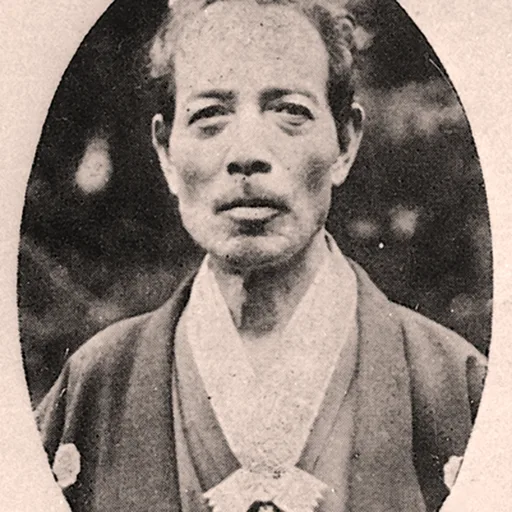
Yokoyama Taikan
Japan 1868-09-18 ~ 1958-02-26
Japanese nihonga painter born in Mito in 1868
Modernized Japanese painting through the hazy morotai technique, fusing Eastern brush tradition with Western spatial awareness
His strategy of renewing tradition from within offers a model for heritage industries adapting to a globalizing world
Born in Mito in 1868, Taikan modernized Japanese painting through the hazy morotai technique that dissolved outlines. He sought to fuse Eastern brush tradition with Western spatial awareness.
What You Can Learn
Taikan offers a lesson in cultural adaptation. His strategy of modernizing nihonga from within, absorbing Western space while keeping Eastern brush spirit, models how heritage brands and traditional industries can evolve without losing identity. His persistence against early criticism shows the value of holding course when innovation is initially misunderstood. And his repeated painting of Mount Fuji, each version exploring a different atmosphere, parallels iterative product development.
Words That Resonate
Mountains are the bones of the earth; clouds are its breath.
画は人なり
Tradition is not a prison; it is a foundation.
芸術に行き詰まりはない。行き詰まるのは芸術家である。
A painter must see with the heart, not merely the eye.
富士を描くことは日本の心を描くことである
Life & Legacy
Yokoyama Taikan is the most important figure in the modernization of nihonga, the Japanese painting tradition that sought to renew itself in the face of Western influence rather than surrender to it. His morotai (hazy) technique dissolved the outlines that had defined Japanese painting for centuries, creating atmospheric compositions that absorbed Western spatial depth while retaining Eastern brush spirit.
Born November 2, 1868, in Mito, Ibaraki Prefecture, he entered the Tokyo Fine Arts School under Okakura Tenshin (Kakuzo), the visionary educator who argued that Asian art must modernize without losing its identity. Taikan became Okakura's most devoted disciple and carried this mission throughout his career.
His early morotai works, which eliminated line in favor of washes of color blending into one another, were initially criticized as blurry and formless. Critics derisively called the style morotai (hazy pictures). Yet Taikan persisted, and over time the technique gained recognition as a legitimate expansion of nihonga's expressive range.
His subject matter ranged from Mount Fuji, which he painted repeatedly throughout his life, to historical and mythological themes. His depictions of Fuji, rendered in varied atmospheric conditions, parallel Hokusai's and Monet's serial approaches to a single motif.
During the war years Taikan's nationalism complicated his legacy. He donated paintings to fund military aircraft and lent his prestige to the war effort, actions that brought postwar scrutiny. Yet his artistic contributions to nihonga modernization remain acknowledged.
He received the Order of Culture in 1937 and was named a Person of Cultural Merit. He died February 26, 1958, at eighty-nine. His legacy is the demonstration that tradition can be renewed from within, absorbing outside influence without abandoning its core identity.
Expert Perspective
Taikan is the leading figure in nihonga modernization. His morotai technique dissolved traditional outlines, absorbing Western spatial depth while preserving Eastern brush spirit. His serial treatment of Mount Fuji parallels Hokusai and Monet. His career embodies Okakura Tenshin's vision of renewing Asian art without surrendering to Western models.