Artists / Japanese Art
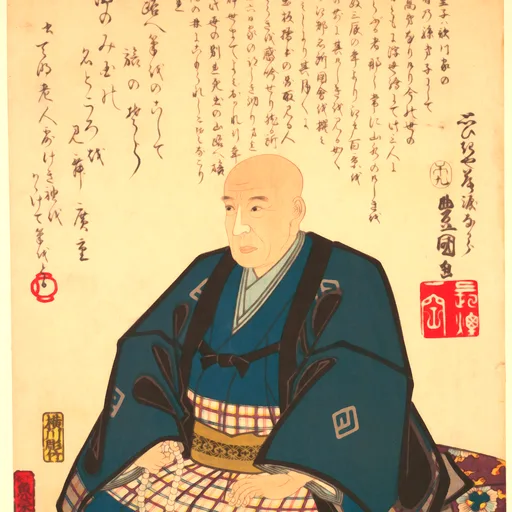
Utagawa Hiroshige
Japan 1797-01-01 ~ 1858-10-12
Japanese ukiyo-e landscape master born in Edo in 1797
Created The Fifty-three Stations of the Tokaido, capturing weather and mood with lyrical atmospheric subtlety
His prints reached Paris in the 1860s and directly influenced Van Gogh, Monet, and the Impressionist movement
Born in Edo in 1797, Hiroshige elevated ukiyo-e landscape art with The Fifty-three Stations of the Tokaido. His atmospheric perspective and seasonal sensitivity deeply influenced European Impressionism.
What You Can Learn
Hiroshige offers lessons in niche mastery. His focus on atmospheric landscape, complementing rather than competing with Hokusai's dynamism, shows the strategic value of occupying a distinct position within a crowded field. His Tokaido series, tied to the physical experience of travel, prefigures location-based content marketing. And his influence on Impressionism demonstrates that work rooted in local culture can reshape an entirely different tradition when it crosses borders.
Words That Resonate
One should capture the spirit of things, not merely copy their form.
東路にふでをのこして旅のそら 西のみくにの名ところを見ん
Every season has its beauty; every rain its poetry.
雪月花の趣を画に移すは絵師の本分なり
The landscape is the mirror of the heart.
名所は足で描く
Life & Legacy
Utagawa Hiroshige is, alongside Hokusai, one of the two ukiyo-e masters who most profoundly influenced Western art. Where Hokusai's landscapes pulse with dynamic energy, Hiroshige's evoke mood, weather, and the passing of seasons with lyrical subtlety.
Born in 1797 in Edo to a minor fire-brigade official, he entered the Utagawa school as a teenager. His early output included actor prints and beautiful-woman prints, but landscape became his calling after he accompanied an official procession along the Tokaido road in 1832.
The Fifty-three Stations of the Tokaido (1833-34) made his reputation. Each print captures a station on the highway between Edo and Kyoto, rendering rain, snow, mist, and twilight with atmospheric sensitivity that had no precedent in Japanese prints. The series sold widely and was reprinted many times.
His later series, One Hundred Famous Views of Edo, explored the capital through bold compositional devices: a close-up plum branch framing a distant bridge, a eagle's-eye view of a river bend. These radical croppings directly influenced European artists; Van Gogh copied two prints in oil, and Monet collected them.
Hiroshige's palette relies on soft gradations and a keen sense of how humidity and light alter color. His rain lines, parallel diagonal strokes crossing the composition, became iconic. This atmospheric approach complemented Hokusai's more structural vision, and together they defined the ukiyo-e landscape tradition.
He died on October 12, 1858, at sixty-one, during a cholera epidemic. His work reached Paris in the 1860s and became a primary vehicle for Japonisme. The flat color areas, asymmetric composition, and weather sensitivity of his prints gave Impressionist and Post-Impressionist painters permission to abandon Western conventions of depth and chiaroscuro.
Expert Perspective
Hiroshige is one of the two ukiyo-e masters, alongside Hokusai, who most influenced Western art. His atmospheric landscapes, rich in weather and seasonal feeling, provided European artists with an alternative to Renaissance perspective. The Fifty-three Stations of the Tokaido and One Hundred Famous Views of Edo were primary vehicles of Japonisme, directly influencing Van Gogh, Monet, and Whistler.