Artists / Sculpture
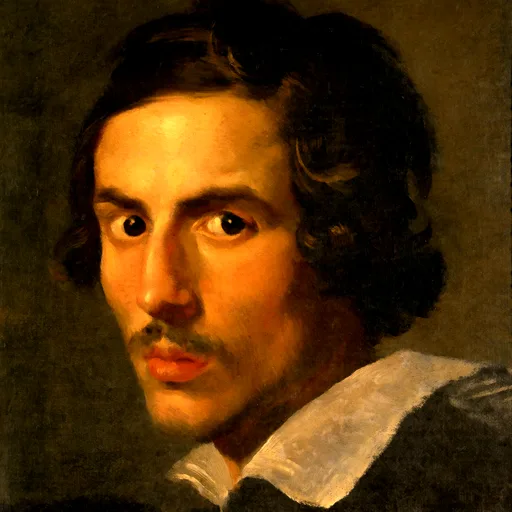
Gian Lorenzo Bernini
Italy 1598-12-07 ~ 1680-11-28
Italian Baroque sculptor and architect born in Naples in 1598
Carved marble into seemingly living forms in Apollo and Daphne and The Ecstasy of Saint Teresa
His integration of sculpture, architecture, and light into immersive environments anticipates modern experience design
Born in Naples in 1598, Bernini was the supreme Baroque sculptor and shaped Rome's public face. The Ecstasy of Saint Teresa fuses drama, movement, and spiritual intensity.
What You Can Learn
Bernini offers lessons in total creative direction. His integration of sculpture, architecture, and lighting into unified experiences prefigures modern experience design, from immersive theater to branded retail environments. His ability to serve eight successive clients (popes) while maintaining artistic vision models how to sustain creative integrity across changing leadership. And his rendering of marble as fluid and alive reminds creators that mastery of craft can make even a rigid medium feel limitless.
Words That Resonate
I render marble as supple as wax.
Il bel composto: l'unità delle arti è il fine supremo.
In art, the hand can never execute anything higher than the heart can imagine.
La luce è l'anima dell'architettura.
The best architect is time, which always reveals the truth.
Il marmo si piega alla mia volontà come se fosse cera.
Life & Legacy
Gian Lorenzo Bernini dominated 17th-century Rome as sculptor, architect, painter, and stage designer, making him the Baroque era's most complete artistic personality. His ability to carve marble into seemingly fluid, breathing forms set a standard that has never been surpassed.
Born December 7, 1598, in Naples to a Mannerist sculptor father, he moved to Rome as a child and showed prodigious talent. By his early twenties he had produced works of astonishing virtuosity, including Apollo and Daphne, which captures the mythological moment of Daphne transforming into a laurel tree with bark spreading over her skin and leaves sprouting from her fingers.
He served eight successive popes and shaped Rome's physical identity. The Baldacchino in St. Peter's, a towering bronze canopy over the papal altar, combines architecture and sculpture. The colonnade of St. Peter's Square extends two curved arms to embrace the faithful, a theatrical gesture on an urban scale.
The Ecstasy of Saint Teresa in the Cornaro Chapel is his masterpiece of emotional sculpture. Teresa swoons as an angel poised to pierce her heart with a golden arrow; drapery cascades in impossible folds, and hidden windows direct golden light onto the figures. The entire chapel functions as a stage set, fusing sculpture, architecture, and lighting into a unified experience.
His portrait busts are equally remarkable. The bust of Louis XIV captures royal authority with a sense of movement in the swirling drapery, and his bust of Costanza Bonarelli is one of the most intimate portraits in sculpture, conveying personality with startling immediacy.
He died November 28, 1680, at eighty-one, having shaped Rome's skyline more than any other individual. His synthesis of the arts into immersive theatrical experiences anticipates the modern concept of the Gesamtkunstwerk.
Expert Perspective
Bernini is the supreme Baroque sculptor and a defining architect of Rome. His ability to carve marble into seemingly living, breathing forms remains unmatched. The Ecstasy of Saint Teresa fuses sculpture, architecture, and light into an immersive theatrical experience. His synthesis of arts anticipates the Gesamtkunstwerk concept.