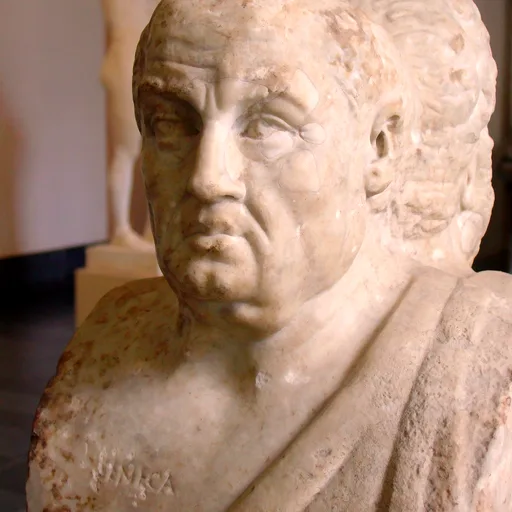
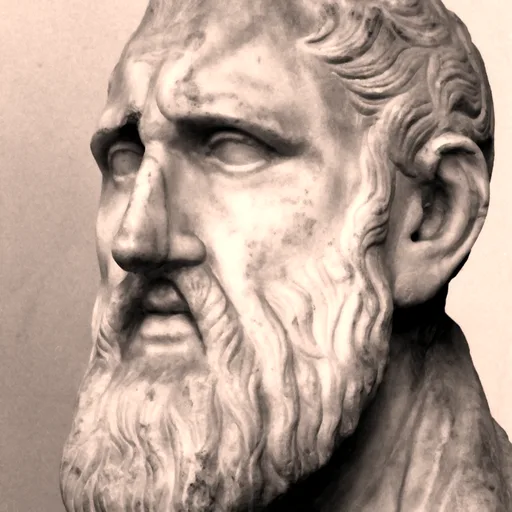
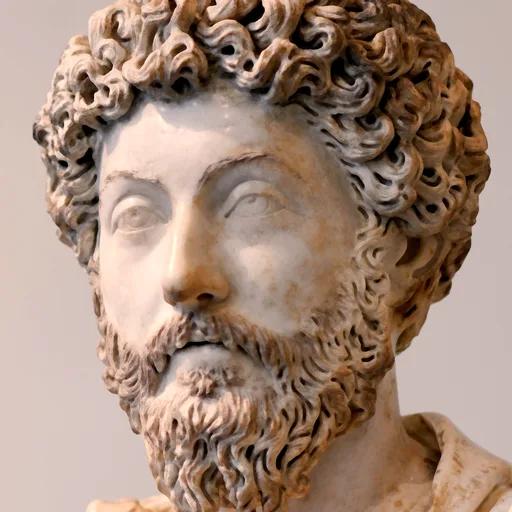
Philosophers / Islamic
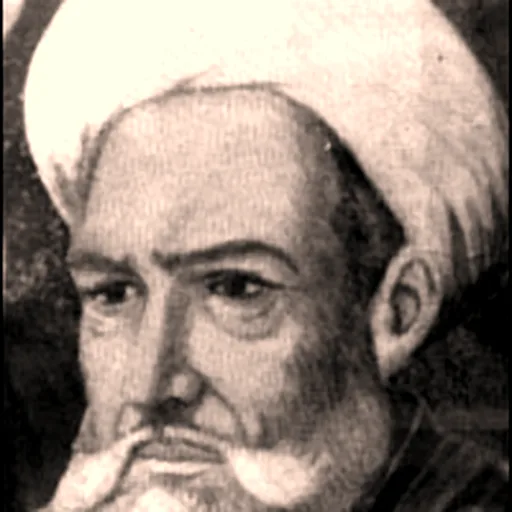
Farabi
Uzbekistan 0870-01-01 ~ 0951-01-01
10th-century philosopher and music theorist of the Islamic world
Called the 'Second Teacher' for integrating Greek philosophy with Islamic thought
The ability to synthesize disparate intellectual traditions is the foundation of cross-cultural leadership
Born around 870 CE in the Farab region of Central Asia, al-Farabi was a pioneering figure in Islamic philosophy. Known as the 'Second Teacher' after Aristotle, he fused Neoplatonic emanation theory with political philosophy into an original system. His major work, Principles of the Views of the Citizens of the Virtuous City, became a foundational text in ideal-state theory that decisively influenced Avicenna and Averroes. He was also a major music theorist who laid the theoretical foundations of Middle Eastern music.
What You Can Learn
The greatest value al-Farabi's thought offers the modern world lies in his methodology for integrating disparate intellectual traditions. Just as he joined Greek philosophy and Islamic monotheism without forcing one to capitulate to the other, today's global businesses must integrate value systems and frameworks from different cultural backgrounds. In diversity, equity, and inclusion (DEI) initiatives and in cross-cultural management more broadly, the al-Farabian approach — seeking a higher synthesis rather than choosing one side — is rich in practical insight. His argument that the ideal ruler must combine wisdom with moral character speaks directly to contemporary leadership theory: the need for leaders who possess not only technical competence but also ethical judgment grows more urgent in an era of AI ethics and ESG governance. His interdisciplinary treatment of music as mathematical order apprehended through the senses also connects to current educational discourse on the fusion of data science and the liberal arts. The habit of building a coherent system by traversing multiple domains of knowledge, rather than retreating into a single specialty, is the intellectual attitude that an age of uncertainty demands.
Words That Resonate
Music is a mathematical science that investigates how melodies are composed and their various properties.
الموسيقى علم رياضي يبحث في الألحان من حيث تتألف وعن أحوالها
Philosophy is the knowledge of beings qua beings.
الفلسفة هي العلم بالموجودات بما هي موجودة
The virtuous city resembles a sound and healthy body.
إن المدينة الفاضلة تشبه البدن التام الصحيح
The purpose of human existence is to attain supreme happiness.
غرض الإنسان في الوجود أن يبلغ السعادة القصوى
The ruler of the virtuous city is one who unites wisdom and prophecy.
رئيس المدينة الفاضلة هو الذي يجمع بين الحكمة والنبوة
Life & Legacy
Al-Farabi was the thinker who first systematized Aristotelian philosophy within the Islamic world and offered the earliest comprehensive answer to the fundamental question of how faith and reason can coexist. Subsequent Islamic philosophers called him the 'Second Teacher' — second only to Aristotle — in recognition of the fact that he was the first intellect since the Stagirite to present philosophy as a coherent, unified system.
Born around 870 CE in the Farab region — in what is now southern Kazakhstan — he is generally held to be of Turkic descent, though the question of his ethnic origin remains debated. Details of his early life are sparse. As a young man he moved to Baghdad, the Abbasid capital, where he is said to have studied Aristotelian logic and natural philosophy under Syriac Christian scholars. Baghdad in this era was the epicenter of the translation movement symbolized by the House of Wisdom, a period in which Greek texts were being rendered into Arabic at a prodigious rate. Within this intellectual current, al-Farabi moved beyond mere translation and commentary to original philosophical creation.
The heart of his thought lies in the integration of Neoplatonic emanation theory with Aristotelian logic and metaphysics. In his ontology, intellects emanate in graduated stages from a single First Cause — God — down to the Active Intellect that governs the sublunary world. This emanationist hierarchy was an attempt to reconcile the Qur'anic monotheistic worldview with the philosophical cosmology of ancient Greece. The human intellect, he taught, reaches perfection through conjunction with the Active Intellect — an epistemological framework that would later become the basis for Avicenna's illuminationist philosophy.
In political philosophy, al-Farabi was equally original. His principal work, Principles of the Views of the Citizens of the Virtuous City, is recognized as a recasting of Plato's Republic within an Islamic context. He argued that the ideal ruler must unite the qualities of philosopher and prophet, and he explored the possibility of wisdom and revelation harmonizing within a single polity. This discussion constituted a pioneering response to the central problem of Islamic thought: the relationship between philosophical truth and religious law. He also analyzed in detail the typology of ignorant and wicked cities, giving the work a dimension of comparative political theory.
Equally remarkable is his contribution as a music theorist. His Grand Book of Music (Kitab al-Musiqa al-Kabir) stands as one of the most important texts on music theory in the Arabic-speaking world. He systematized intervals, scales, and rhythms in mathematical terms, described the tuning of instruments such as the oud and rabab, and was reportedly an accomplished performer himself. His treatment of music as an activity in which mathematical order is apprehended through the senses reveals the integrative ambition of a mind that sought to unify all branches of knowledge.
In his later years al-Farabi lived under the patronage of the Hamdanid court in Aleppo, Syria. He died around 950 CE in Damascus. He is said to have led a frugal life, far from courtly splendor, devoting himself entirely to writing and contemplation. His extant works span logic, metaphysics, ethics, political science, and music; the total number reportedly exceeds a hundred.
Al-Farabi's intellectual legacy extends well beyond Islamic philosophy. Avicenna declared that it was al-Farabi's writings that first made Aristotle's metaphysics intelligible to him. Averroes treated al-Farabi's interpretations as key reference points in his own Aristotelian commentaries. In medieval Jewish philosophy, Maimonides drew on his political thought. In the Latin West he was known as Alpharabius. Al-Farabi is that rare thinker who left traces on the philosophical traditions of all three Abrahamic monotheisms.
Expert Perspective
In the history of Islamic philosophy, al-Farabi stands at the transition from the translation movement to original philosophical creation. By integrating Neoplatonic emanation theory with Aristotelian logic and natural philosophy, he produced the first systematic philosophy in the Islamic world and became the point of departure for every subsequent discussion by Avicenna and Averroes. In political philosophy he fused Plato's philosopher-king with the Islamic concept of the prophet-ruler, pioneering the medieval central question of the relationship between reason and revelation. Thomas Aquinas would later grapple with the same problem of harmonizing faith and reason — a challenge to which al-Farabi had already offered his own answer more than a century earlier.