Philosophers / Contemporary Western
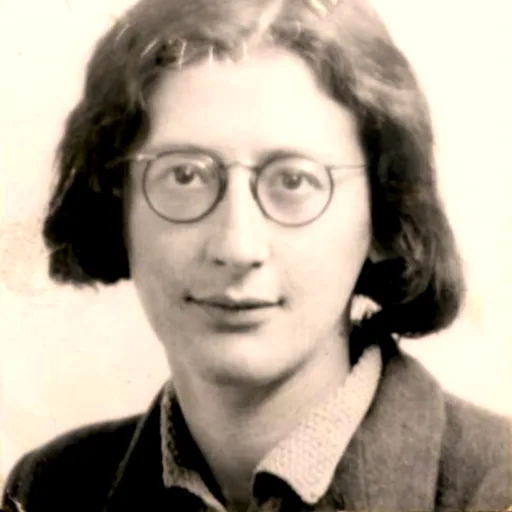
Simone Weil
France 1909-02-03 ~ 1943-08-24
20th-century French philosopher and mystic
Forged a philosophy of 'attention' and 'affliction' from the experience of factory labor
Setting aside preconceptions to truly listen is at the heart of mindfulness
Born in Paris in 1909, Simone Weil died at 34, leaving behind a body of thought that defies conventional classification. A graduate of the Ecole Normale Superieure, she voluntarily became a factory worker, forging from the crucible of physical suffering a philosophy centered on 'affliction' (malheur) and 'attention' (attention). Her posthumous collection Gravity and Grace, edited by Camus, has been read across the boundaries of religion, philosophy, and social thought ever since.
What You Can Learn
Weil's philosophy of attention provides an urgently practical compass for a world drowning in information and multitasking. What she means by attention is not simply concentrating harder but setting aside one's own assumptions and expectations in order to receive the other person or subject as it truly is. This maps directly onto the core of active listening in business and the essence of mindfulness practice. In a meeting, not interrupting; instead of preparing a rebuttal, staying with the speaker's actual words. Receiving customer feedback without filtering it through corporate convenience. These postures foster both organizational innovation and trust. Her concept of 'affliction' also carries implications for contemporary workplace mental health — she was diagnosing not mere stress but the structural degradation of human dignity. When evaluating a work environment, asking 'Are the people here being uprooted?' cuts deeper than surface-level surveys of employee benefits and gets at the genuine health of the organization.
Words That Resonate
The need for roots is perhaps the most important and least recognized need of the human soul.
L'enracinement est peut-etre le besoin le plus important et le plus meconnu de l'ame humaine.
Affliction compels us to recognize as real what we did not believe possible.
Le malheur contraint a reconnaitre comme reel ce qu'on ne croit pas possible.
All the natural movements of the soul are governed by laws analogous to those of physical gravity. Grace alone is the exception.
Tous les mouvements naturels de l'ame sont regis par des lois analogues a celles de la pesanteur materielle. La grace seule fait exception.
Prayer is nothing other than attention in its fullness.
La priere n'est pas autre chose que l'attention dans sa plenitude.
Attention is the rarest and purest form of generosity.
L'attention est la forme la plus rare et la plus pure de la generosité.
Life & Legacy
Simone Weil's name endures in philosophy not merely because of the depth of her ideas but because she made her own body the testing ground for her thought, literally staking her life to close the gap between theory and practice. Her very existence was a philosophical act.
Born into a Parisian Jewish intellectual family, Weil grew up alongside her brother Andre, who would become a celebrated mathematician. She displayed acute sensitivity from childhood; a widely told anecdote has her refusing sugar at age five in solidarity with soldiers at the front. She studied under Alain at the Lycee Henri-IV and graduated from the Ecole Normale Superieure in 1931, among the earliest cohort of women to do so. She then taught philosophy at provincial secondary schools, but the classroom alone could not satisfy her; she simultaneously threw herself into labor activism and political engagement.
The factory experience of 1934-1935 was the decisive turning point in Weil's thought. Working as an unskilled laborer at Renault and other factories, she learned firsthand how monotonous, grueling repetitive work crushes the human spirit. From this ordeal she forged her distinctive concept of 'affliction' (malheur) — not mere pain or bad luck, but a condition in which a person is socially uprooted and the very existence of the self is negated. Those months taught her how little an intellectual's abstract solidarity actually reaches the reality of the worker, leaving an indelible mark on everything she wrote afterward.
Weil also joined the Spanish Civil War as a volunteer. But her intellectual center of gravity gradually shifted from political action to spiritual inquiry. Visits to Assisi in 1938 and the experience of hearing Gregorian chant at Solesmes deepened her turn toward Christian mysticism. Yet she refused baptism for the rest of her life: entering the institutional Church, she believed, would sever her solidarity with those outside its walls. This stance of 'remaining on the threshold' is itself an embodiment of her thought's core.
Two key concepts run through Weil's philosophy: 'attention' (attention) and the paired notions of 'gravity' and 'grace.' Attention, for Weil, is not mere concentration but the capacity to empty the self and receive the object as it truly is — she went so far as to call it 'the very substance of prayer.' Against the natural pull of 'gravity' — selfishness, the hunger for power — she posited the force of 'grace,' which works in an entirely different direction. Grace cannot be won by human effort; one can only withdraw the ego through attention, making room for grace to pass through. The thought bridges Platonic philosophy and Christian mysticism in an original way and resonates deeply with Eastern concepts of selflessness.
In 1942 Weil fled Nazi-occupied France, passing through the United States to reach London, where she worked for the Free French government drafting postwar blueprints. But she had imposed on herself the rule of eating no more than her compatriots under occupation. Her weakened body succumbed to tuberculosis. In August 1943 she died at a sanatorium in Ashford, southeastern England, at 34. The coroner recorded 'suicide while the balance of the mind was disturbed,' a verdict debated to this day.
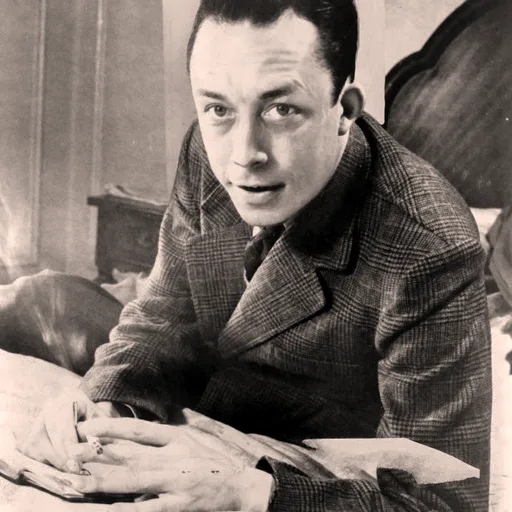
After her death, notebooks she had entrusted to her friend Gustave Thibon were edited by Camus and published as Gravity and Grace. The aphoristic style and intellectual depth of the collection won a wide readership. Spanning political thought, philosophy of labor, religious inquiry, and ancient Greek scholarship, her posthumous writings are remarkably broad, and new readings continue to emerge more than 80 years after her death.
Expert Perspective
Within the conventional taxonomy of Western philosophy, Weil occupies a singular position. She drew on Platonism as her foundation while cross-pollinating ideas from Christian mysticism, Hinduism, and Buddhism, and she grounded her theorizing in the bodily experience of factory labor — a combination that resists academic categorization. Epistemologically, she championed a self-emptying mode of cognition achieved through attention; ethically, she probed the roots of social justice through an analysis of affliction. Unlike her contemporaries Sartre and Beauvoir, who centered human freedom, Weil focused on human vulnerability and openness to transcendence — a philosophical stance undergoing renewed appreciation in the post-secular age.