Entrepreneurs / Consumer
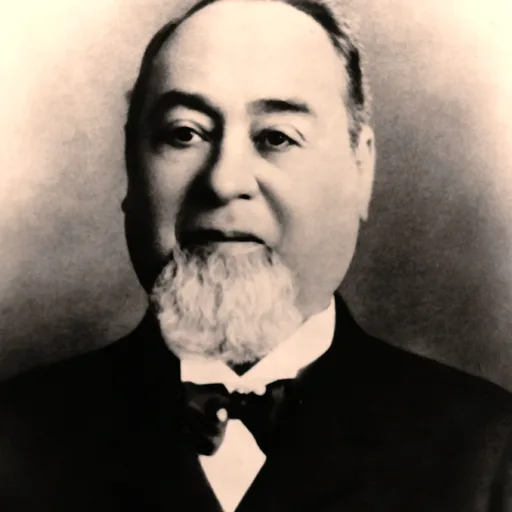
Levi Strauss
United States 1829-02-26 ~ 1902-09-26
19th-century American entrepreneur
Developed rivet-reinforced work pants and brought jeans to the world
'Sell the pickaxes during a gold rush' is a lesson that applies to the AI boom too
Born in 1829 in Bavaria, Germany, into a Jewish family, Levi Strauss emigrated to the United States and in 1853 opened a dry-goods wholesale business in San Francisco amid the California Gold Rush. Together with tailor Jacob Davis, he developed rivet-reinforced work pants and patented them in 1873. The product evolved into what the world now knows as jeans, and Levi Strauss & Co. has endured as a global brand for over 170 years.
What You Can Learn
Strauss's career is a surprisingly rich source of lessons for today's entrepreneurs. First, the 'sell pickaxes during a gold rush' strategic insight: when a market is in a frenzy, providing the infrastructure and tools used by participants is often lower-risk and more reliably profitable than joining the frenzy directly. The success of GPU makers and cloud-infrastructure providers in the AI boom is the contemporary version of exactly this playbook. Second, product development that starts from a concrete customer pain point: jeans were invented because 'pants tear too easily' — an intensely specific complaint. The modern startup axiom that products should begin with a pain point was embodied 150 years ago. Third, the strategic use of patents and partnerships: spotting the value in Davis's invention, funding the patent, and supplying distribution is structurally identical to the role played today by accelerators and venture capitalists who pair capital and business resources with founders who possess technology. The principle that linking a technology holder with a commercialization partner accelerates innovation has not changed.
Words That Resonate
Very few direct quotations from Levi Strauss survive in primary sources. He was a 19th-century businessman active in an era of limited media exposure.
リーバイ・ストラウスの直接的な名言として一次資料で確認できるものは極めて少ない。19世紀の実業家であり、メディア露出の少ない時代に活動していたことがその理由である。
My happiness lies in my routine day-to-day dealings with my fellow men.
I will be always ready to work for the benefit of the residents of the city which has been my home for so many years.
Life & Legacy
Levi Strauss is an entrepreneur whose career sits at the intersection of immigrant enterprise and Gold Rush opportunity. By creating a product that solved a concrete, everyday problem for manual laborers, he built a brand that has outlasted almost every contemporary competitor — a textbook case of how customer-centric product development generates longevity.
Born Loeb Strauss in 1829 in Buttenheim, in the Kingdom of Bavaria, he grew up in a Jewish German household. Anti-Jewish sentiment and economic hardship in 1840s Europe drove the family to emigrate; in 1847 he sailed for America with his mother and siblings. After arriving in New York he apprenticed in the dry-goods business run by his older brothers.
In 1853, recognizing the commercial opportunity created by the California Gold Rush, Strauss relocated to San Francisco and set up as a wholesale dealer in textiles and sundries. His calculation was straightforward: the merchant who supplies the miners earns a steadier living than the miner himself. This 'sell the pickaxes during a gold rush' logic remains one of the most cited strategic frameworks in entrepreneurship — the idea that serving the participants in a boom is lower-risk and more reliably profitable than joining the boom directly.
The decisive turn in Strauss's business came through Jacob Davis, a tailor in Reno, Nevada. Davis had devised the idea of reinforcing the stress points of work pants with metal rivets but lacked the capital to file a patent. Strauss recognized the technology's value, and together they obtained a patent for rivet-reinforced pants on May 20, 1873. That patent is the origin of what would eventually become the iconic 501 jean.
The product succeeded because it solved a specific, tangible problem: the pants worn by miners and railroad workers tore apart too quickly. The combination of indigo-dyed denim and rivet reinforcement delivered unmatched durability and practicality, and the garment spread rapidly through the working population. Strauss leveraged his San Francisco wholesale network to organize distribution across the entire American West.
Beyond business, Strauss played an important civic role in San Francisco. He contributed actively to local charities, donated to orphanages and educational institutions, and established 28 scholarships at the University of California, Berkeley. When he died in 1902 at 73, the business passed to his nephews, and Levi Strauss & Co. continued to grow as a family-controlled enterprise.
In the mid-20th century, jeans underwent a transformation in meaning, evolving from workwear into casual fashion and becoming a symbol of youth culture and counterculture. Strauss himself never intended this shift, but the phenomenon illustrates a powerful principle: a product built on genuine quality and functionality can transcend its original context, acquiring new cultural significance in each successive era.
The fact that a product born from one immigrant teenager's small dry-goods venture on the American frontier is still worn worldwide 170 years later speaks volumes about the enduring power of meeting a real customer need. From the youth rebellion of the 1950s through the counterculture of the 1960s to today's fast fashion, jeans have been continuously reinvested with meaning — proof that functional excellence is the foundation of brand longevity.
Expert Perspective
As an entrepreneurial archetype, Strauss belongs to the 'immigrant merchant entrepreneur' category. He was neither a technician nor an inventor; the core of his business was the ability to connect a market need with someone else's technology. Where contemporaries like Carnegie and Rockefeller built fortunes by organizing entire industries, Strauss concentrated on a single product category and defined the market through quality and utility. This approach is the prototype of brand business and remains a viable strategy for consumer-product startups today.