Scientists / Biology & Medicine
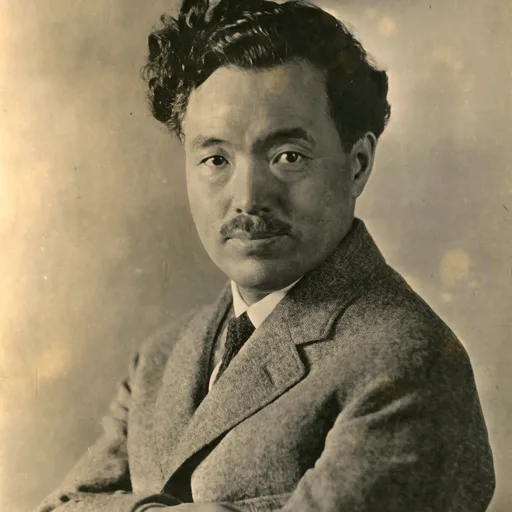
Hideyo Noguchi
Japan
Early twentieth-century Japanese bacteriologist
Researched syphilis and yellow fever at the Rockefeller Institute
Died of yellow fever in Ghana while verifying his own findings, embodying both the dedication and risk of field research
Japanese bacteriologist born in 1876 in Fukushima who researched syphilis and yellow fever at the Rockefeller Institute. He died of yellow fever in Ghana in 1928 while verifying his own findings.
What You Can Learn
Noguchi's career highlights both the power of field research and the importance of reproducibility. His willingness to travel to epidemic zones to verify results firsthand is a model of scientific integrity. Yet the revision of his yellow-fever findings demonstrates that even celebrated results must withstand independent verification, a principle central to modern peer review and quality assurance.
Words That Resonate
Until I achieve my goal, I will never set foot here again.
志を得ざれば再び此の地を踏まず。
The person who studies three, four, five times harder than anyone else -- that is a genius.
誰よりも三倍、四倍、五倍勉強する者、それが天才だ。
Patience is bitter, but its fruit is sweet.
忍耐は苦い。しかしその実は甘い。
Life & Legacy
Hideyo Noguchi rose from rural poverty and a childhood hand injury to become an internationally active bacteriologist based at the Rockefeller Institute. His career embodies determination and fieldwork commitment, though some of his findings have been revised by later research.
Born Seisaku Noguchi in 1876 in a farming village in Fukushima Prefecture, he suffered severe burns to his left hand as a toddler, leaving his fingers fused. Surgery partially restored function and inspired him to pursue medicine. He studied at the Saisei Gakusha (a predecessor of Nippon Medical School) and joined Kitasato Shibasaburo's Institute for Infectious Diseases.
In 1900 he moved to the United States and worked under Simon Flexner at the University of Pennsylvania before joining the Rockefeller Institute in 1904. His most acclaimed work was on syphilis: in 1911 he detected the spirochete Treponema pallidum in the brains of patients with general paresis, providing direct evidence that syphilis invades the central nervous system. He was reportedly nominated for the Nobel Prize multiple times.
From 1918 onward he focused on identifying the yellow-fever pathogen. Working in Ecuador, he reported a Leptospira bacterium as the cause and developed a vaccine. Later research proved the true agent is a virus, invisible and unculturable with the technology of his era. What Noguchi had likely found was the agent of Weil's disease.
In 1927 he traveled to Ghana to re-examine his findings. He contracted yellow fever during the research and died in Accra on 21 May 1928 at age fifty-one. His death in the field underscores both the dedication and the danger of infectious-disease research.
Noguchi's legacy is complex. His story of overcoming adversity became a national narrative in Japan, and his portrait appeared on the thousand-yen note from 2004 to 2024. At the same time, the revision of his yellow-fever conclusions illustrates the self-correcting nature of science.
Expert Perspective
Among scientists, Noguchi is notable for bridging Japanese and American bacteriology and for his commitment to fieldwork in endemic regions. His syphilis research was a genuine advance, while the yellow-fever error illustrates how contemporary technological limits can mislead even skilled researchers. His story is both inspirational and instructive about the self-correcting nature of science.