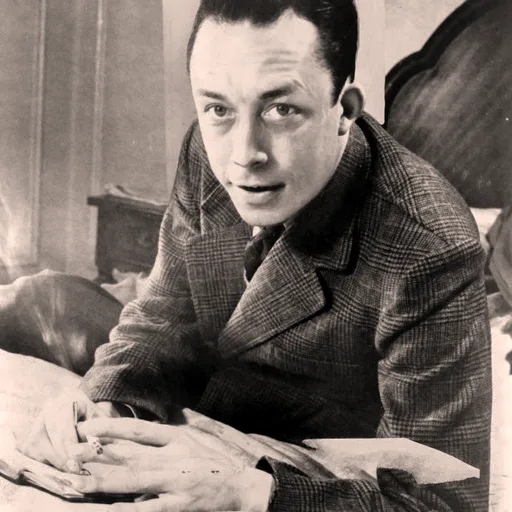
Writers & Literary Figures / Writers

Yukio Mishima
Japan
Mishima Yukio (1925-1970) was a Japanese novelist, playwright, and nationalist whose extraordinary body of work - including 'The Temple of the Golden Pavilion' and the Sea of Fertility tetralogy - earned multiple Nobel Prize nominations. His ritual suicide by seppuku after a failed coup attempt remains one of the most dramatic deaths in literary history.
What You Can Learn
Mishima's obsession with the unity of thought and action - his refusal to let words remain mere words - challenges the modern tendency toward passive consumption of ideas. His bodybuilding practice alongside literary work anticipated the modern understanding that physical discipline enhances cognitive performance. For leaders, his life raises the essential question: are you willing to live by your stated values, even at extreme personal cost? While his politics remain deeply controversial, his commitment to aesthetic excellence and his refusal to separate art from life offer a powerful model of creative integrity.
Words That Resonate
There is no such thing as a perfect sentence. Just as there is no such thing as perfect despair.
美しいもの、それだけがこの世でのわたしの敵だった。
A beautiful death is never within our grasp.
行為の中にしか生はない。
The beauty of the human body is beautiful precisely because we know it must perish.
言葉は言葉を呼び、その結果行為は永久に来ない。
The difference between infinity and eternity lies in that one is a matter of quantity, and the other a matter of quality.
無限と永遠の差は、一方が量であり、一方が質であるという点にある。
Life & Legacy
Mishima Yukio (1925-1970), born Hiraoka Kimitake, was Japan's most internationally celebrated postwar writer and its most controversial public intellectual. A three-time Nobel Prize nominee, he produced 34 novels, 50 plays, 25 books of short stories, and numerous essays before his spectacular death at age 45.
Born into a middle-class Tokyo family, Mishima was raised largely by his grandmother, who kept him isolated indoors and instilled in him both aristocratic pretensions and a fascination with death and beauty. His first novel was published at age sixteen. 'Confessions of a Mask' (1949), a barely disguised autobiography exploring homosexual desire and social performance, established him as postwar Japan's most daring literary voice.
'The Temple of the Golden Pavilion' (1956), based on the true story of a young monk who burned down the famous Kinkaku-ji temple, is his acknowledged masterpiece. It explores the destructive power of beauty and the human compulsion to destroy what one cannot possess. 'The Sound of Waves' (1954) offered a contrasting pastoral idyll inspired by the Greek myth of Daphnis and Chloe.
Mishima cultivated his body as obsessively as his prose, taking up bodybuilding, martial arts, and kendo in his thirties. He formed a private militia, the Shield Society, dedicated to restoring the Emperor's divine status.
His final work, the Sea of Fertility tetralogy (1965-1970) - 'Spring Snow,' 'Runaway Horses,' 'The Temple of Dawn,' and 'The Decay of the Angel' - traces four incarnations across twentieth-century Japan, forming a grand meditation on reincarnation, beauty, and decline.
On November 25, 1970, after delivering the final manuscript to his publisher, Mishima led a group of followers to a military base, delivered a speech calling for constitutional revolution, and committed ritual seppuku. He was 45.
Expert Perspective
Mishima is Japan's most internationally recognized literary figure after Soseki, unique in combining classical Japanese aesthetics with Western theatrical sensibility. His work bridges literature and performance, text and body, in ways that anticipated postmodern concerns. His dramatic death ensured his work would never be read as merely literary - it is always also political, philosophical, and deeply personal.