Artists / Modern
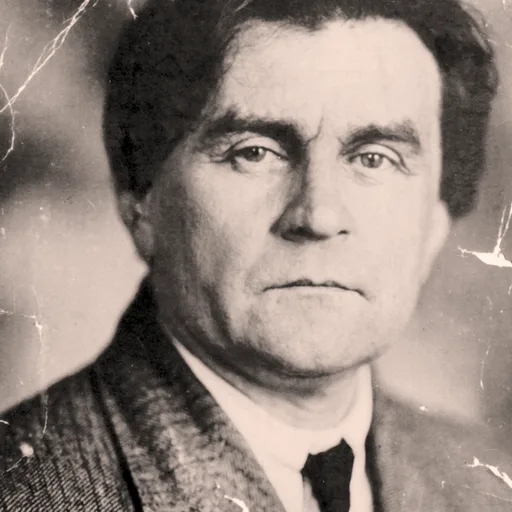
Kazimir Malevich
Ukraine 1879-02-23 ~ 1935-05-15
Russian-born painter born in 1879, creator of the Black Square
Founded Suprematism, reducing art to pure geometric form and color
His radical simplification demonstrates that removing everything nonessential can open rather than close creative possibilities
Born in 1879 in the Russian Empire, Malevich painted Black Square, a radical icon of geometric abstraction. His Suprematism reduced art to pure geometric form and color, seeking the zero degree of painting.
What You Can Learn
Malevich offers a lesson in radical simplification. Black Square strips painting to its absolute minimum and thereby opens an entirely new field of possibility, a pattern echoed by technology products that succeed by removing features rather than adding them. His theoretical writings show the value of articulating the philosophy behind a creative decision. And the survival of his influence despite decades of suppression demonstrates that powerful ideas are difficult to contain.
Words That Resonate
A painted surface is a real, living form.
Чёрный квадрат — зародыш всех возможностей.
Art does not need us, but we need art.
Ощущение — единственный способ художественного выражения.
I have established the semaphore of Suprematism.
Я преобразился в нуле форм и выловил себя из омута дряни академического искусства.
Life & Legacy
Kazimir Malevich occupies a pivotal position in 20th-century art because he pushed abstraction to its logical extreme. Black Square (1915), a black quadrilateral on a white ground, was intended as the zero point of painting, the ultimate reduction of visual art to its barest elements.
Born February 23, 1879, near Kyiv (then in the Russian Empire), he grew up in a Polish-speaking family. He moved to Moscow to study art and passed through Impressionism, Fauvism, and Cubism before arriving at pure abstraction.
In 1915 he exhibited Black Square at the Last Futurist Exhibition in Petrograd, hanging it across a corner in the position traditionally reserved for religious icons. The gesture was deliberate: Suprematism was to be a new spiritual art freed from representation. He published From Cubism and Futurism to Suprematism, arguing that art should express pure sensation through geometric form and color alone.
Suprematist Composition: White on White (1918) took the idea further, reducing the palette to near-invisibility. These works anticipated Minimalism and Color Field painting by half a century.
After the Russian Revolution he held teaching positions and briefly led official art institutions, but as the Soviet state turned toward Socialist Realism his avant-garde approach fell from favor. In the late 1920s he returned to figurative painting under political pressure, though his late figures retain a Suprematist geometry.
He died May 15, 1935, at fifty-six. His Suprematist works were hidden from public view in the Soviet Union for decades but exerted enormous influence in the West through exhibitions and publications. His legacy shows that the most radical reduction can open rather than close creative possibilities.
Expert Perspective
Malevich pushed abstraction to its logical extreme with Black Square and Suprematism. White on White anticipated Minimalism by decades. His theoretical writings gave geometric abstraction an intellectual framework. Despite Soviet suppression, his influence reached the West and shaped generations of abstract artists.