Artists / Japanese Art
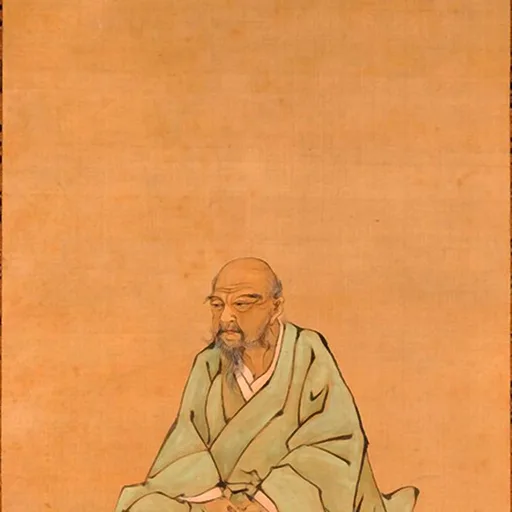
Itō Jakuchū
Japan 1716-03-01 ~ 1800-10-27
Japanese painter born in Kyoto in 1716
Created the Colorful Realm of Living Beings, thirty scrolls of birds, fish, and plants rendered with extraordinary precision
His obsessive observation and chromatic brilliance demonstrate that humble subjects, elevated by craft, can produce art of the highest order
Born in Kyoto in 1716, Jakuchu painted birds, fish, and plants with a hyper-detailed technique that fused Japanese and Chinese traditions. His Colorful Realm of Living Beings is a masterwork of chromatic brilliance.
What You Can Learn
Jakuchu offers lessons in depth and patience. His decade-long commitment to the Colorful Realm shows that sustained focus on a single ambitious project can produce work of enduring impact. His choice of humble subjects, roosters and vegetables, elevated through sheer craft, illustrates how quality of execution transforms any subject into something extraordinary. And his long posthumous obscurity followed by rediscovery affirms that genuine quality endures.
Words That Resonate
Life & Legacy
Ito Jakuchu stands out in Edo-period art because his obsessive attention to natural detail and his bold use of color produced works that feel startlingly contemporary. His thirty-scroll set Colorful Realm of Living Beings renders roosters, fish, insects, and flowers with a precision and vibrancy unmatched in 18th-century Japanese painting.
Born in 1716 in Kyoto to a prosperous greengrocer, he inherited the family business but devoted his free time to painting. After retiring from commerce at forty he dedicated himself entirely to art, studying under Ooka Shunboku and immersing himself in Chinese bird-and-flower painting.
The Colorful Realm, donated to Shokokuji temple alongside a triptych of Shakyamuni, occupied him for roughly a decade. Each scroll is packed with minutely observed creatures rendered in mineral pigments that retain their brilliance after two and a half centuries. Roosters strut with individual personality; fish shimmer as if underwater light plays across them.
Jakuchu also experimented with mosaic-like compositions, dividing surfaces into small squares of color, a technique anticipating pixelated digital imagery by two centuries. His monochrome ink works, by contrast, achieve an expressive economy that rivals the best of the literati tradition.
Largely forgotten after his death, he was rediscovered in the 20th century by art historian Tsuji Nobuo, and a 2016 exhibition in Tokyo drew record crowds. His case parallels Vermeer's and Botticelli's: an artist whose quality ensured eventual recognition regardless of intervening obscurity.
He died in 1800 at eighty-three. His work demonstrates that patient observation of humble subjects, chickens, vegetables, insects, can yield art of the highest order, a principle relevant to any discipline that values depth over breadth.
Expert Perspective
Jakuchu is a singular figure in Edo-period painting, combining hyper-detailed observation with bold chromatic brilliance. His Colorful Realm of Living Beings is one of the supreme achievements of Japanese art. His mosaic-like compositions anticipate digital imagery. His rediscovery in the 20th century parallels the cases of Vermeer and Botticelli.